Masterplanning · 2013 · Competition
Changsha Eco Tech City
The Changsha Eco Tech Resort City as envisioned by Asymptote is a 21st century vision for a new urban center that brings together living, working and recreation with nature.
About the project
Situated along the Xiang River in the Dawang Mountain resort district, the Eco Tech City masterplan establishes a new paradigm for integrated urban development in central China. Approximately 930,000 square meters of program are organized across two distinct architectural typologies, cylindrical glass towers and low-rise diagrid-structured campus volumes, woven together by a continuous landscape armature of parks, waterways, and planted promenades that position nature as the connective tissue of the entire development.
Masterplan Vision
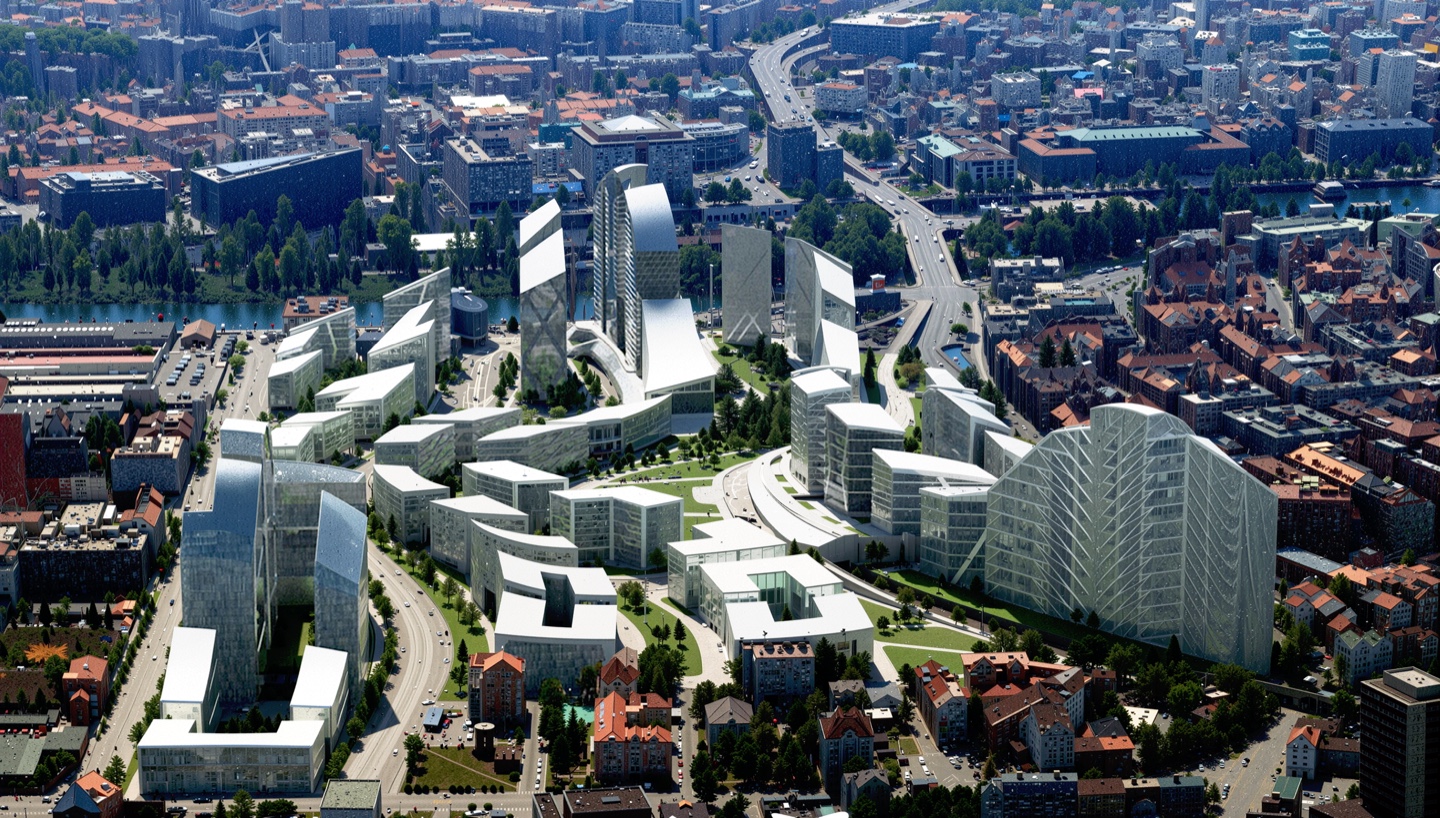
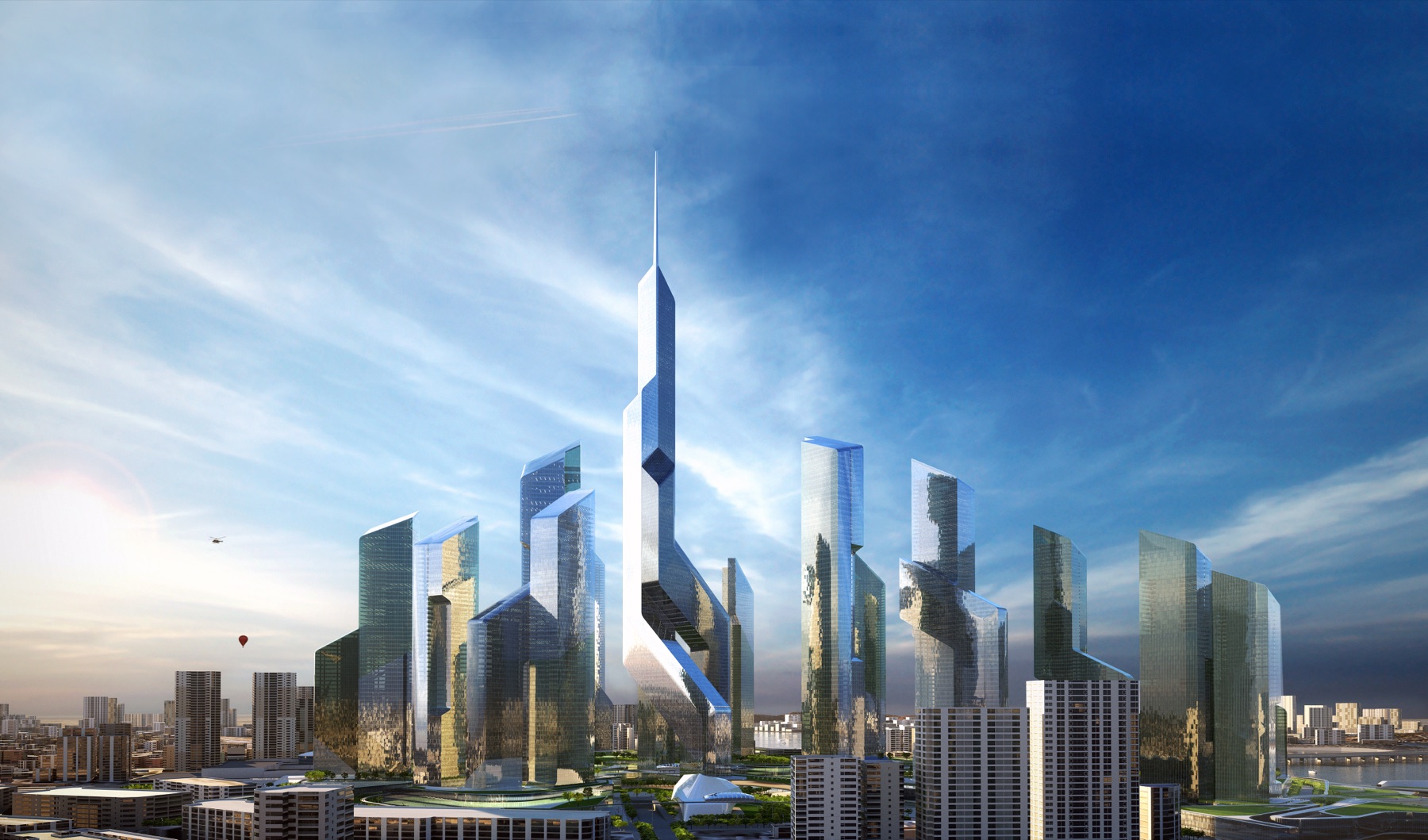
Situated along the Xiang River in Changsha’s Dawang Mountain resort district, the Eco Tech City masterplan establishes a new paradigm for integrated urban development in central China. The scheme organizes approximately 930,000 square meters of program across two distinct architectural typologies: a series of cylindrical glass towers housing mixed-use residential, hotel, and commercial functions, and a low-rise technology campus composed of faceted diagrid-structured volumes. These two systems are woven together by a continuous landscape armature of parks, waterways, and planted promenades that position nature as the connective tissue of the entire development. The result is a city conceived not as an accumulation of buildings but as a single coherent environment where architecture, infrastructure, and ecology operate as interdependent systems.
Transit & Mobility
The Changsha Eco Tech City is a lush, green, and car-free sustainable environment. An elevated monorail transit system serves as the primary mode of movement, its sweeping curved tracks threading between the cylindrical tower clusters and connecting each district to the metro network and the broader Dawang Mountain resort area. The monorail infrastructure itself becomes an architectural element, its sinuous elevated guideways and station platforms are designed as integral components of the urban landscape rather than utilitarian additions. Vehicular roads from the original masterplan are retained below grade, providing access to underground parking garages while keeping the surface realm entirely devoted to pedestrians, cyclists, and landscape. A network of limited-use service roads ensures emergency and maintenance access without compromising the pedestrian experience.
Architecture & Form
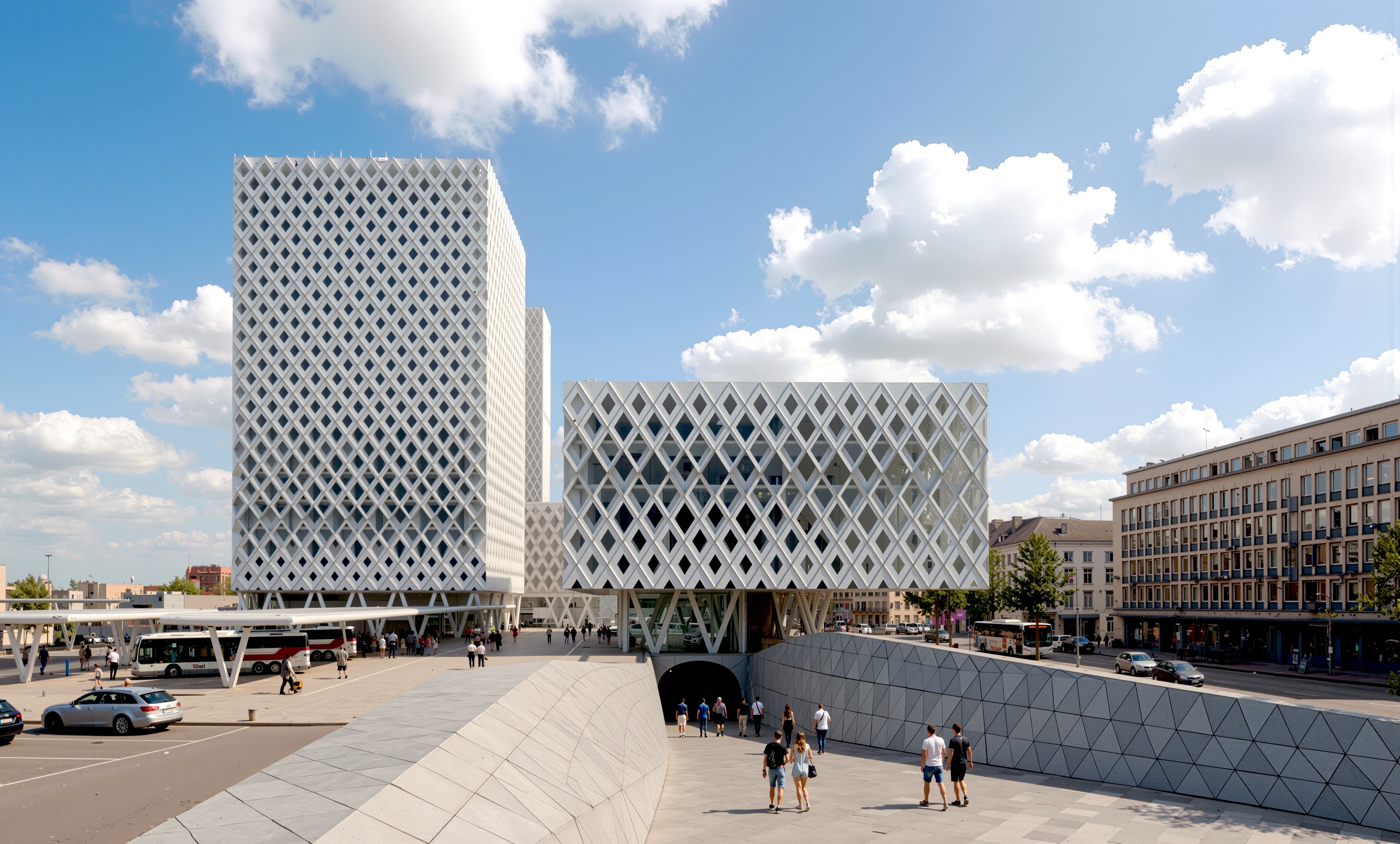
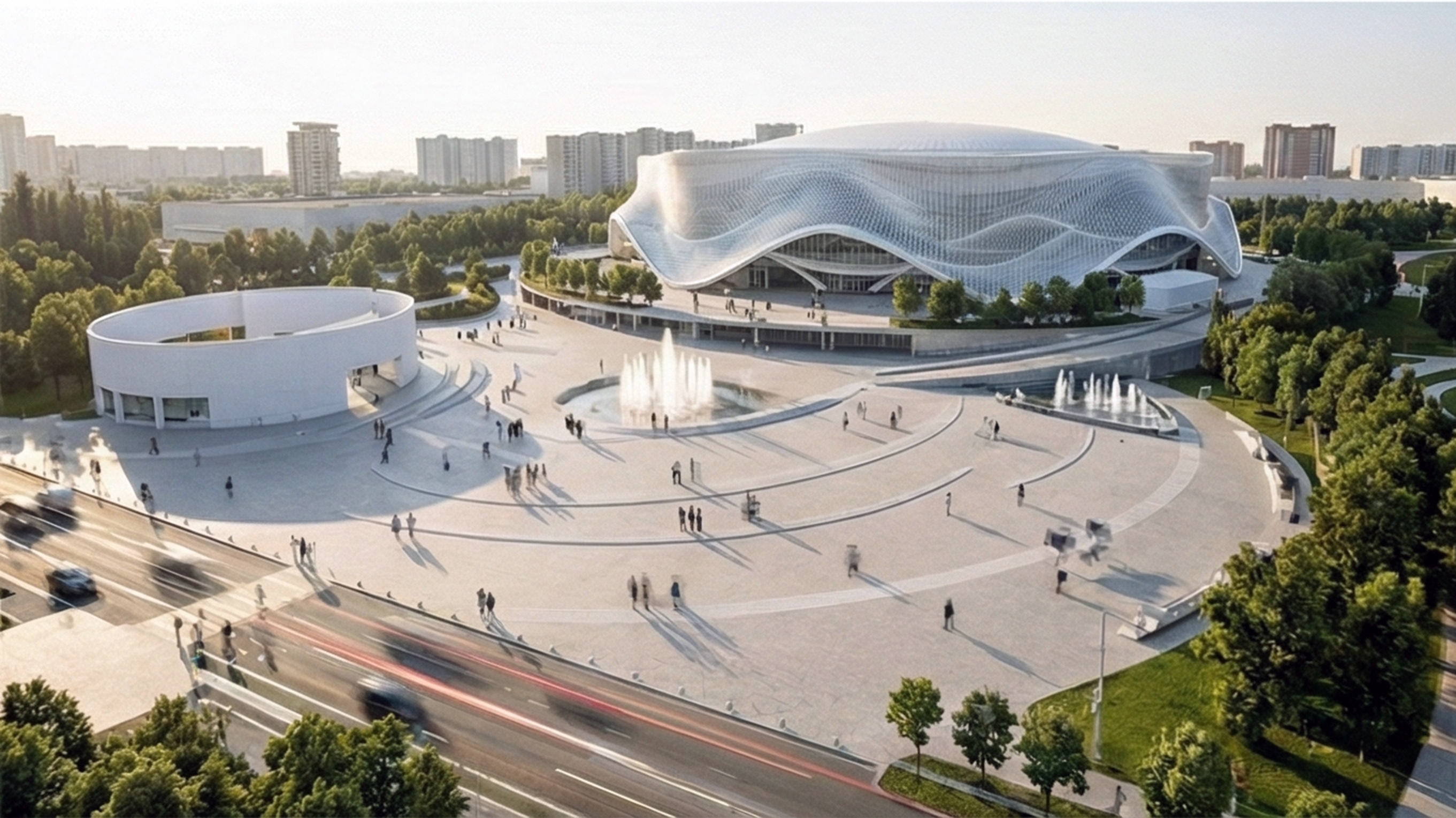
Two primary building typologies define the character of the Eco Tech City. The cylindrical glass towers, stacked and offset volumes wrapped in continuous curtain wall glazing, anchor the skyline and house the development’s residential, hospitality, and commercial programs. At their bases, spiraling landscaped terraces cascade outward, dissolving the boundary between building footprint and ground plane and creating a vertical extension of the park landscape. The technology campus district takes a contrasting formal approach: large-scale faceted volumes clad in a white steel diagrid exoskeleton and floor-to-ceiling glass. These angular buildings frame generous public plazas and provide open-plan workspaces flooded with natural light. The expressive structural lattice visible from both interior and exterior lends the tech campus a distinct identity while maintaining visual transparency between indoor and outdoor environments.
Water & Landscape
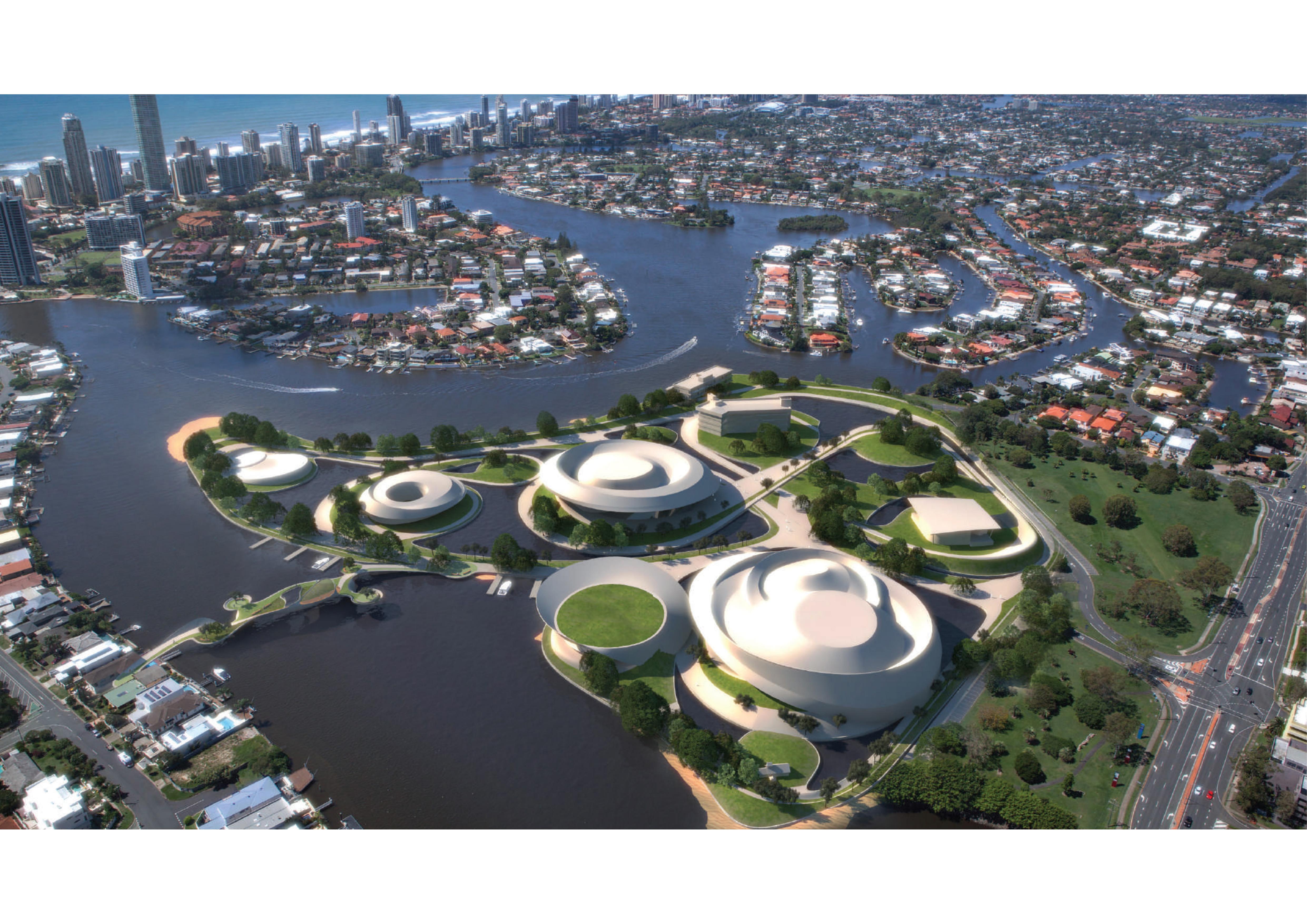
Water is an organizing principle that extends across the entire masterplan. A central lake and a network of canals, reflecting pools, and curvilinear water features link the residential, commercial, and technology districts into a continuous ecological corridor. The waterfront promenade, lined with native grasses, stone-edged banks, and pedestrian pathways, provides direct public access to the water’s edge and serves as the primary recreational spine of the city. Green spaces range in scale from intimate courtyard gardens within the tech campus to expansive riverside parks that buffer the development from adjacent roadways. This layered landscape strategy manages stormwater through absorption and filtration, contributes to microclimate cooling, and creates a diverse habitat structure that supports biodiversity within the urban fabric.
Sustainability & Performance
The Eco Tech City adheres to a high standard of sustainable design by planning in harmony with the natural context, prevailing winds, solar orientation, and the thermal mass of the adjacent river all inform the disposition and geometry of the built form. The abundant water on the site is deployed not only for recreation and as a visual amenity but also as a resource for district-scale cooling infrastructure, integrating the lake and canal system into an energy strategy that reduces reliance on conventional mechanical systems. The continuous landscape surface absorbs and filters rainwater for reuse, while the elevated transit network and car-free ground plane eliminate the environmental and spatial burden of surface-level vehicular infrastructure. The overall effect is a thoroughly contemporary model for a 21st century city where high-performance, technologically advanced architecture and ecological infrastructure are inextricably linked, offering an alternative to the dense, congested urbanism that characterizes much of China’s rapid development.