Transportation · 2012 · Competition
Keelung Port Terminal Facility
A major waterfront gateway project transforming Keelung's industrial harbor edge into a new international arrival point and urban destination.
About the project
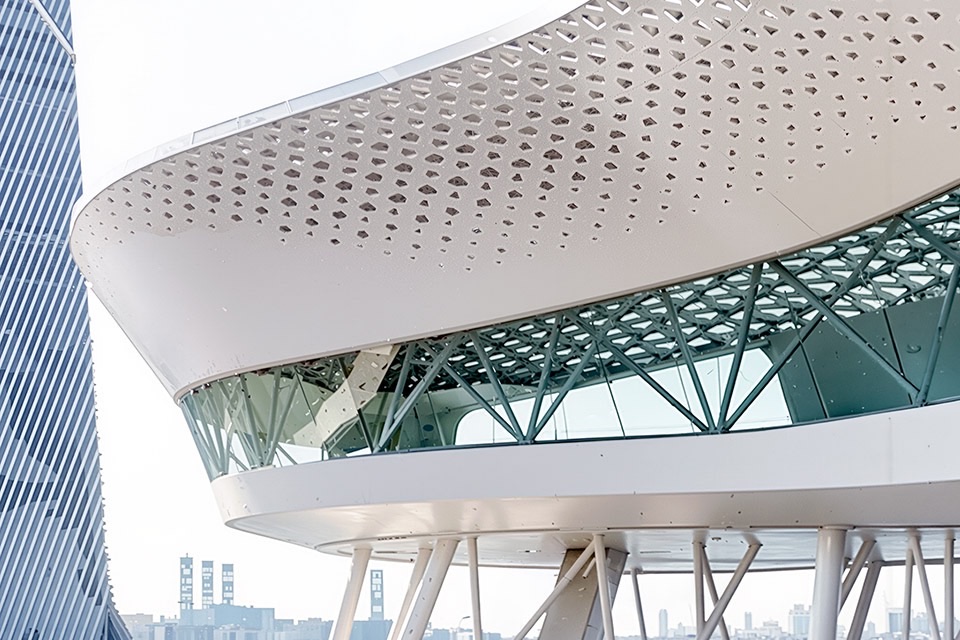
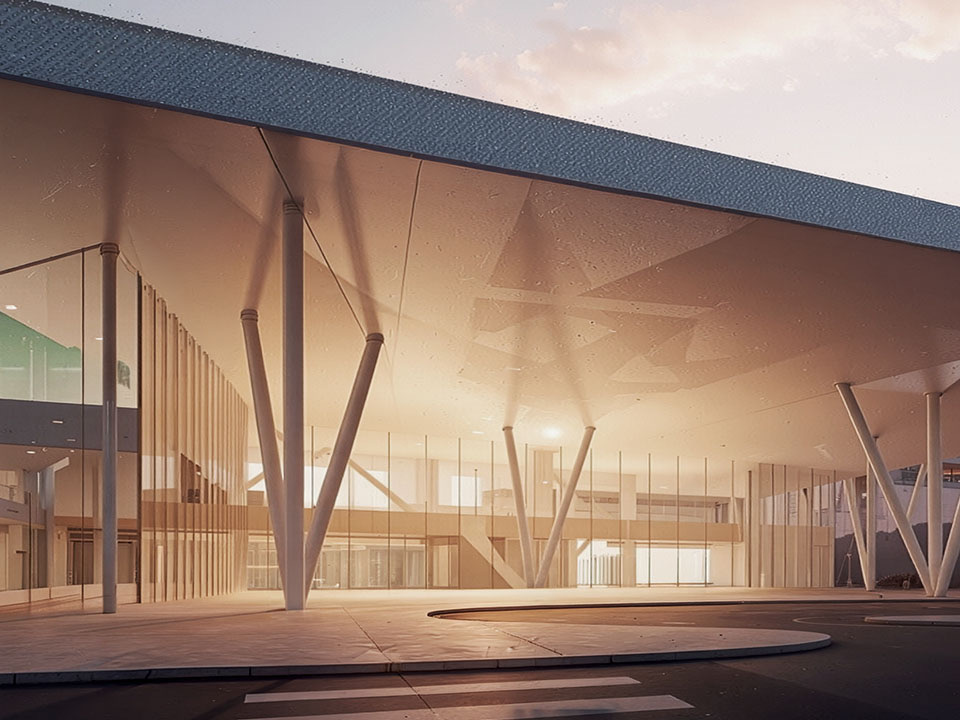
Keelung’s harbor sits within an extraordinary natural amphitheater, mountains surround it on three sides and a lush green landscape descends to the water’s edge, yet the city’s industrial port operations have long severed the connection between the urban center and the waterfront. Asymptote’s proposal re-establishes that link by integrating large-scale cruise infrastructure with civic and commercial programs. Anchored by a distinctive 70-meter gateway tower, the development extends horizontally through a series of dramatic canopy structures that frame a new public plaza and transportation interchange.
Interior & Circulation
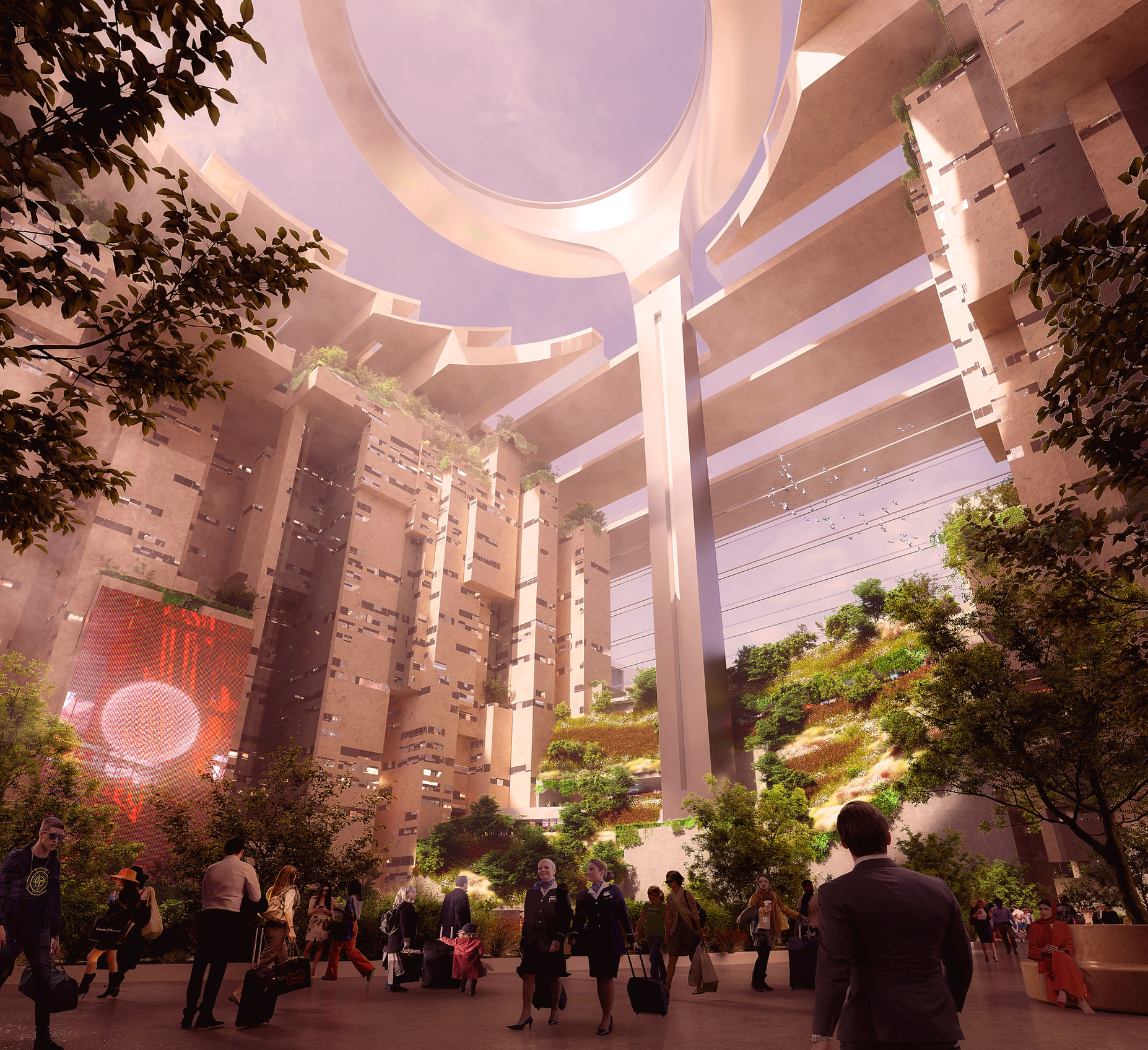
The architecture organizes passenger circulation, commercial activity, and public space within a layered urban framework. Interior public routes spiral through a glazed garden atrium lit by a honeycomb skylight canopy, linking terminal functions with over 5,600 square meters of retail, cultural, and civic amenities while maintaining clear operational flows capable of processing up to 3,000 passengers per hour. A second circulation system, spatially integrated with the public routes, traverses the immense interior volume and provides efficient access between the terminal’s various levels and functions.
Public Realm
At grade level, pedestrian connections enable full access from the city to the waterfront, drawing the energy of urban life directly into the building’s interior and effectively dissolving the boundary between port and city. The exterior public spaces of the gateway are designed to function around the clock, creating an animated civic destination that extends well beyond the operational hours of the terminal itself.
Urban Vision
At the urban scale, the project reconnects Keelung to its waterfront through new pedestrian connections and landscaped public spaces, forming a vibrant gateway district and a catalyst for the city’s long-term waterfront transformation.