Installations · 1999 · Realized
I-Scape 1.0
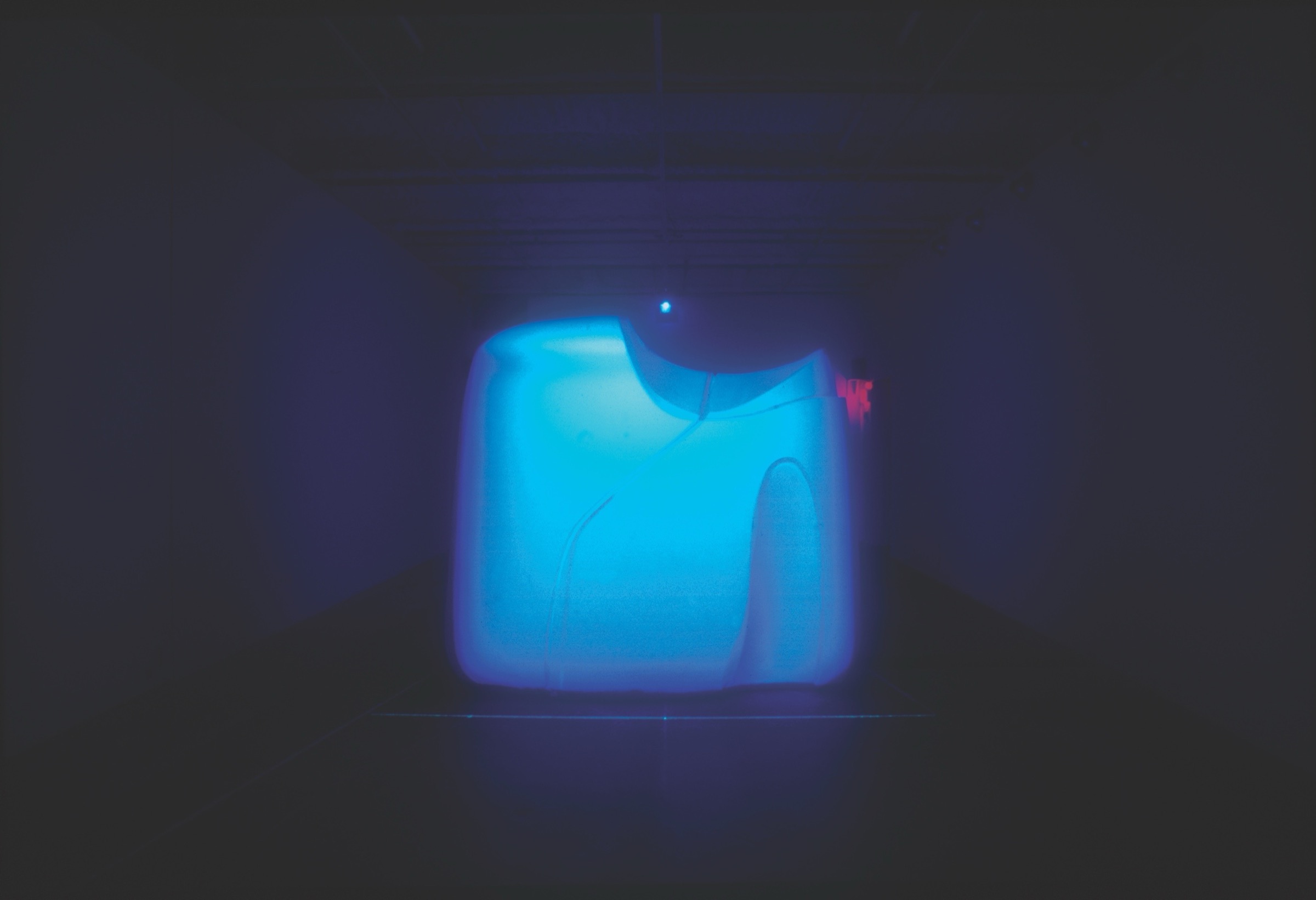
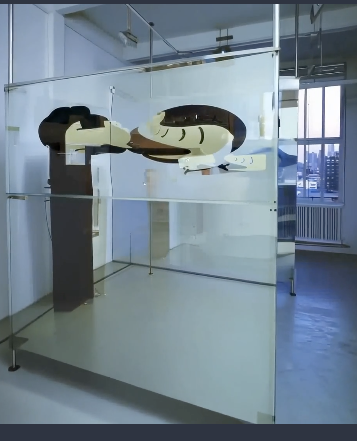
FluxSpace 1.0, the first iteration of the Fluxspace series, presented at TZ Art in New York. A translucent glass screen suspended in a loft gallery with projected digital imagery, glass floor planes creating reflections below, blurring the boundary between physical and virtual space.
About the project
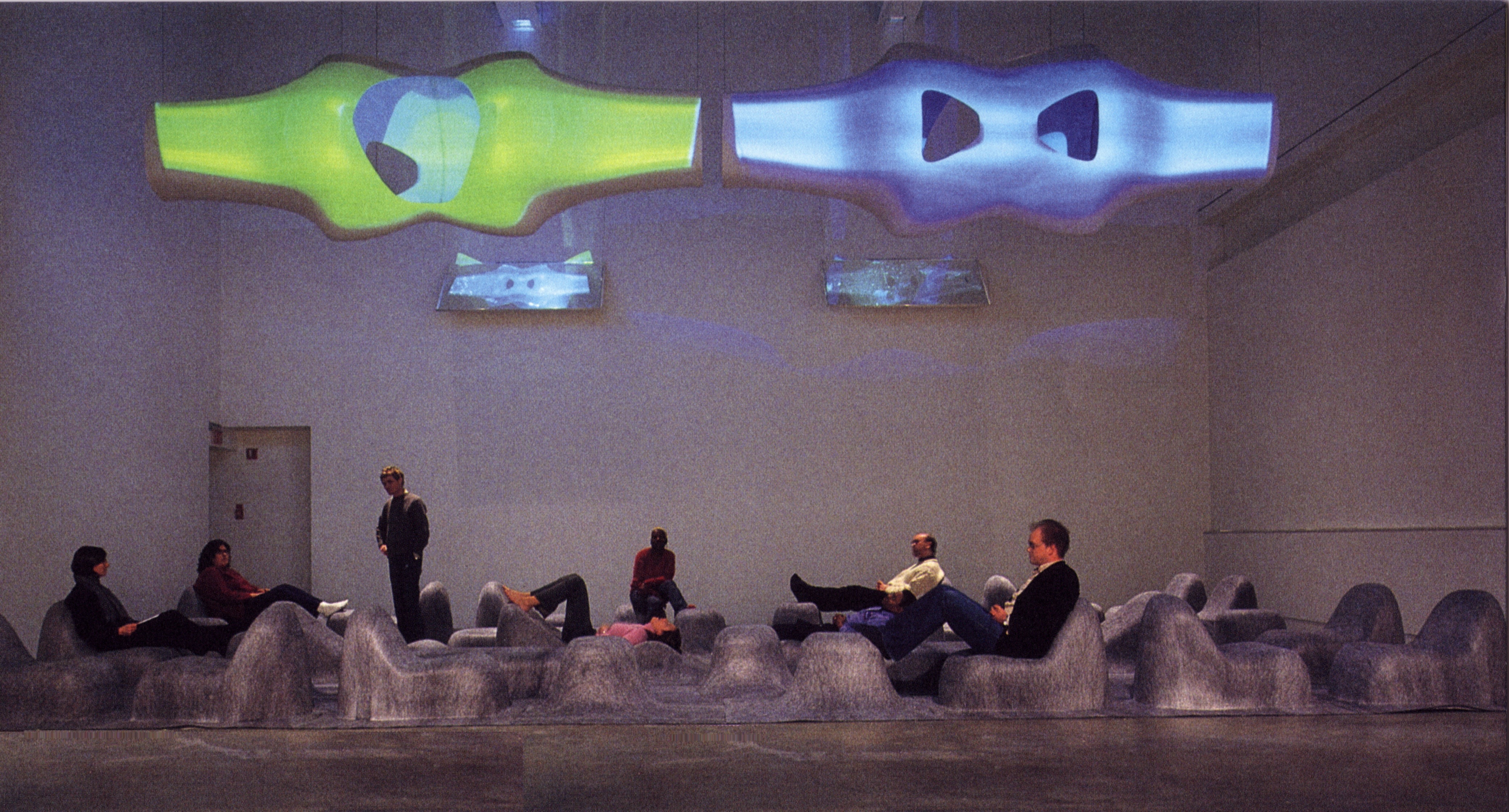
FluxSpace 1.0 was the first iteration of the Fluxspace series, the body of work that would come to define Asymptote’s exploration of the intersection between physical architecture, projected media, and virtual space. Presented at TZ Art in New York, the installation established the fundamental vocabulary that would be extended through FluxSpace 2.0 at the Venice Biennale, Fluxspace 3.0 at Documenta XI, and Flux 4.0: Ascape in Brooklyn.
Glass and Light
A large translucent glass screen was suspended within the industrial loft space, its surface animated by projected digital imagery of architectural forms and spatial explorations from Asymptote’s practice. The translucent screen operated as a mediating surface between the physical gallery and the projected digital content, neither fully transparent nor opaque, the glass caught the projected light while allowing glimpses of the space beyond, creating a luminous blue field that transformed the gallery into an immersive viewing environment.
Reflections and Doubling
Glass floor planes below reflected the projected imagery, doubling the content and dissolving the boundary between the installation and its architectural container. The work established a principle that would recur throughout the Fluxspace series: architecture as a screen for digital content, where the projected and the physical become indistinguishable.
Origins of a Series
FluxSpace 1.0 exemplified Asymptote’s approach to exhibition design as spatial practice, rather than presenting digital work on conventional screens, the installation reimagined the gallery itself as a digital environment, using glass, projection, and industrial infrastructure to create an immersive architectural experience. This approach would scale dramatically through the subsequent iterations, from the pneumatic pavilion in Venice to the suspended projection spines of Documenta.