Installations · 2000 · Realized
FluxSpace 2.0
FluxSpace 2.0, a pneumatic inflatable pavilion installed in the Giardini for the 7th Venice Architecture Biennale, blurring the boundary between physical and virtual reality through rotating mirrors, webcams, and real-time online transmission. Now in the collection of the Solomon R. Guggenheim Museum, New York.
About the project
Invited to participate in the 7th International Architecture Exhibition at the Venice Biennale in 2000, Massimiliano Fuksas’s Less Aesthetics, More Ethics, Asymptote installed FluxSpace 2.0 outdoors among the trees of the Giardini gardens. Separate from the American Pavilion, where Hani Rashid simultaneously co-curated Architectural Laboratories with Greg Lynn and Columbia GSAPP students, FluxSpace 2.0 was Asymptote’s own large-scale installation, a convergence of media, technology, spectacle, interactivity, and architecture, and an inhabitable experiment in bridging physical and virtual audiences. The project was commissioned by The Bohen Foundation, with technology sponsorship from IPIX Imaging, and is now in the permanent collection of the Solomon R. Guggenheim Museum, New York, a gift of The Bohen Foundation.
Structure
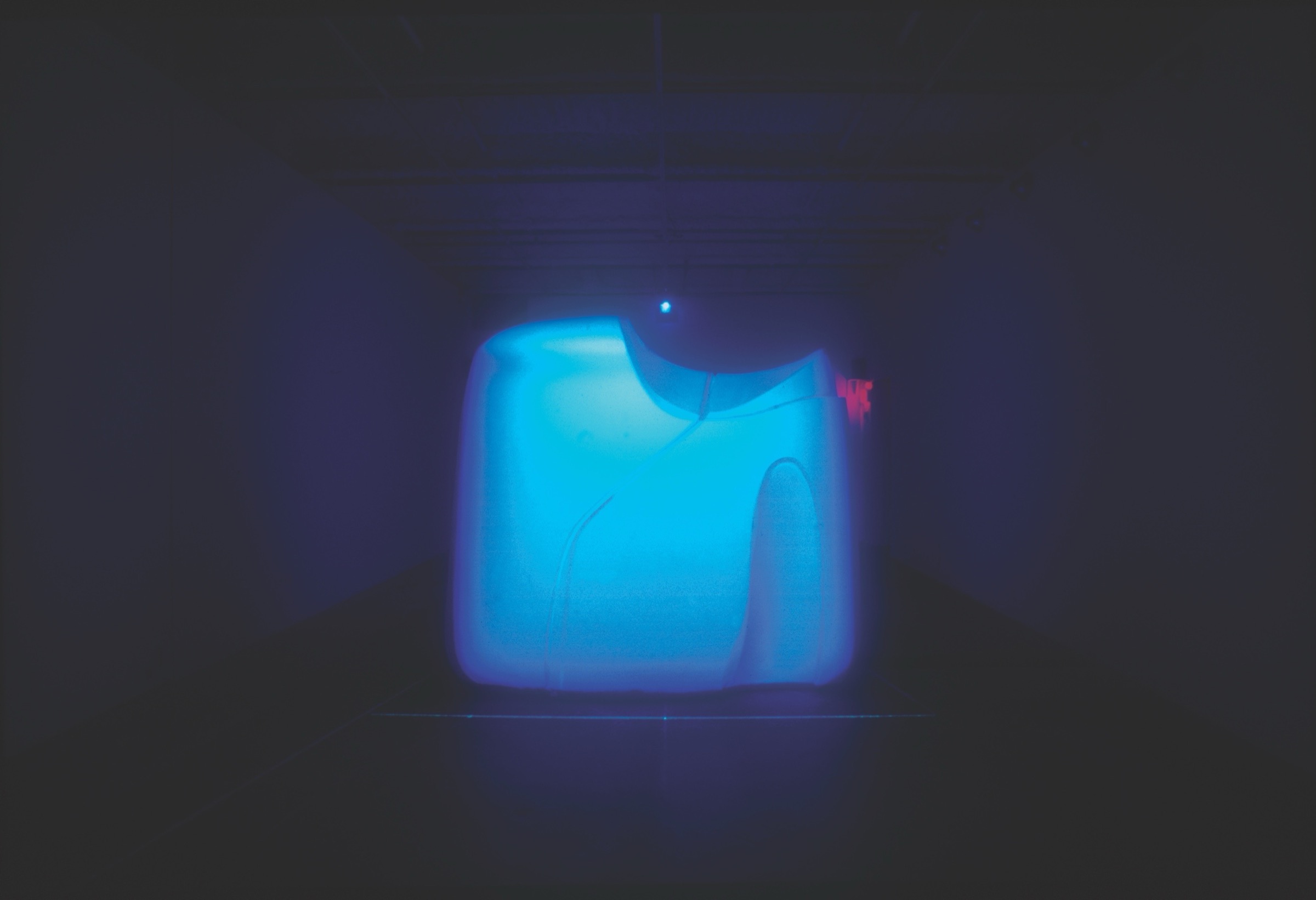
The two-story high, air-filled envelope measured 20 by 15 by 40 feet (6.09 x 4.57 x 12.19 m), a vivid red pneumatic membrane supported by an elaborate steel-frame structure that formed the installation interior, raised above a concrete and wood foundation and flooring. Two pivoting Plexiglas diaphragms measuring 8 feet in diameter were equipped with IPIX cameras capable of recording images at thirty-second intervals. The form suggested something between an organism and a vehicle, a temporary architectural body hovering among the trees of the Giardini.
Mirrors and Webcams
Inside the air-filled shell, two pivoting one-way mirrored Plexiglas diaphragms measuring 8 feet in diameter were equipped with IPIX cameras. Visitors entering the pavilion found their perceptions of the space continuously transformed as the pivoting diaphragms reflected ever-changing perspectives of the interior and part of the landscape visible below the canopy. The resulting images of the constantly changing interior “architectures” were published on the Internet in real time. The project produced 1.54 million distinct images of the interior volume and the distortions and changes that unfolded over the five-month duration of the Biennale, engaging both online audiences experiencing it as a virtual space in real time and visitors to the physical structure itself. In 2000, such real-time transmissions from a physical installation to a global online audience were completely new and radical, the technology was entirely nascent, and FluxSpace 2.0 was among the earliest architectural works to bridge the physical and virtual in this way.
The Fluxspace Series
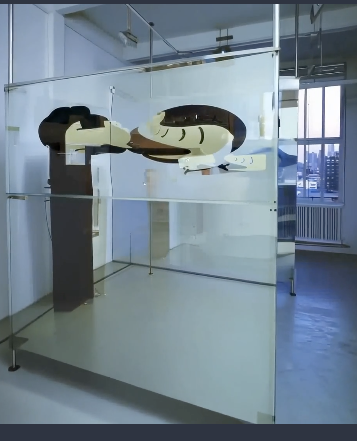
FluxSpace 2.0 was the second iteration in the Fluxspace series. FluxSpace 1.0 had been presented at TZ Art in New York, establishing the fundamental vocabulary of translucent glass screens and projected digital imagery. The Venice pavilion extended this investigation into the public realm, an inhabitable pneumatic structure in the open air that bridged physical and virtual audiences. Two years later, Fluxspace 3.0 at Documenta XI would take the concept to its most ambitious scale, with suspended projection spines in a darkened gallery.
Collections
FluxSpace 2.0 is in the permanent collection of the Solomon R. Guggenheim Museum, New York, a gift of The Bohen Foundation, which sponsored the project.