Installations · 2002 · Realized
FluxSpace 3.0 Documenta XI
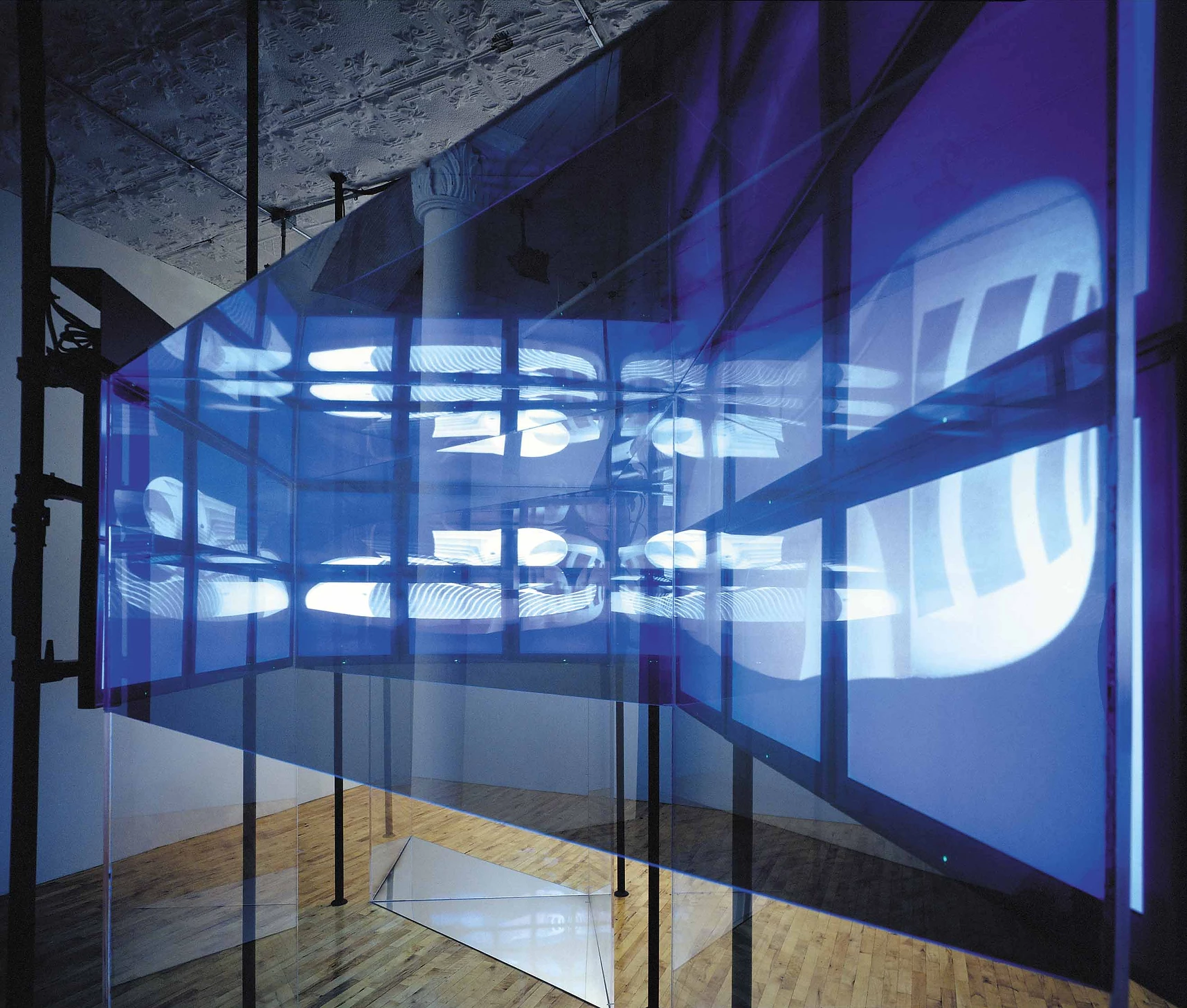
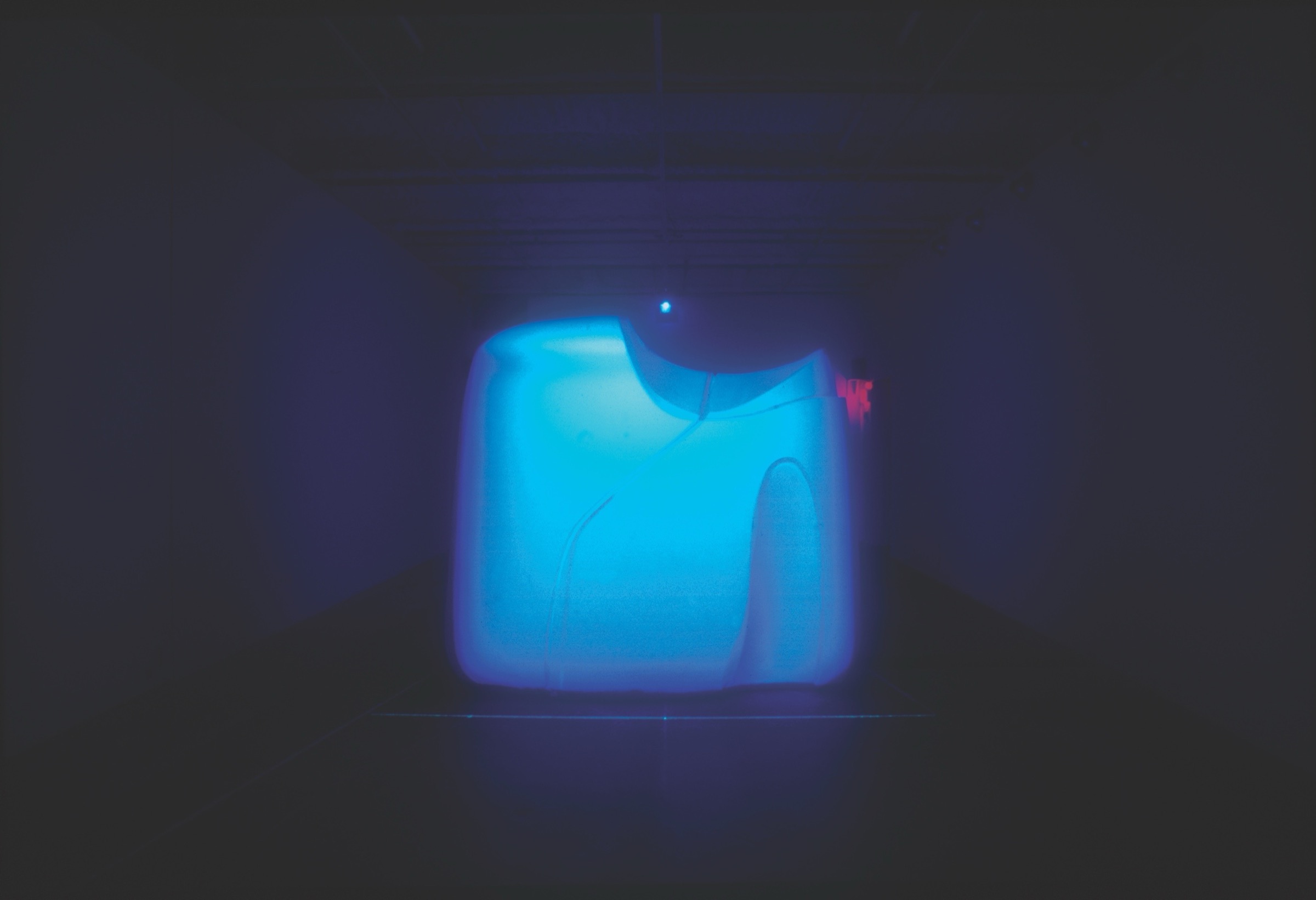
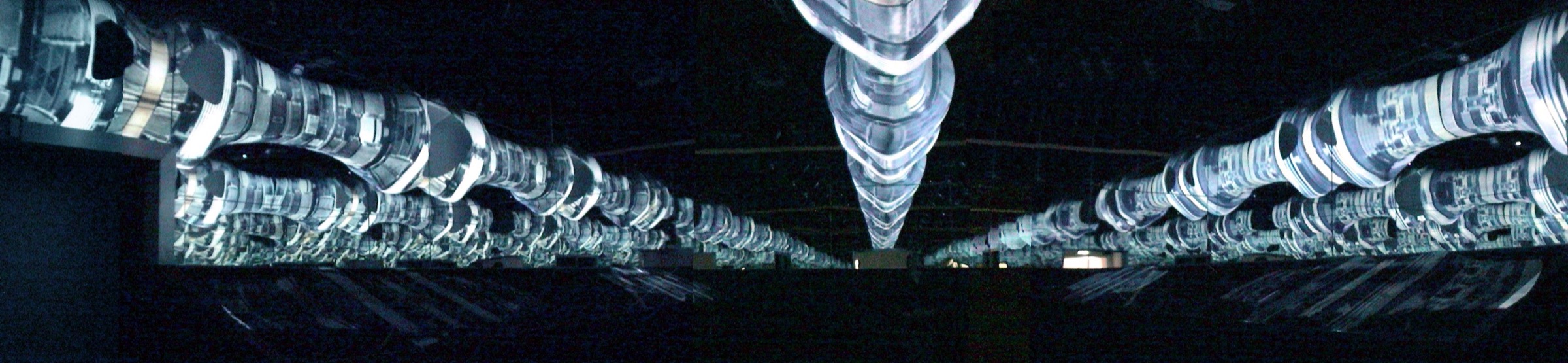
Fluxspace 3.0, an immersive multimedia installation presented at Documenta XI in Kassel, biomorphic sculptural forms suspended from the ceiling become screens for projected cityscapes of New York, Tokyo, and Hong Kong, abstracted into flowing data streams and reflected in mirrored surfaces below.
About the project
Documenta XI, the eleventh edition of the landmark contemporary art exhibition, was held in Kassel in the summer of 2002 under the direction of Okwui Enwezor, the first non-European curator in the event’s history. Enwezor’s edition expanded the boundaries of what constituted contemporary art practice, and Asymptote was the only architecture firm among 117 participating artists, a recognition that the studio’s work operated within the discourse of contemporary art, not merely architecture.
The Installation
The work consisted of biomorphic sculptural armatures, spinelike forms suspended from the ceiling above mirrored surfaces, onto which a continuous video montage of abstracted cityscapes was projected. The digitally mapped skylines of New York, Tokyo, and Hong Kong became the instrument of an original soundtrack: conversations and ambient sounds sampled on location in each city were embedded into the building silhouettes, so that as the skylines rotated across the projection surfaces, the architecture itself performed the audio. Skyscrapers and rooflines triggered sampled voices and urban murmurs like keys on a massive player piano, what visitors saw and heard were the cities’ own whispered conversations, played back through the very forms that housed them. Visitors moved through the darkened space beneath the suspended projections, surrounded by mirrored reflections that multiplied the imagery into an apparently infinite depth.
Sound as Architecture
The soundtrack mechanism was rooted in a longstanding interest in visionary urbanism, in particular the work of Constant Nieuwenhuys, whose New Babylon proposed an endlessly reconfigurable city given over entirely to play and creative life, and Yona Friedman, whose utopian megastructures imagined architecture as an open framework for inhabitation rather than a fixed object. In Fluxspace 3.0, these precedents were channeled into a proposition where the city itself, its skyline, its noise, its collective voice, became both the visual and sonic medium. The installation collapsed the distance between representation and experience: the architecture was not depicted but performed, its data translated into an immersive environment that visitors could walk through, listen to, and feel enveloped by.
The Fluxspace Series
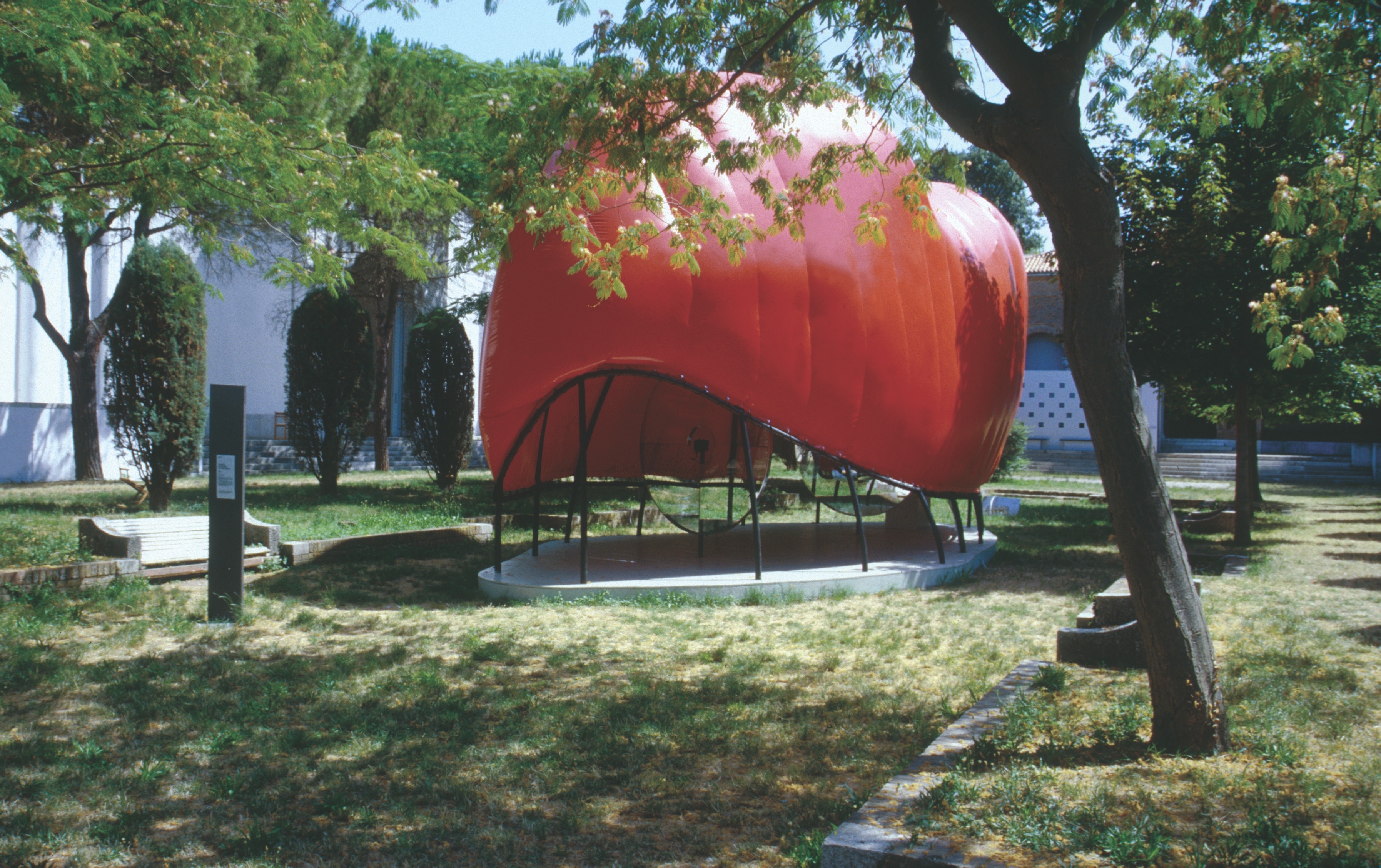
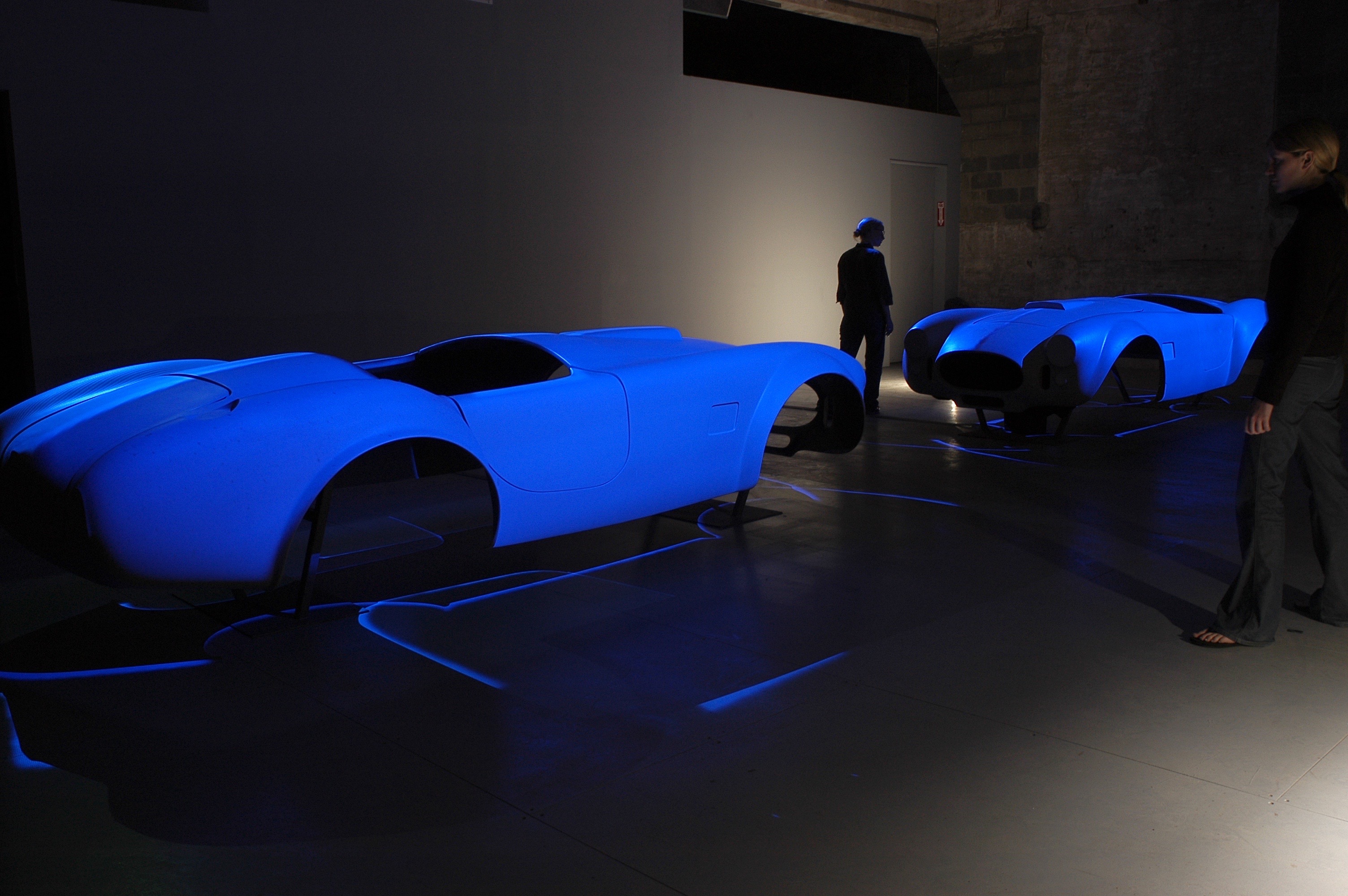
Fluxspace 3.0 was the culmination of an evolving body of work. Fluxspace 1.0, first shown at CCAC Institute in San Francisco in 2000, established the fundamental premise: architecture as a medium for the fusion of physical and virtual space. Fluxspace 2.0, presented at the Venice Architecture Biennale the same year as an invited installation in the Giardini, separate from the American Pavilion where Rashid co-curated Architectural Laboratories with Greg Lynn, extended the concept into the context of an international exhibition. At Documenta, the third iteration achieved its most ambitious scale and technical complexity, deploying the M-Scape vocabulary, forms Rashid described as ambiguous bodies caught between the automotive and the anatomical, as projection surfaces for an urbanistic meditation on the invisible forces shaping contemporary cities.
Legacy
The installation caught the attention of Brazilian fashion designer Carlos Miele, who saw it at Documenta and subsequently commissioned Asymptote to design his New York flagship store, a pivotal moment in the firm’s transition from experimental practice to realized architecture. A documentation photograph of the Flux 3.0 M_Scapes installation is held in the permanent collection of the Museum of Modern Art (MoMA), New York, in the Department of Architecture and Design. The broader Fluxspace investigations are the subject of the monograph Asymptote: Flux, published by Phaidon.