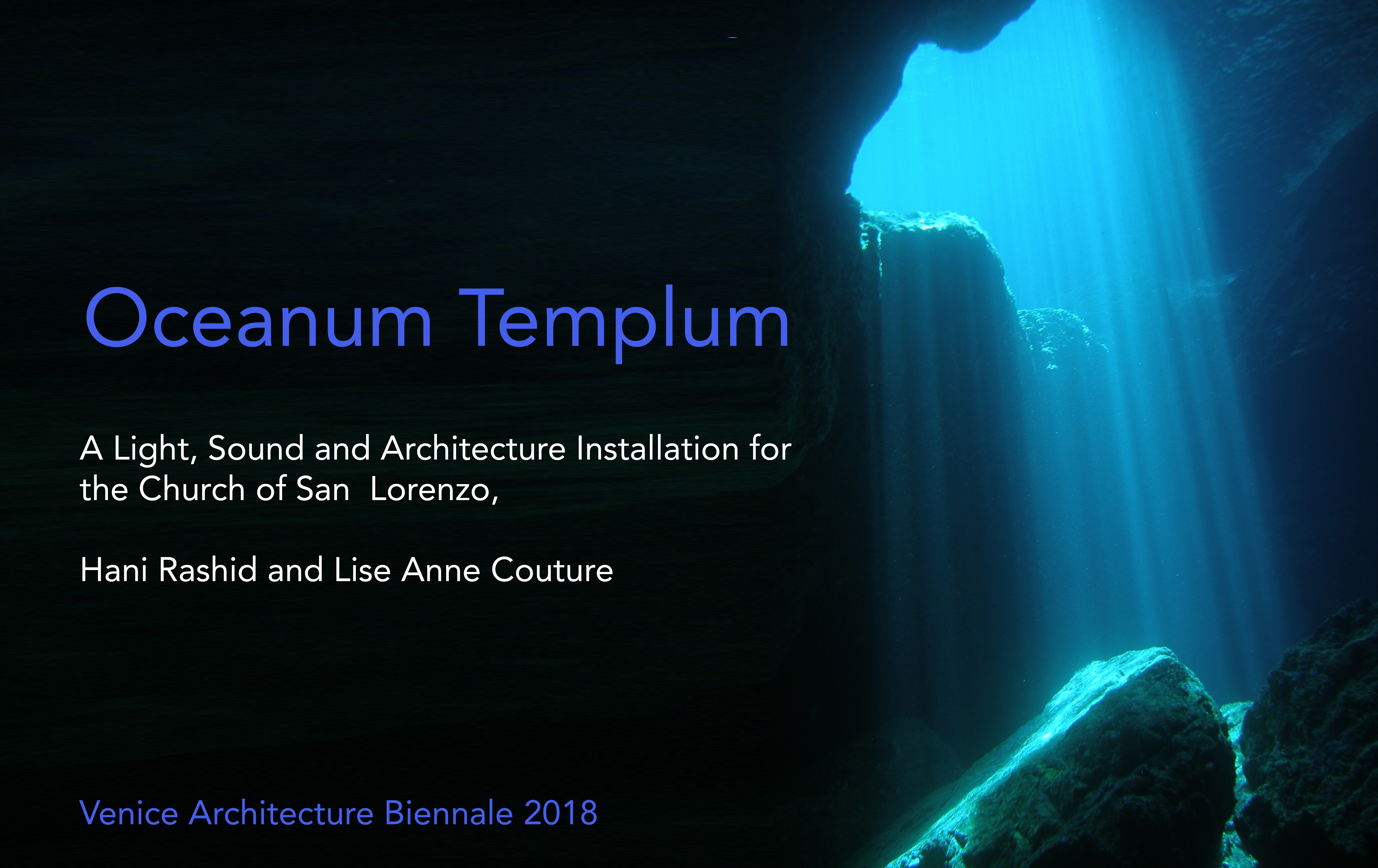
Oceanum Templum
Chiesa di San Lorenzo, Venice
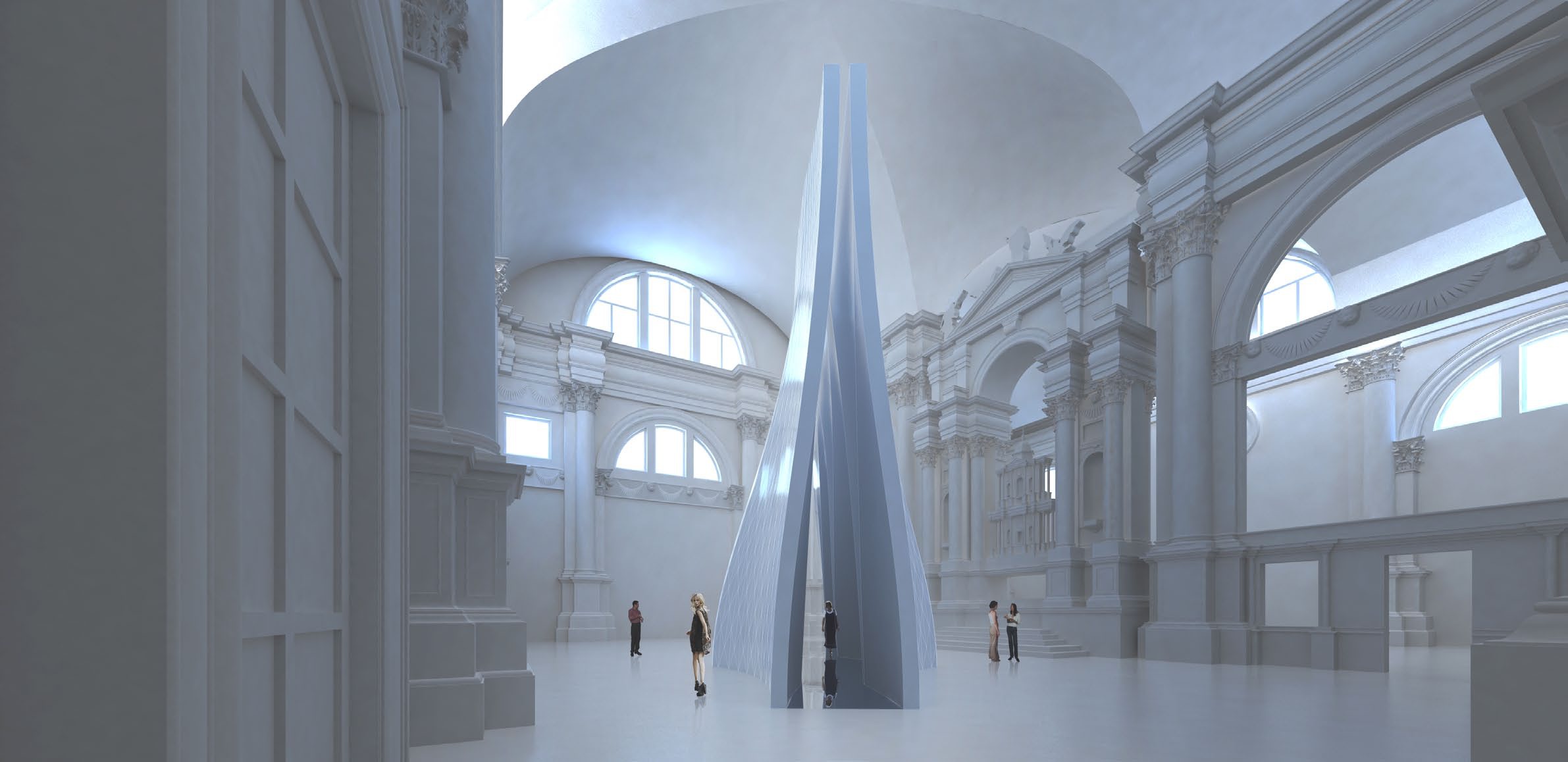
An unrealized light, sound, and architecture installation proposed for the Chiesa di San Lorenzo in Venice for the 2018 Venice Architecture Biennale — a large tessellated surface embedded with micro-microphones that registers breathing, footsteps, and ambient sound, then vibrates to produce reverberating acoustic patterns throughout the church. An analog counterpart to Asymptote's earlier FluxSpace 1.0 interactive installation.
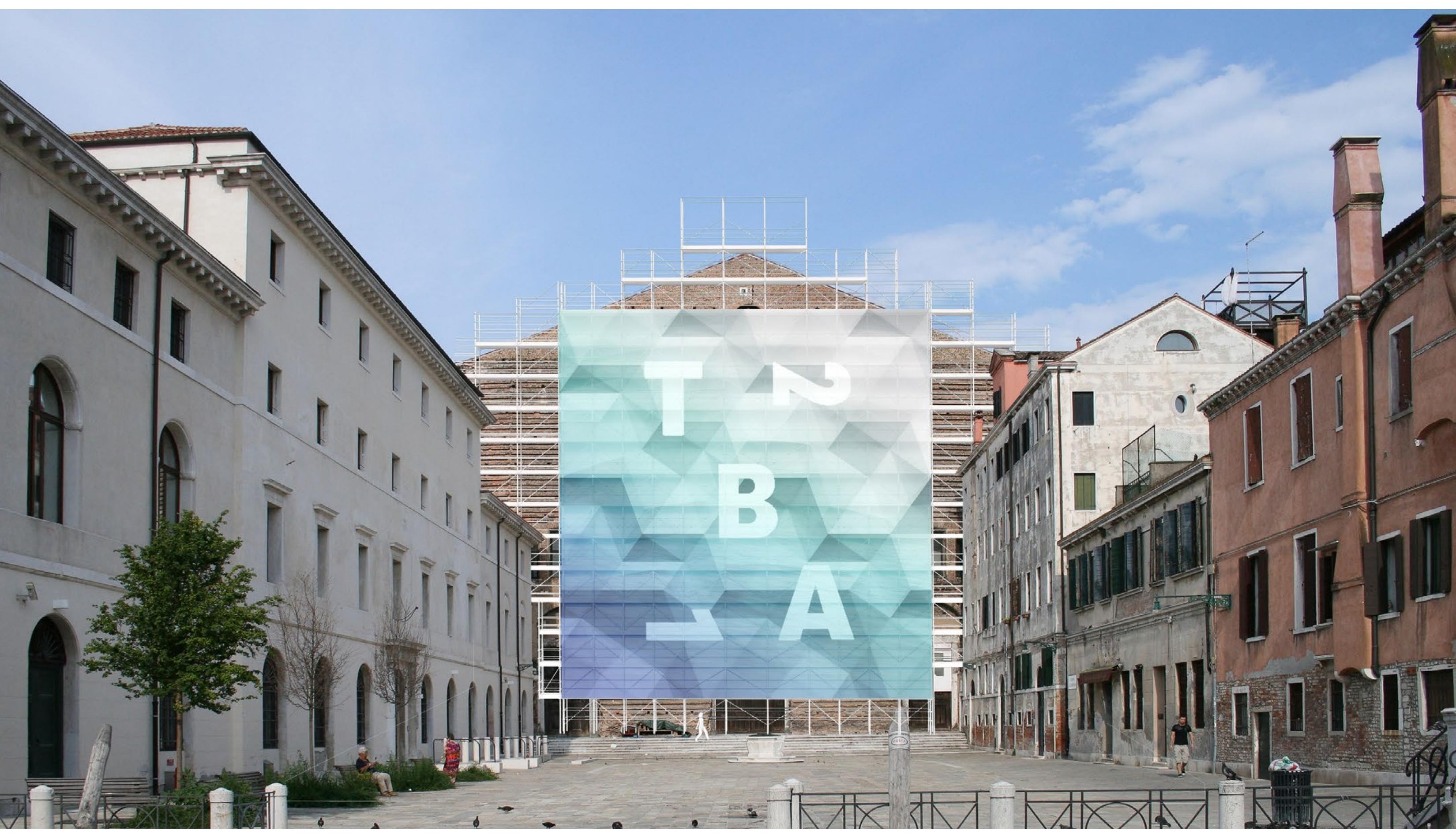
Oceanum Templum was a light, sound, and architecture installation proposed for the Chiesa di San Lorenzo in Venice — commissioned by TBA21 (Thyssen-Bornemisza Art Contemporary) for the 2018 Venice Architecture Biennale. The project extended Asymptote’s ongoing engagement with the deconsecrated 16th-century church, following the 2016 Oceans Pavilion concept design for the same site.
Installation
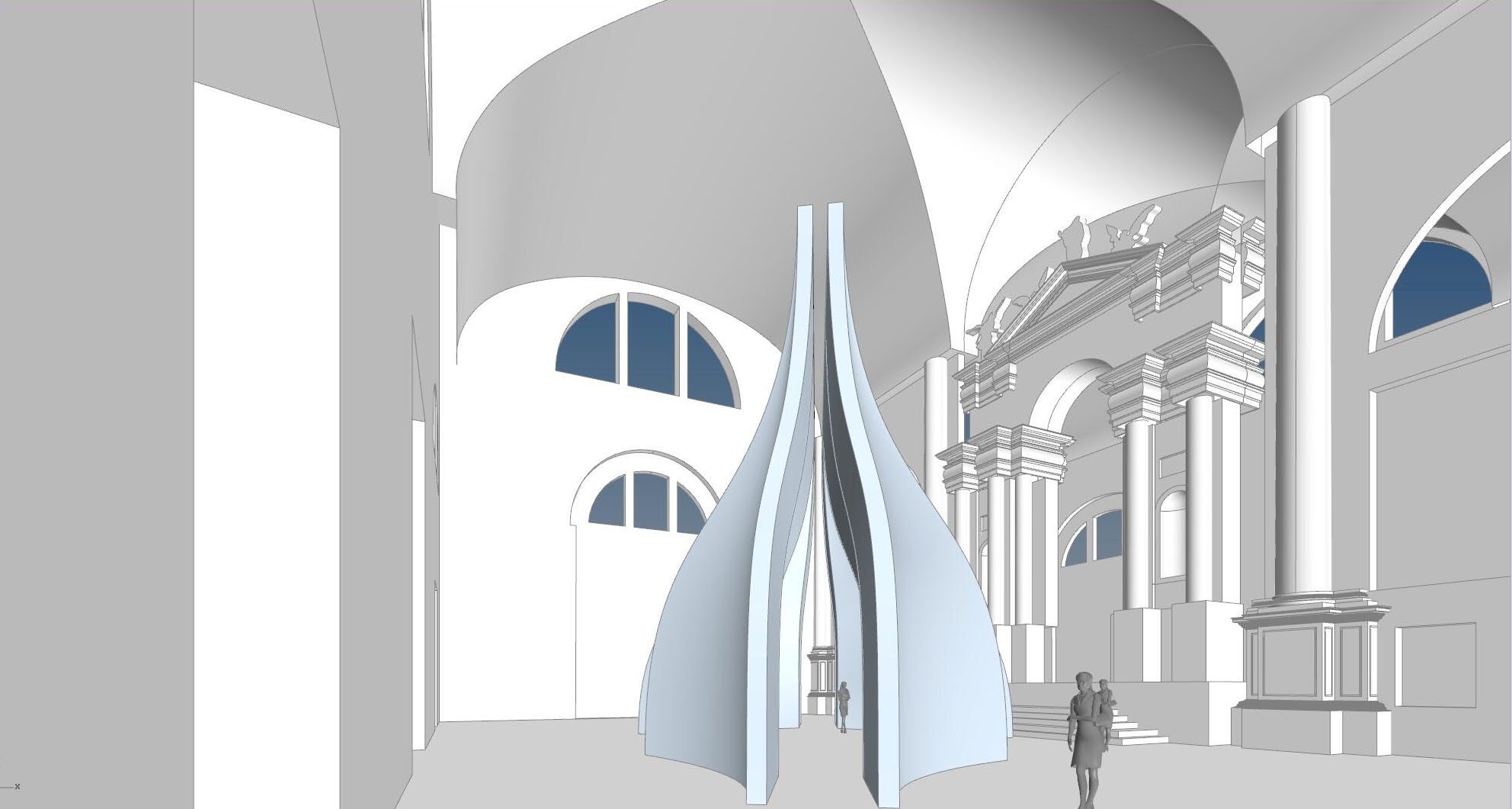
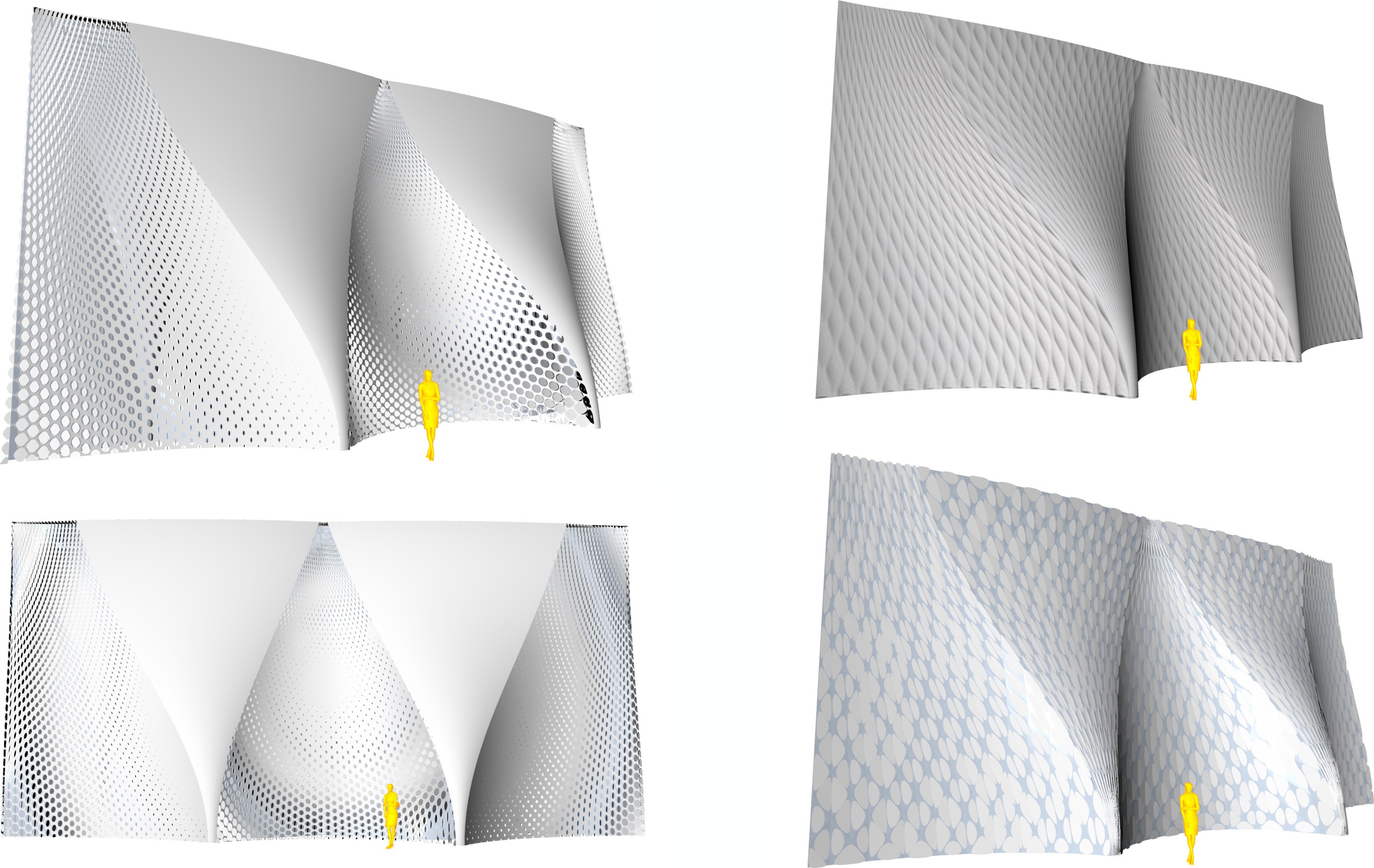
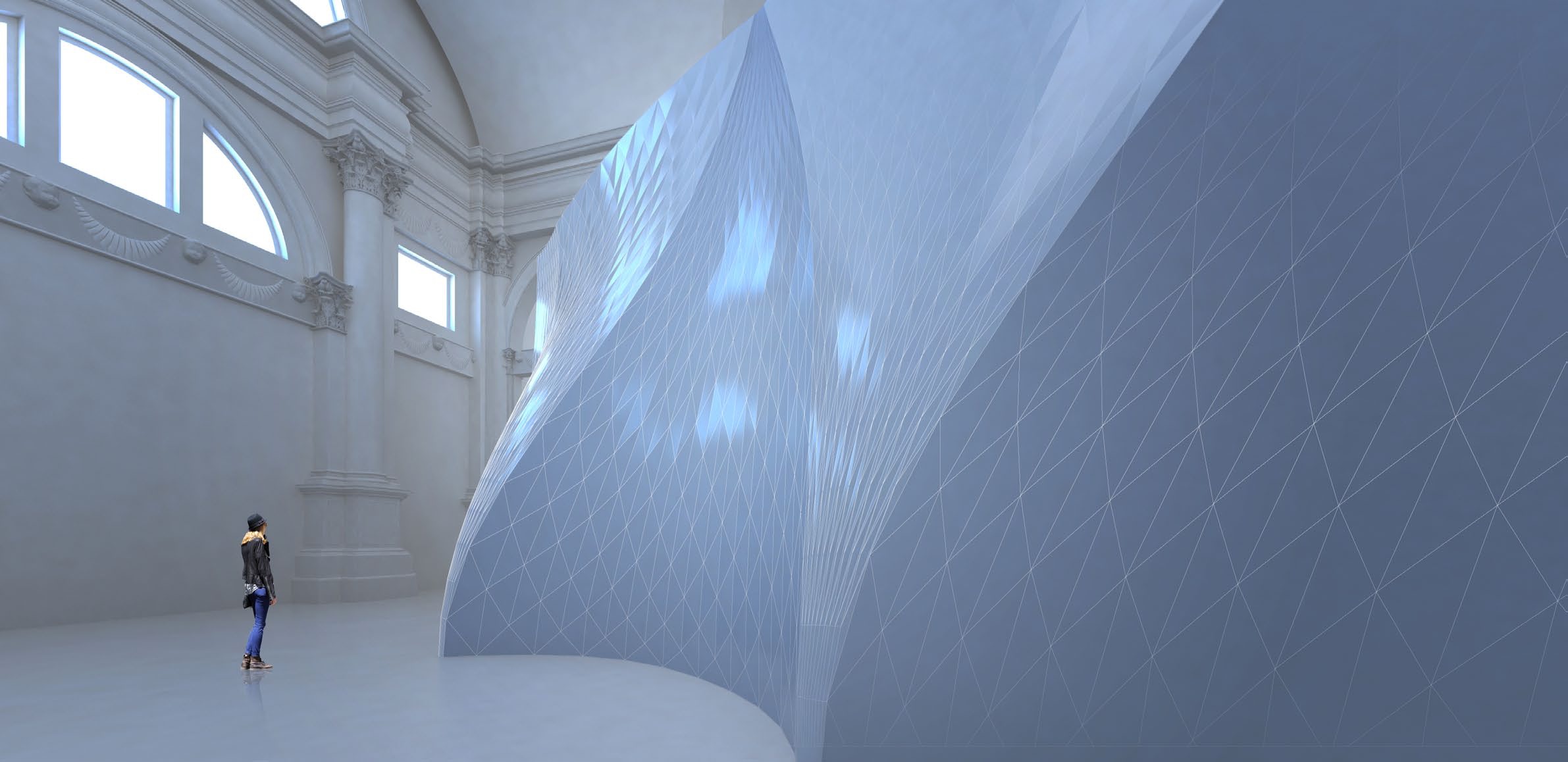
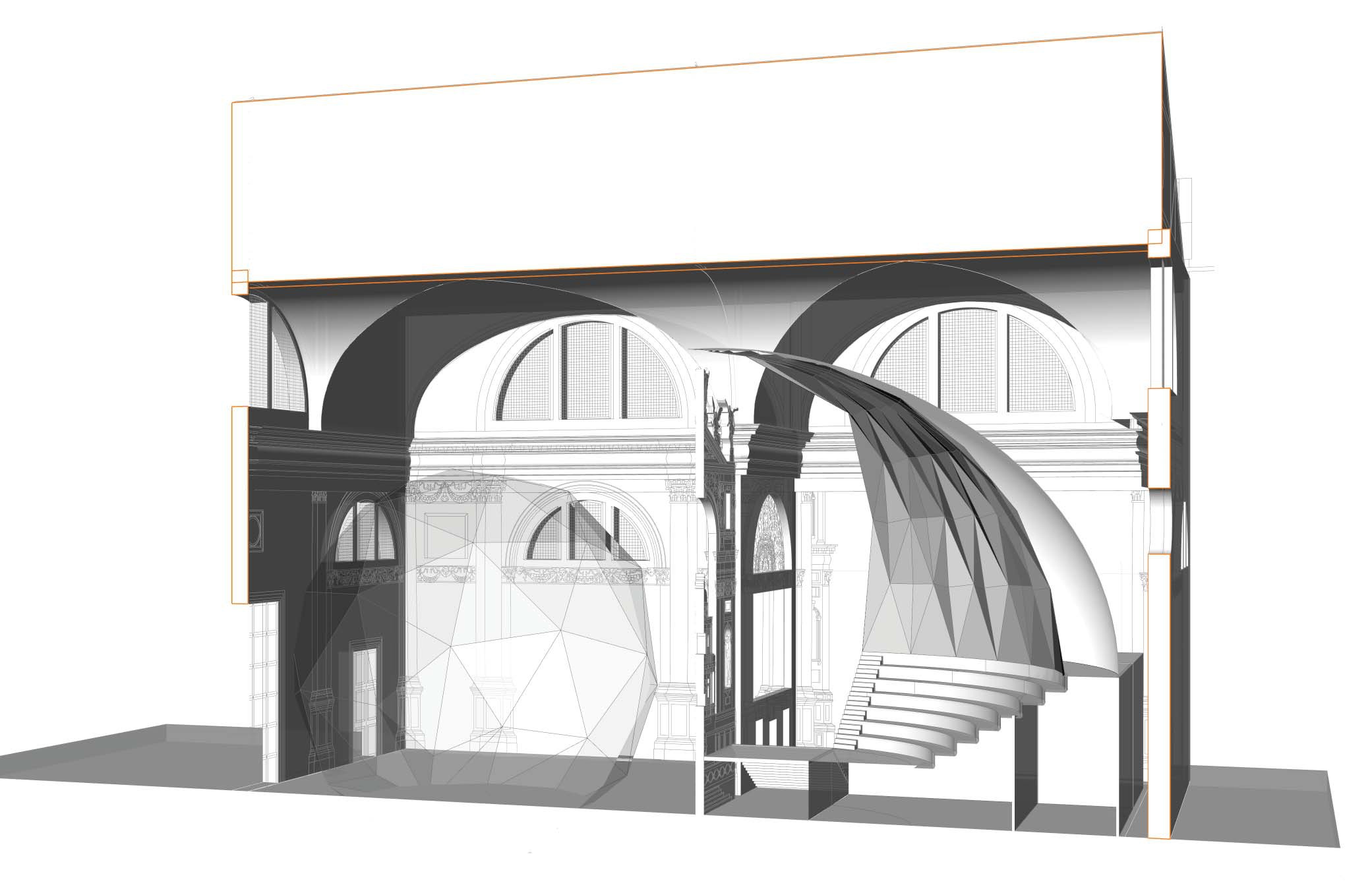
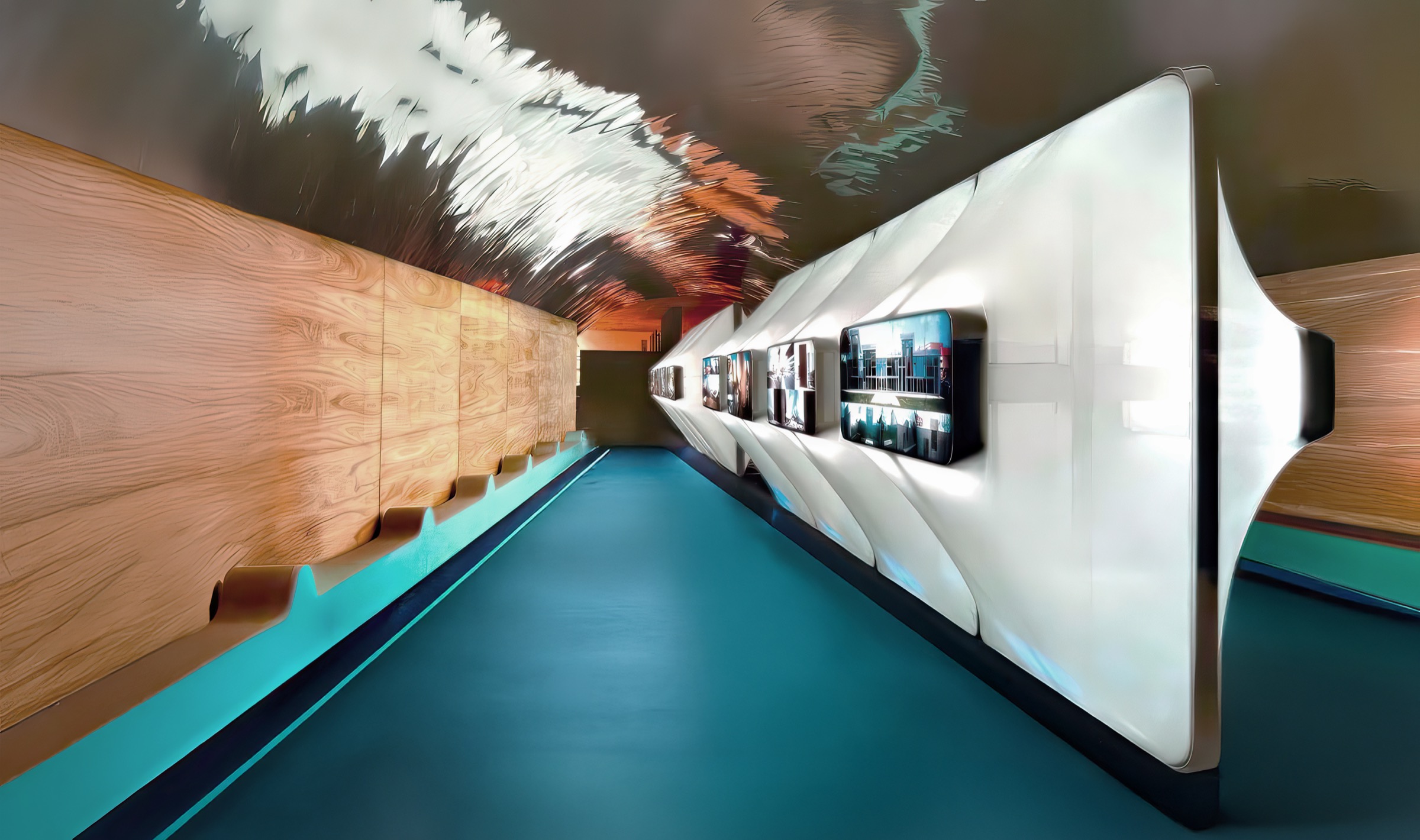
The proposal centered on a large-scale tessellated surface inserted into the nave of the church. The form — derived from computational processes analogous to the carving and erosion patterns of ocean currents on coastlines, coral reefs, and underwater grottos — rises through the full height of the nave volume. Four tessellation patterns were developed for the installation skin, each exploring different geometries of perforation and faceting: circular perforations at varying densities, woven mesh structures, triangulated facets, and diamond tessellations.
Sound
The surfaces of the installation contain embedded micro-microphones capable of registering breathing, footsteps, voice, and ambient sound from visitors moving through and around the structure. These inputs are transmitted through vibration transducers that cause the skin of the installation to resonate, producing reverberating acoustic patterns that emanate outward through the nave and into the full volume of the church. The system operates without digital mediation — an analog sound instrument at architectural scale, where the tessellated geometry determines the acoustic characteristics of the reverberation.
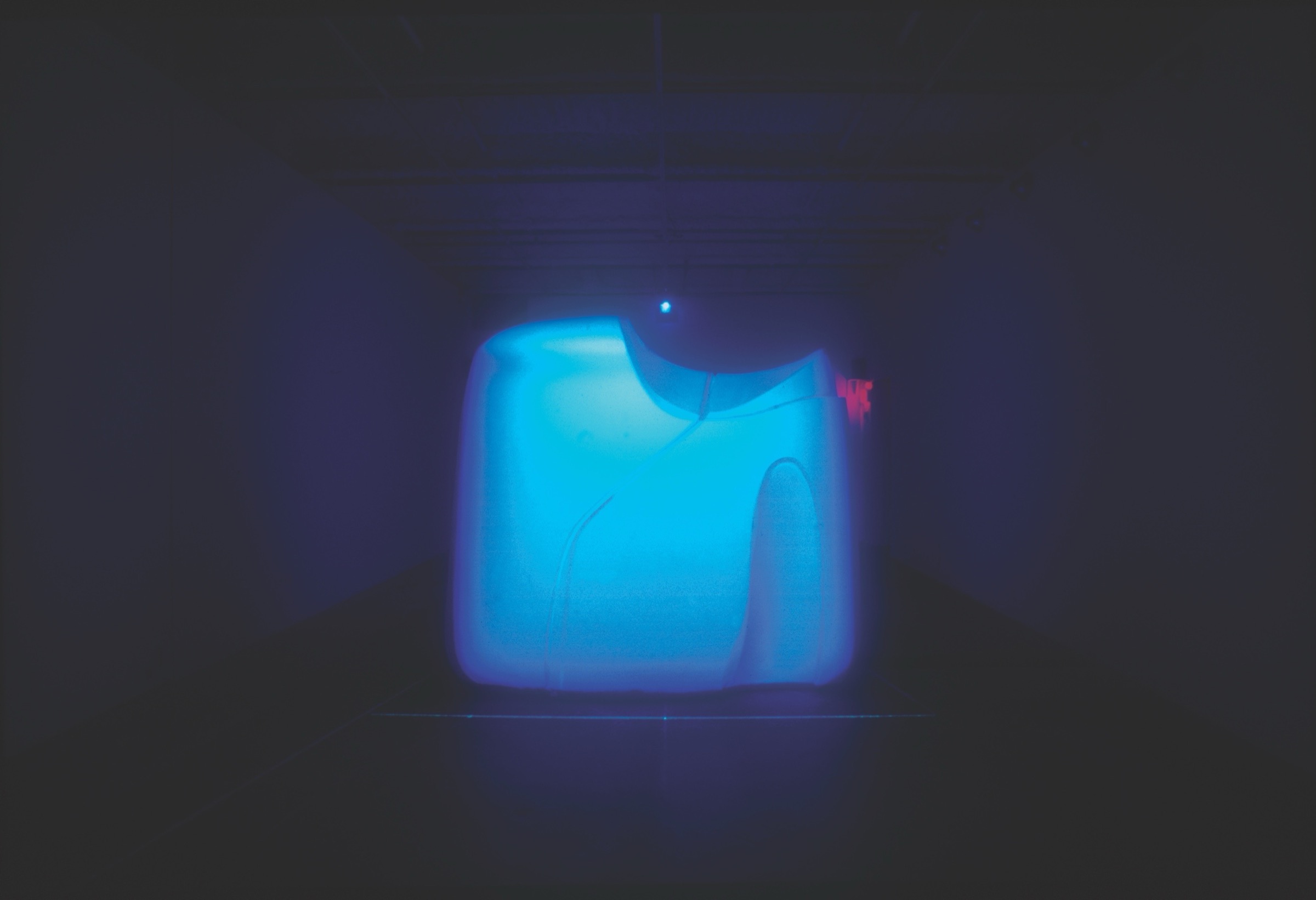
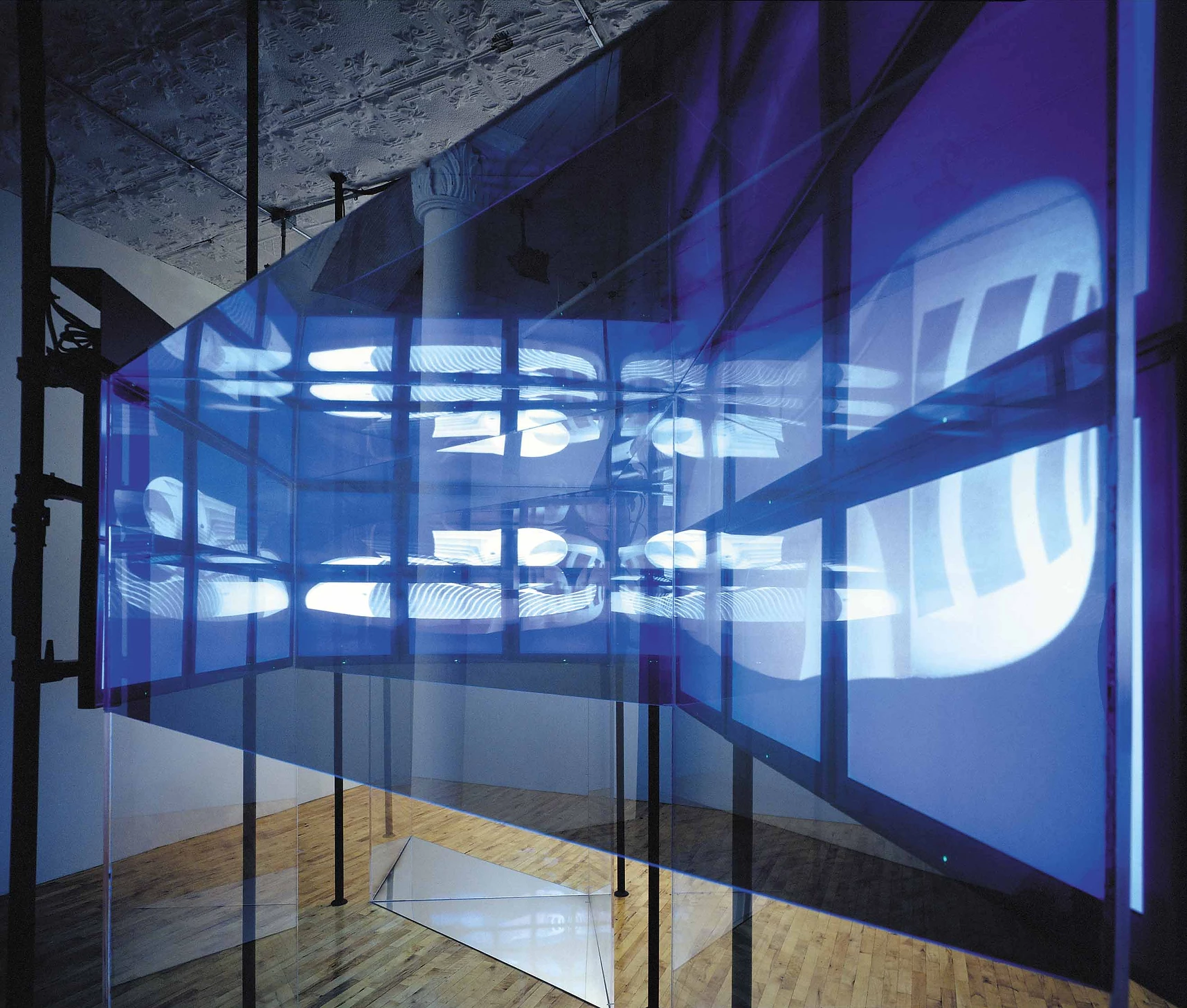
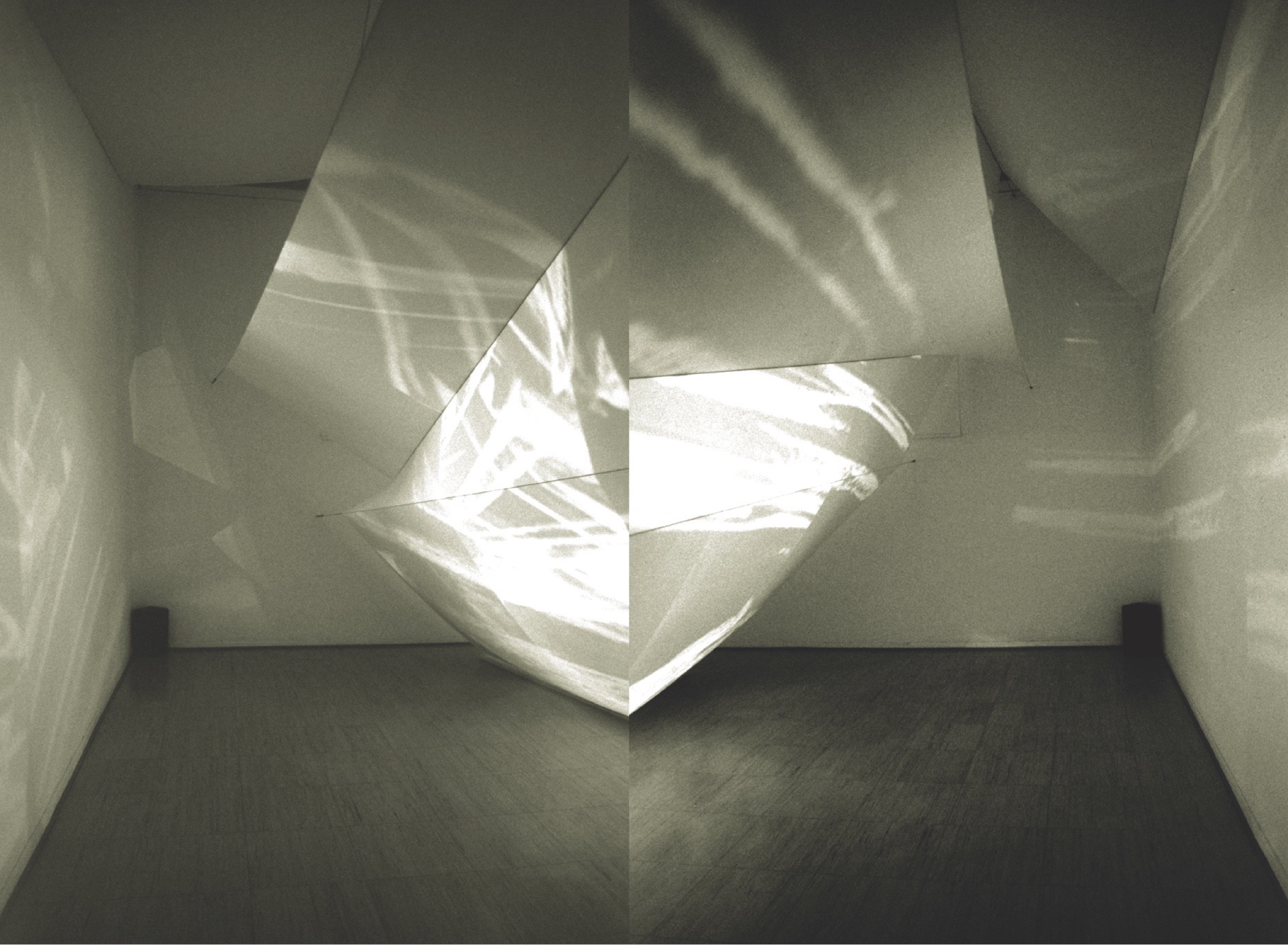
The concept extends the logic of Asymptote’s FluxSpace 1.0 (2000), an interactive installation at CCAC Institute in San Francisco in which touch-sensor-equipped surfaces triggered soundscapes and projected media. Where FluxSpace 1.0 used digital projection and computation to transform visitor interaction into visual and acoustic output, Oceanum Templum translates the same principle into a purely physical system — surface geometry, material vibration, and spatial acoustics replacing screens and processors.
Light
A controlled lighting program works in tandem with the acoustic system. The tessellated skin, translucent in certain configurations, transmits and diffuses light to produce shifting conditions within the installation volume — an environment calibrated to the oceanic research and environmental program of TBA21-Academy.