Cultural · 2016 · Commission
TBA21 Oceans Pavilion
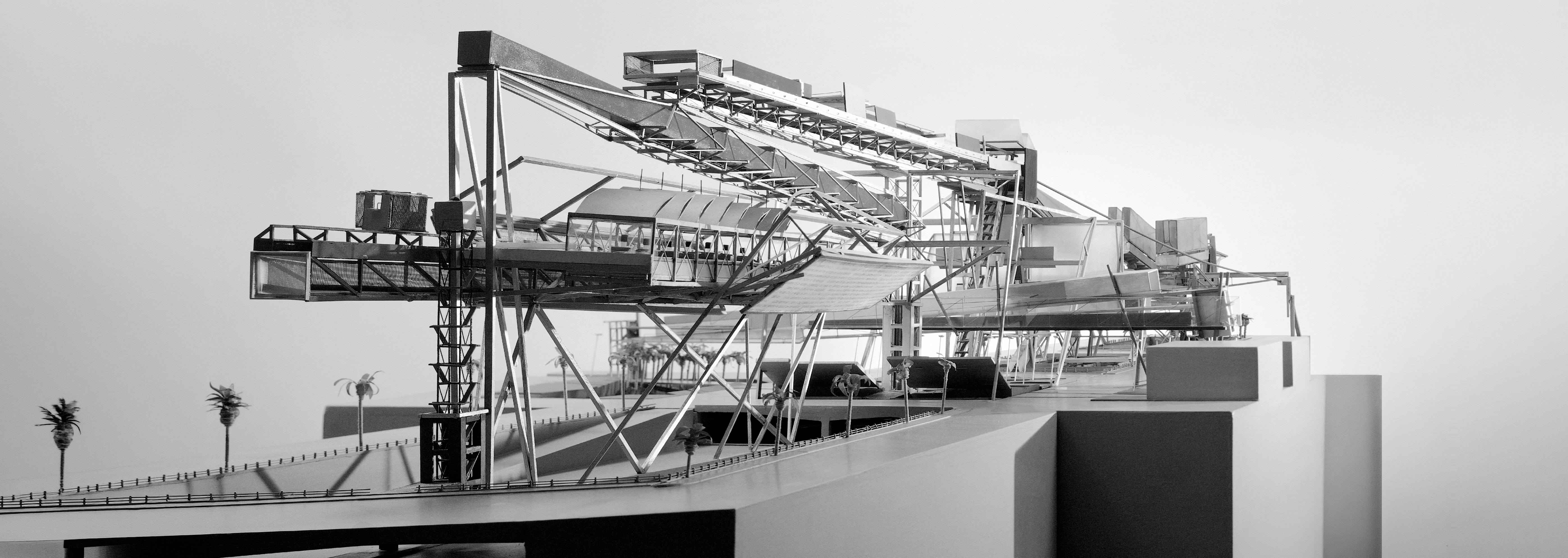
A concept design for the Thyssen-Bornemisza Art Contemporary (TBA21) Oceans Pavilion within the Chiesa di San Lorenzo in Venice, an architectural intervention that inserts a contemporary exhibition, research, and augmented-reality environment into a deconsecrated 16th-century church with the largest ceiling span in the city.
About the project
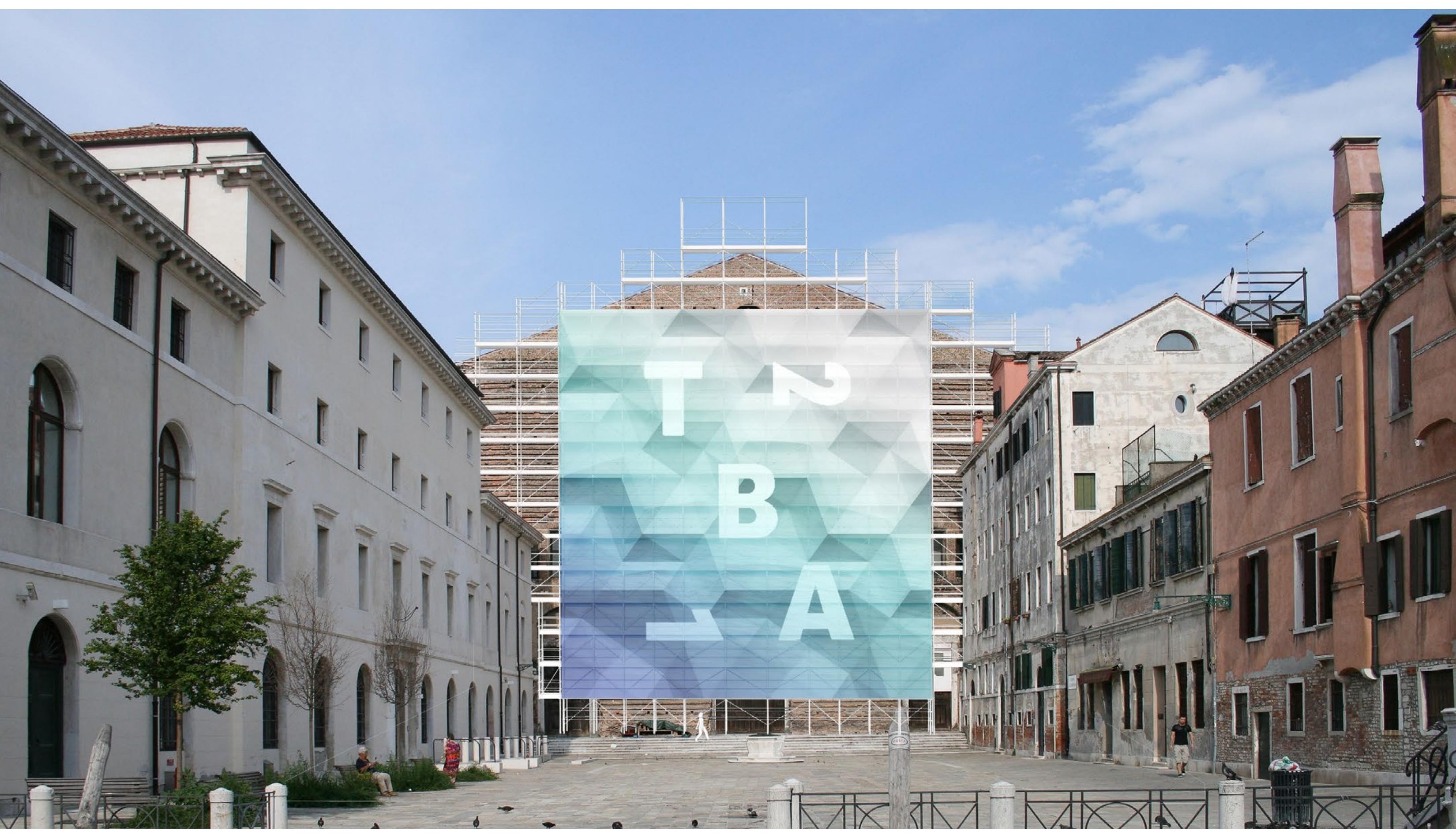
The Chiesa di San Lorenzo is a deconsecrated 16th-century church in Venice’s Castello district, rebuilt between 1592 and 1602 to a design attributed to Simone Sorella. Its interior is divided by Girolamo Campagna’s double-sided altar into a public nave and a Benedictine monastic space, and its vaulted ceiling constitutes the largest unsupported span in the city. Closed to the public since 1865 and fabled as the burial site of Marco Polo, the church was secured under a long-term lease by Francesca Thyssen-Bornemisza’s TBA21 foundation in 2016 to serve as a permanent home for the foundation’s ocean-focused art and research programming.
Architectural Intervention
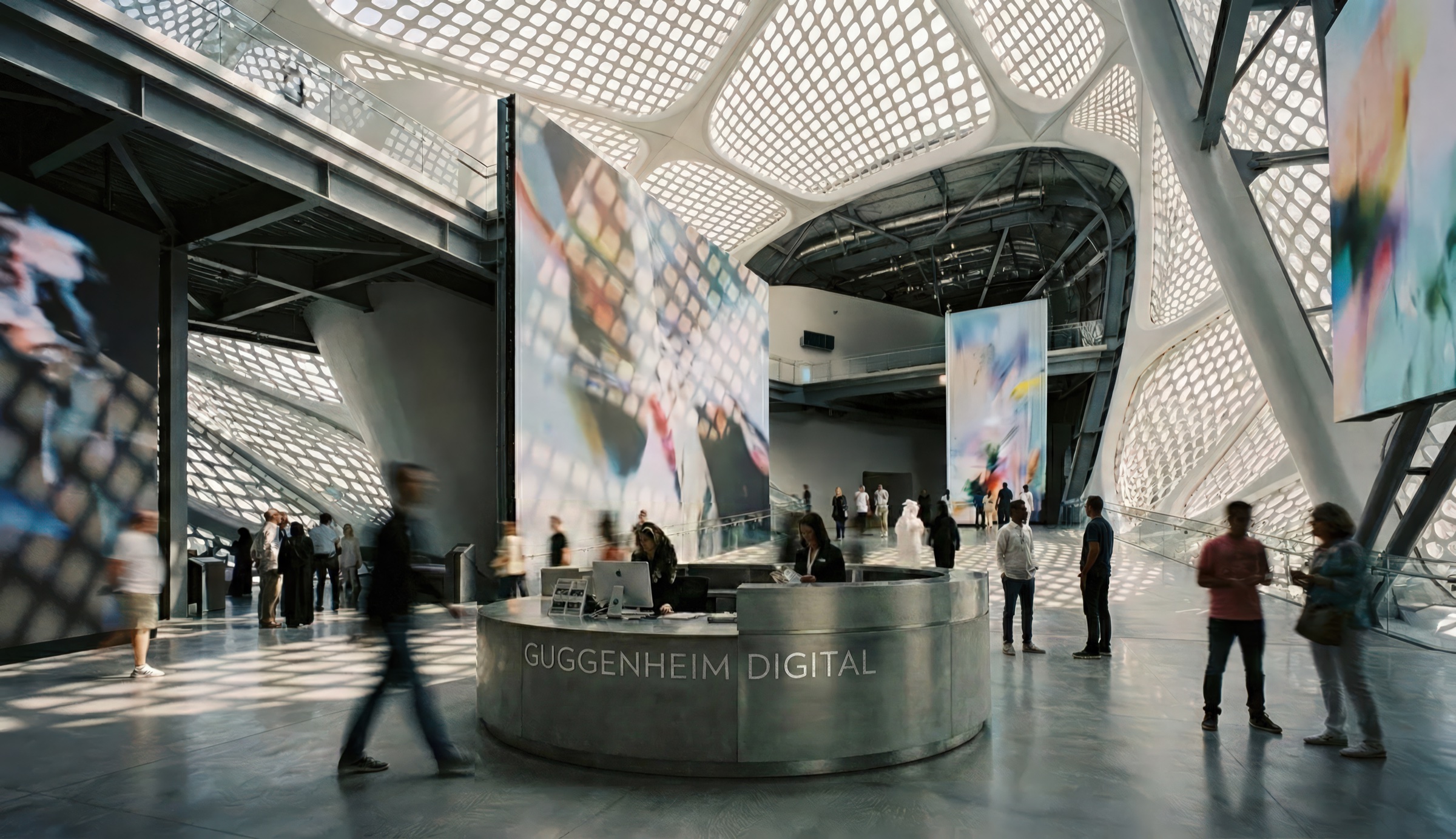
Asymptote’s concept design proposed an interior architecture that operates within the full volume of the church without permanently altering its historic fabric. A steel truss framework, suspended from the existing roof structure, supports translucent screens and projection surfaces that transform the nave into a controlled environmental volume, capable of accommodating immersive projected media, live performance, and large-scale installation. The system is conceived as a spatial instrument: reconfigurable for different exhibition scenarios, from full-immersion ocean media to white-cube display to volumetric color installations.
Program
The design distributes program across the church’s two halves, separated by Campagna’s altar. The public nave houses the main installation space and a forum for lectures and events. The former monastic space receives a faceted crystalline volume containing a research lounge, gallery, and library, a space dedicated to TBA21-Academy’s transdisciplinary work connecting contemporary art with ocean science and environmental research.
Augmented Reality
The concept integrated Microsoft HoloLens technology to layer the physical architecture with real-time three-dimensional content. Visitors wearing the headsets would be able to explore a detailed digital model of the church, navigate augmented exhibitions, and experience animated content produced by TBA21-Academy’s ocean research program, all while physically immersed in the architectural intervention. The proposal anticipated a hybrid spatial experience where the Byzantine-era archaeological layers beneath the church, the 16th-century fabric, and the contemporary insertion would coexist as simultaneously accessible realities.