Central University Library of Montenegro
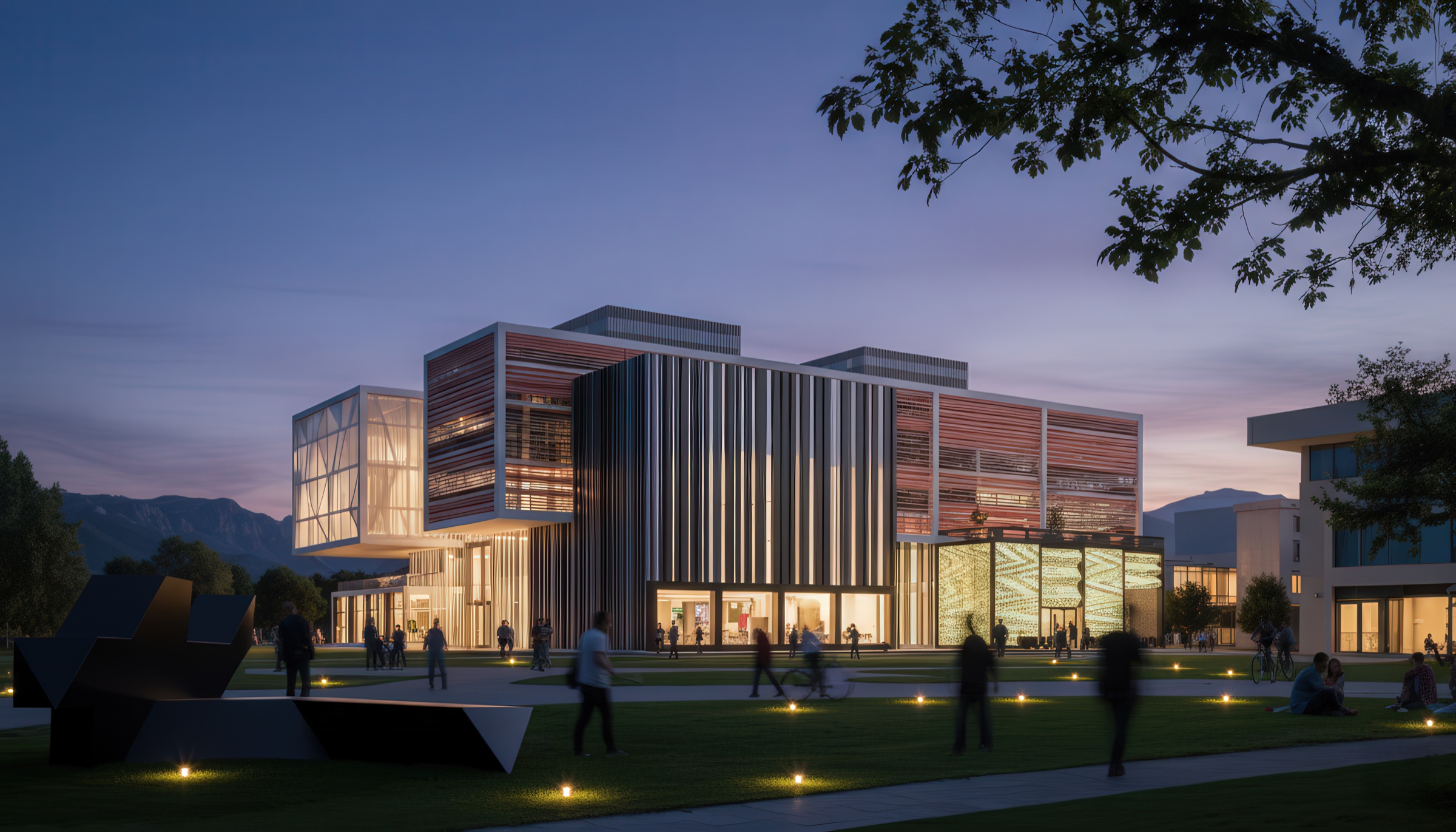
An international competition entry for the new Central University Library of Montenegro in Podgorica — a civic library for the University of Montenegro conceived as an urban catalyst and social condenser that stitches the city to the campus through a transparent public ground floor, a central atrium agora, and a long reading-room volume elevated above the plaza.
Podgorica today is a city shaped by layers of architectural ambition — from historic and traditional buildings to ambitious modernist experiments, a new generation of contemporary architects and their architecture is paving a new future. This layered reality reveals the potential for a renewed architectural approach in Podgorica: one that points toward an architecture able to play a vital role in shaping a more resilient, civic, and future-oriented cultural landscape.
The design for the new Central University Library of Montenegro, submitted to the 2026 international competition, is conceived as a robust architecture that honours the region’s rich architectural legacy while embracing updated ambitions — an architecture that embraces the vectors of environmental stewardship and sustainability, a pursuit of openness, and a commitment to technological innovation.
Site & Urban Strategy
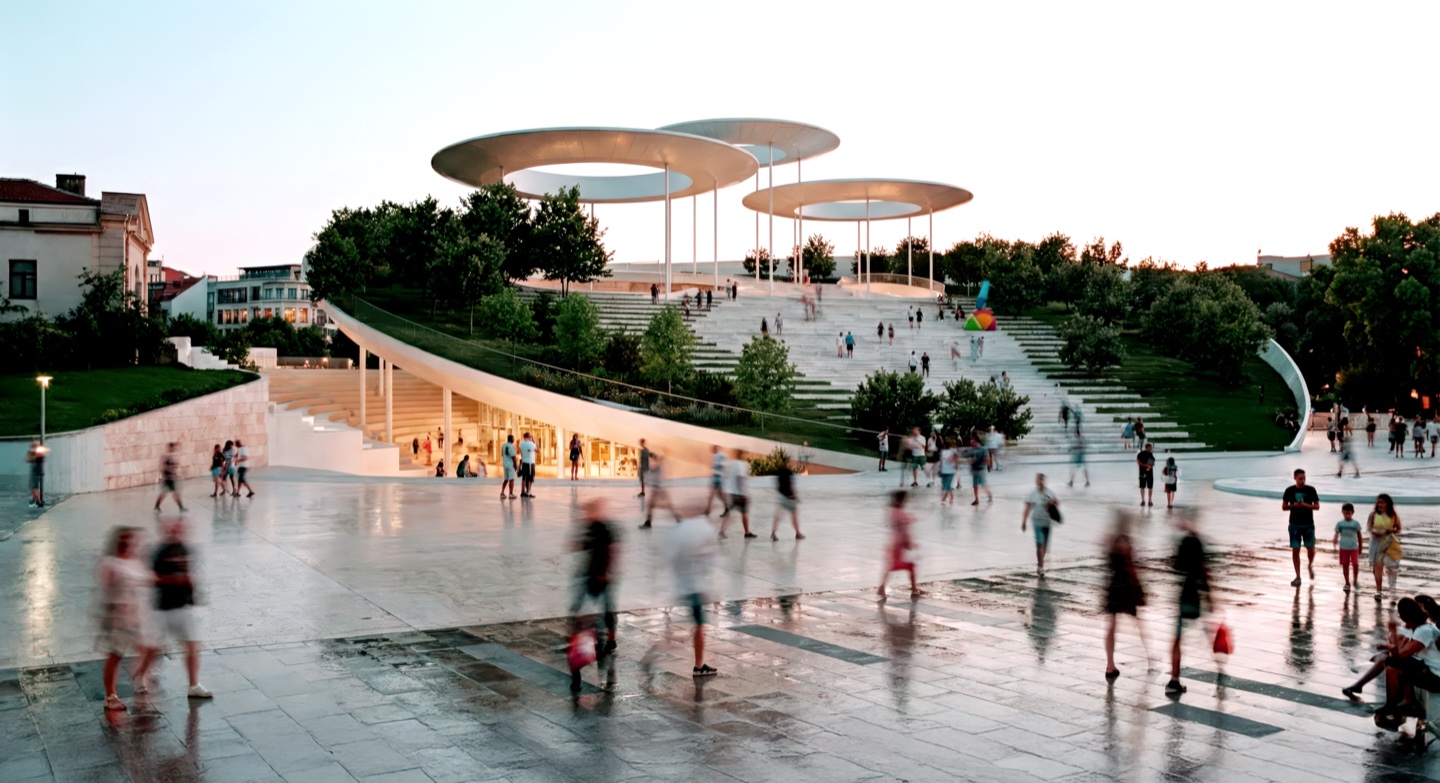
The library sits at a hinge point between the University of Montenegro campus and the city of Podgorica, with two distinct public addresses: a city-facing north facade and a campus-facing south facade. The building is organised as a horizontal reading-room bar elevated above a transparent glazed public plinth, allowing movement between city and campus to pass directly through the ground floor of the library rather than around it.
Urban Catalyst & Social Condenser
The library’s programmatic functions are integrated to produce social and cultural interactions, positioning the library as a true civic landmark that draws people to participate in the architecture, not simply use it. A large open reading room anchors contemplative study, research, and discovery. A dedicated gallery serves as a venue for cultural engagement and exhibition, connecting the library to the wider urban life of Podgorica. Cafés and a bookstore — including a garden café on the second floor overlooking the atrium — provide social gathering points, and a multipurpose theatre offers a flexible venue for lectures, performances, and community events.
Atrium & Circulation
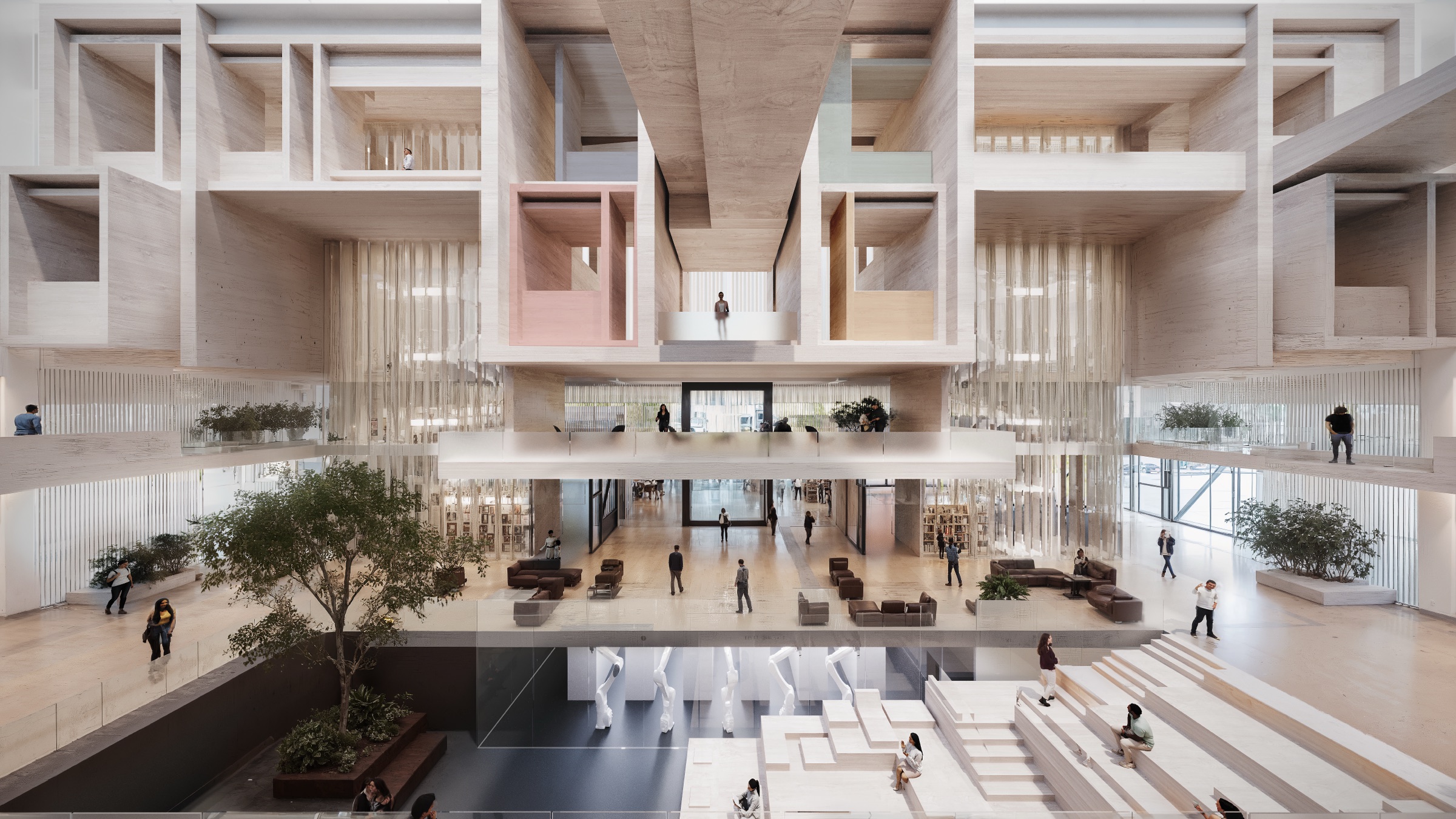
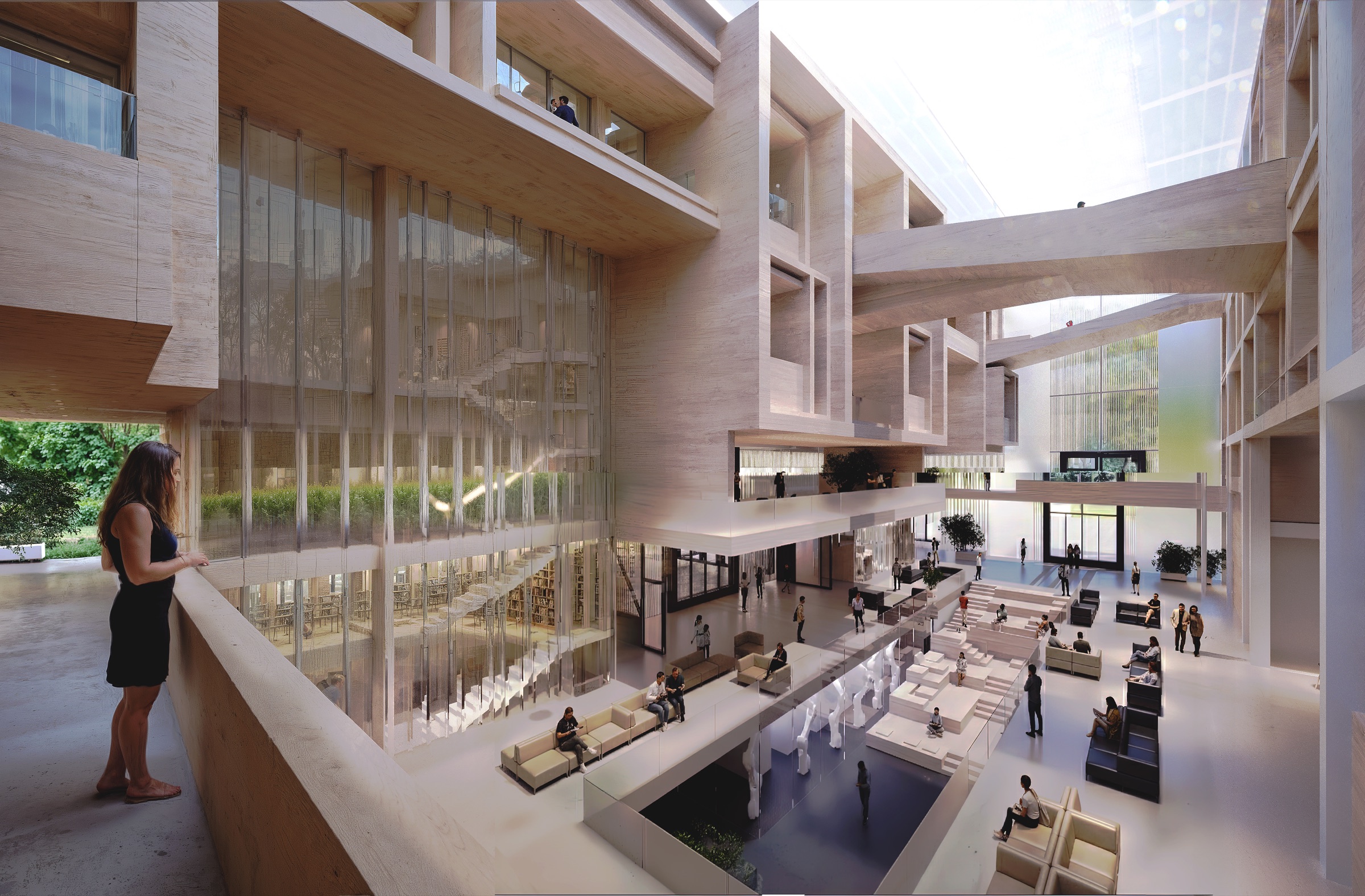
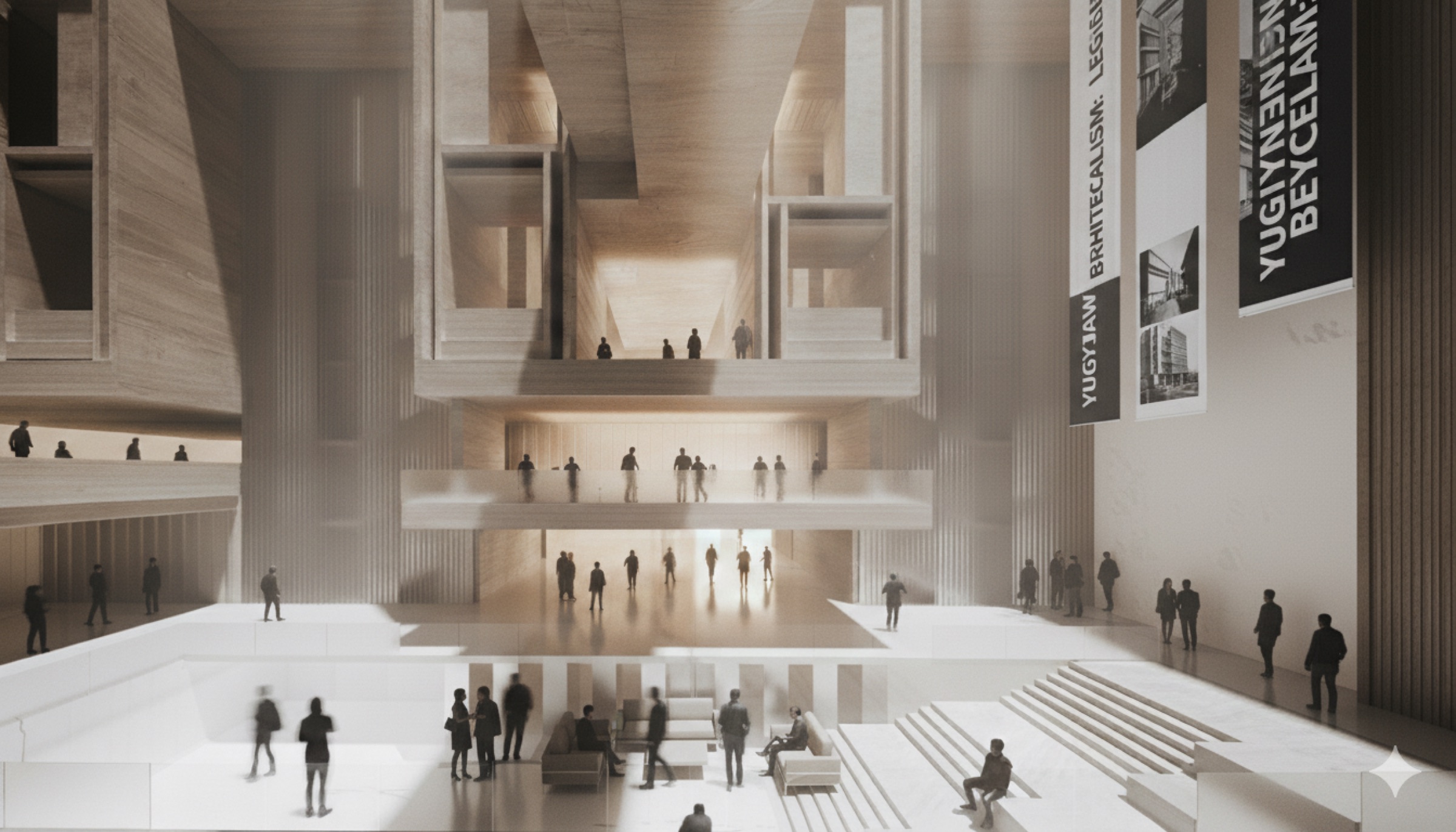
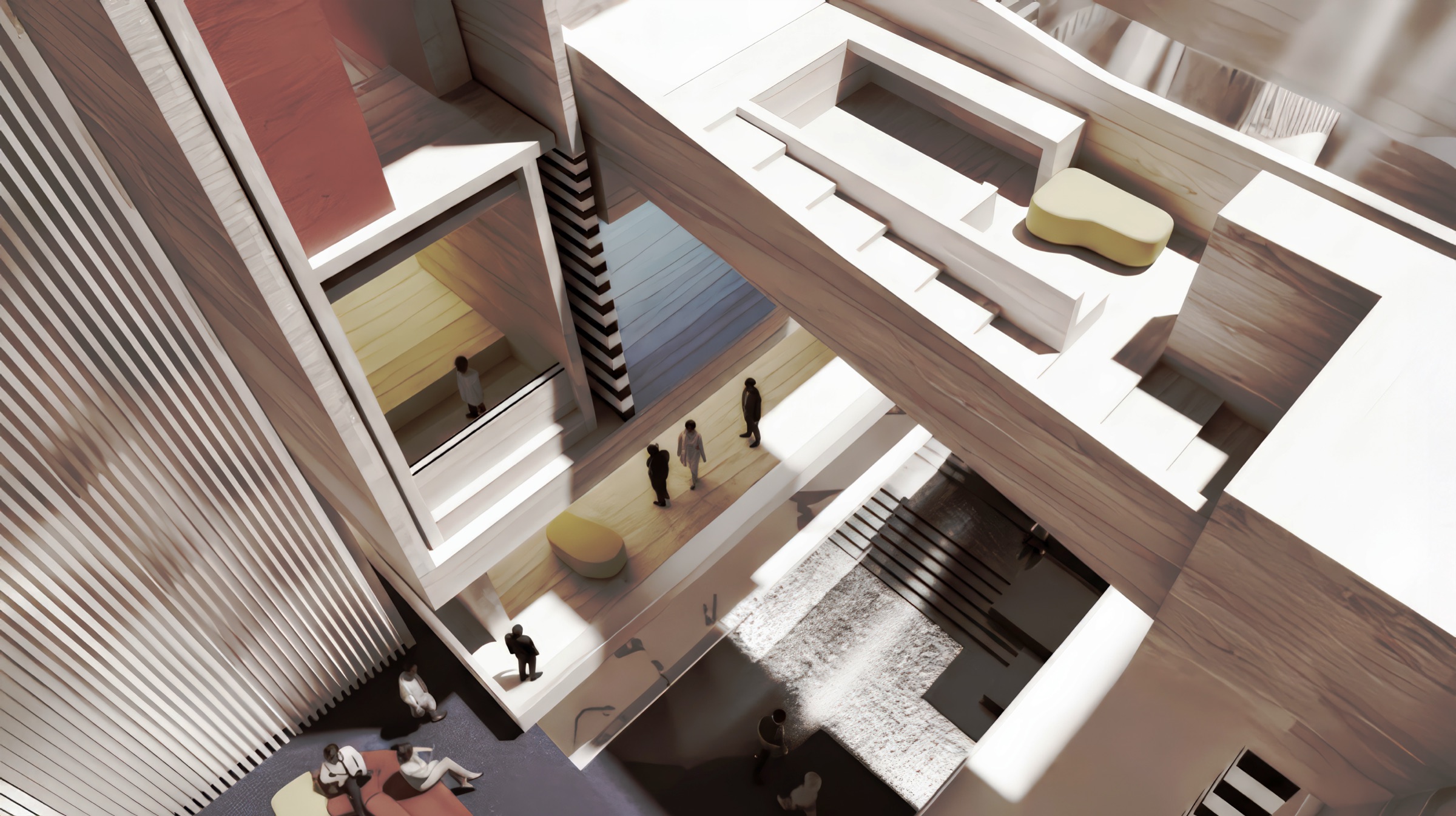
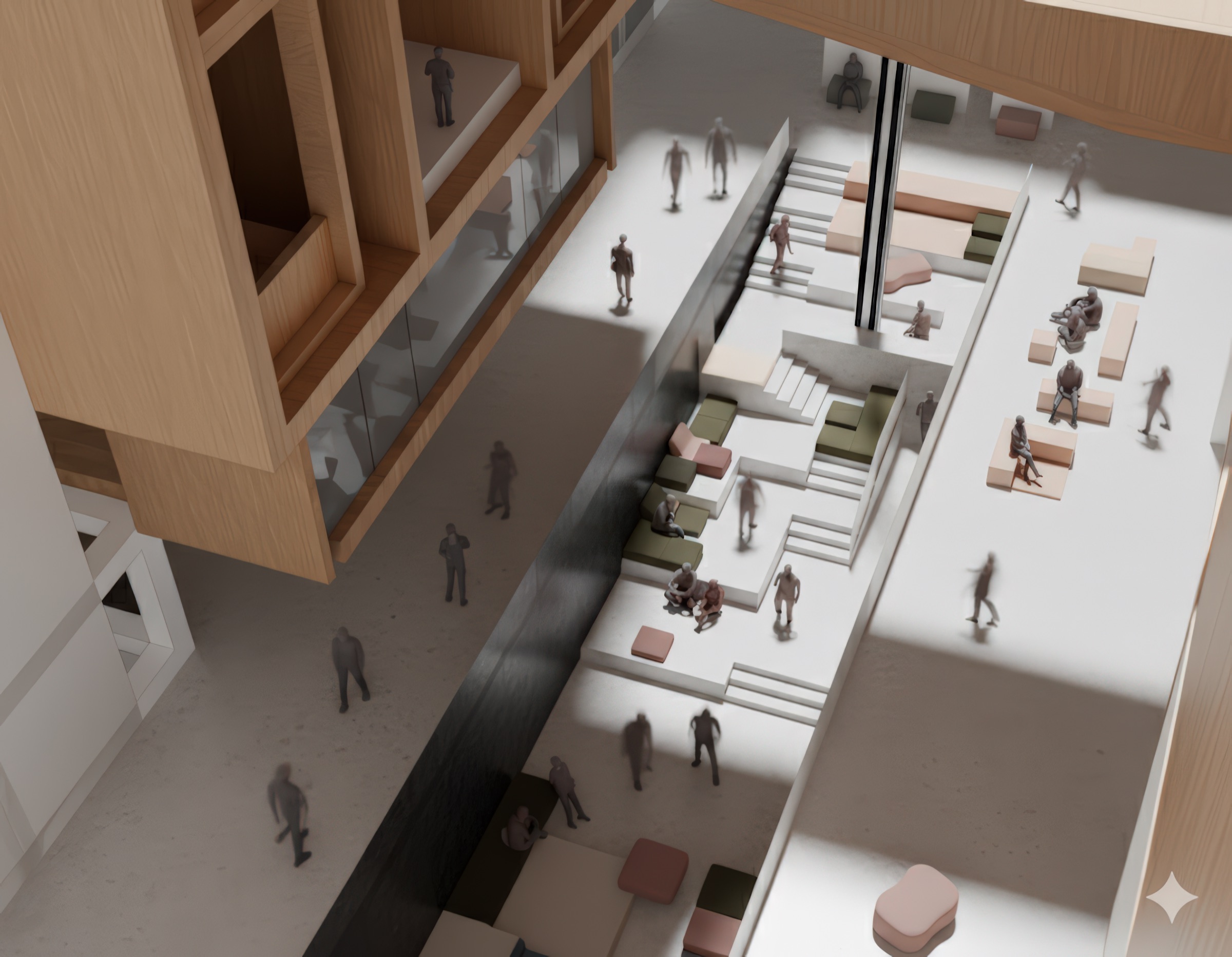
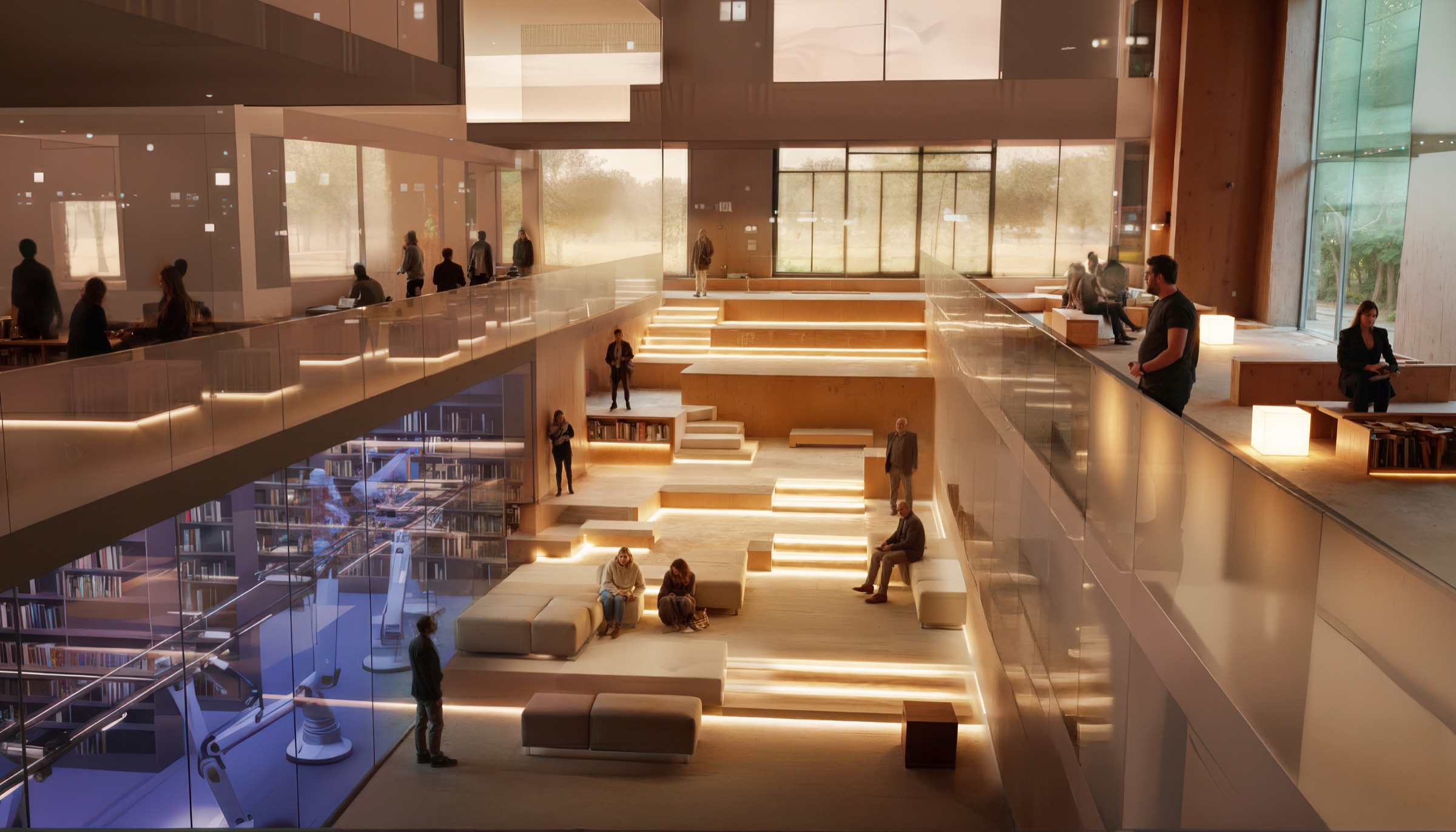
At the heart of the building, a central atrium rises through all public levels and performs as the social condenser of the library. At level minus one, an “atrium agora” of stepped timber seating faces the glazed wall of an automated book depository, turning the collection itself into a civic amphitheatre. Above, a sculptural pleated staircase connects the ground-floor atrium to the main reading room and upper mezzanines, while the building’s circulation is organised around city and campus entrances that meet at the atrium and distribute visitors to the library, auditorium, gallery, and cafés.
Reading Room
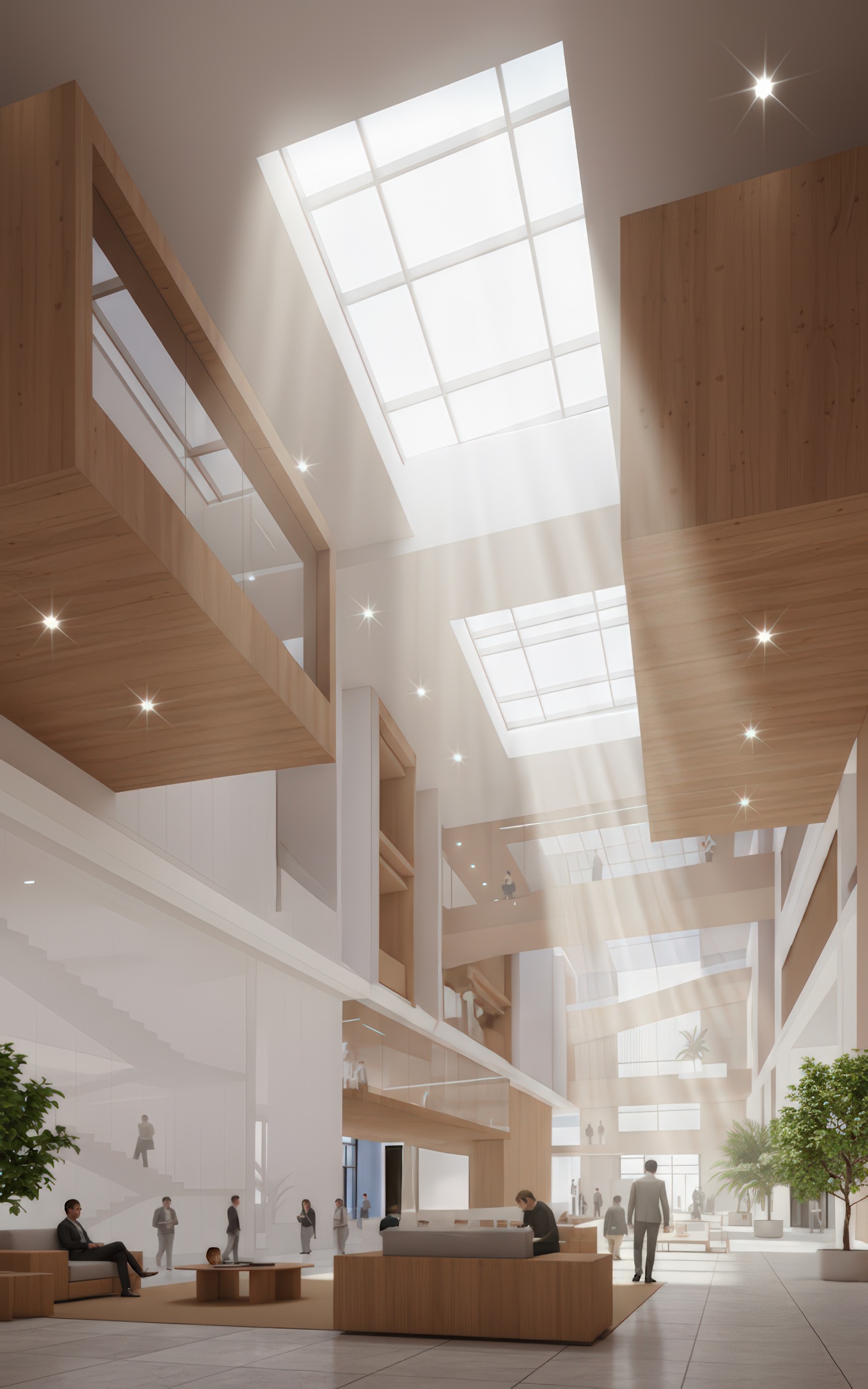
The main reading room is conceived as a long calm volume lined with faceted timber surfaces and punctuated by round skylights that cast pools of daylight across the study tables. The room opens on one side to a green courtyard and on the other to the atrium, allowing readers to register the wider life of the building without interrupting the quiet of study. A mezzanine level above holds additional reading space alongside music archives, legacies, and special collections.
Facade & Environment
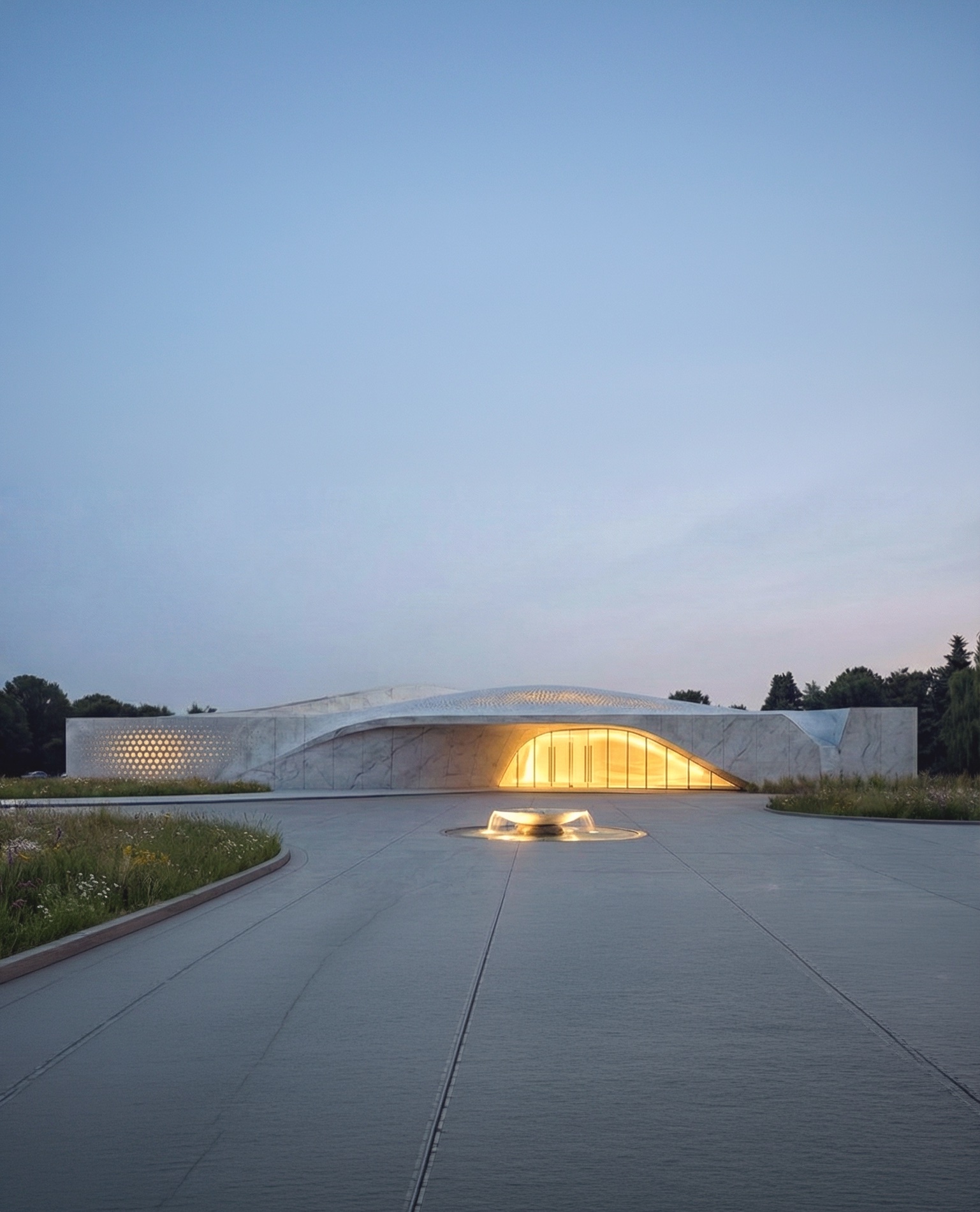
The upper reading-room volume is wrapped in a perforated facade of faceted white lattice panels on the city side and rhythmic bands of timber and red louvres on the campus side — a dual address that reads differently from each approach while performing a common environmental role. The facade filters direct sun, reduces cooling loads, and allows daylight deep into the reading floors, while at night the perforated envelope transforms the building into a luminous lantern visible from the surrounding plazas and the city beyond.