Carob Warehouse Museum of Contemporary Art
The conversion of a listed 1961 carob warehouse on the Limassol waterfront into a museum of contemporary art -- the retained vaults carrying arrival, new wave-form roofs housing the galleries.
The project is the conversion of a carob warehouse on the Limassol waterfront into a museum of contemporary art. The warehouse was built in 1961 to a design by Fivos Polidoridis with the engineer Andreas Papadopoulos, listed as a cultural monument in 2012, and is now managed by the PSI Foundation, which commissioned the museum. Warehouses tied to the island’s carob trade once lined this shoreline; most were lost as the coastline was redeveloped, and this one survives. The project gives the listed building a new public use as a place for visual art, performance, education, and community gathering, anchoring a broader effort to reclaim the waterfront as civic space.
Architecture
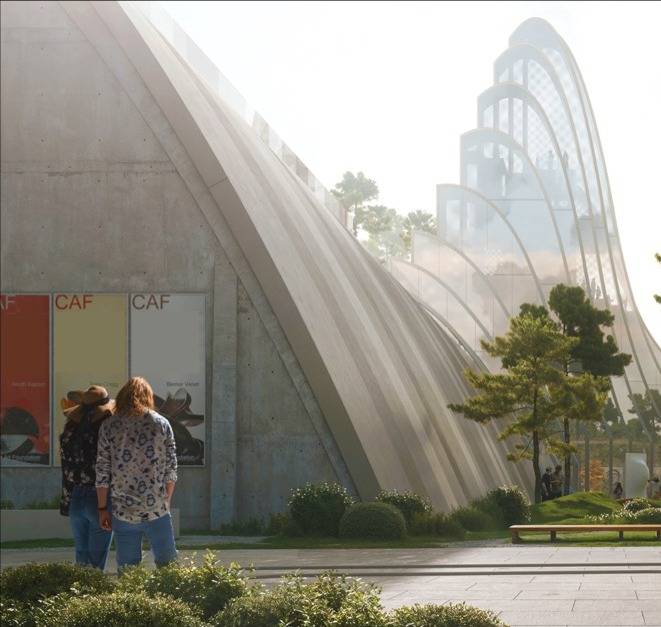
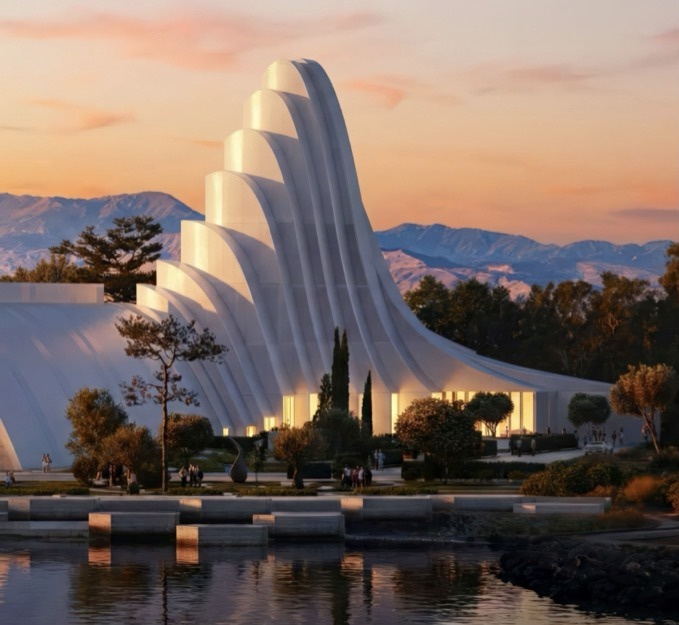
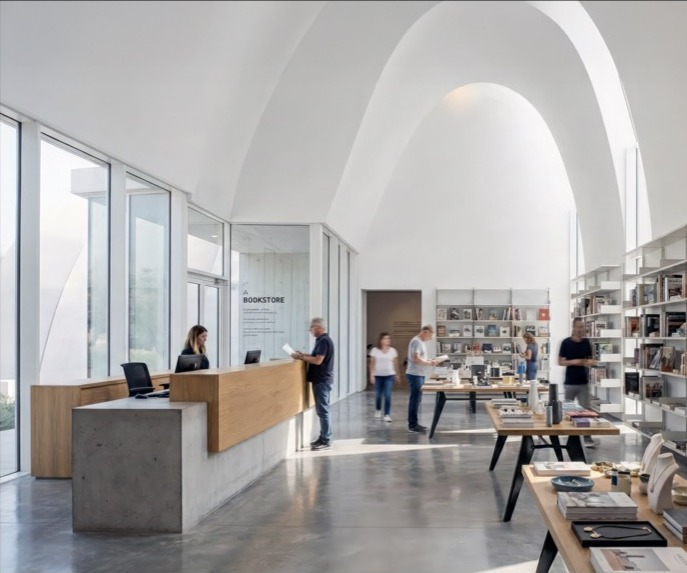
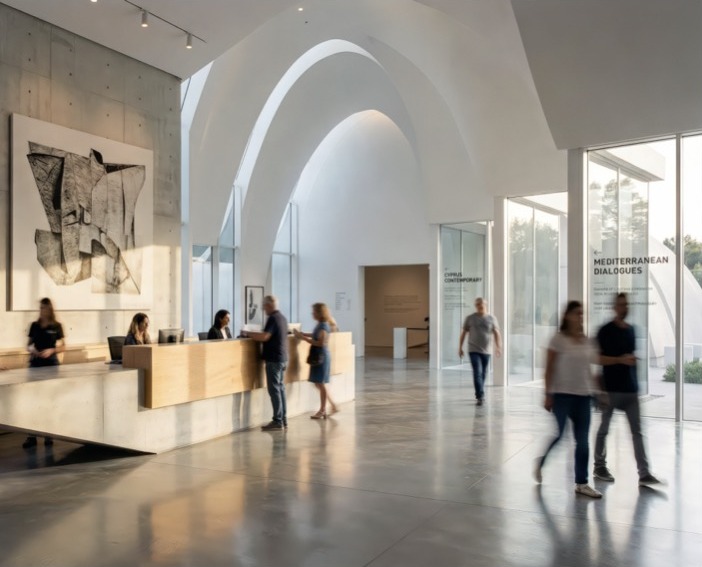
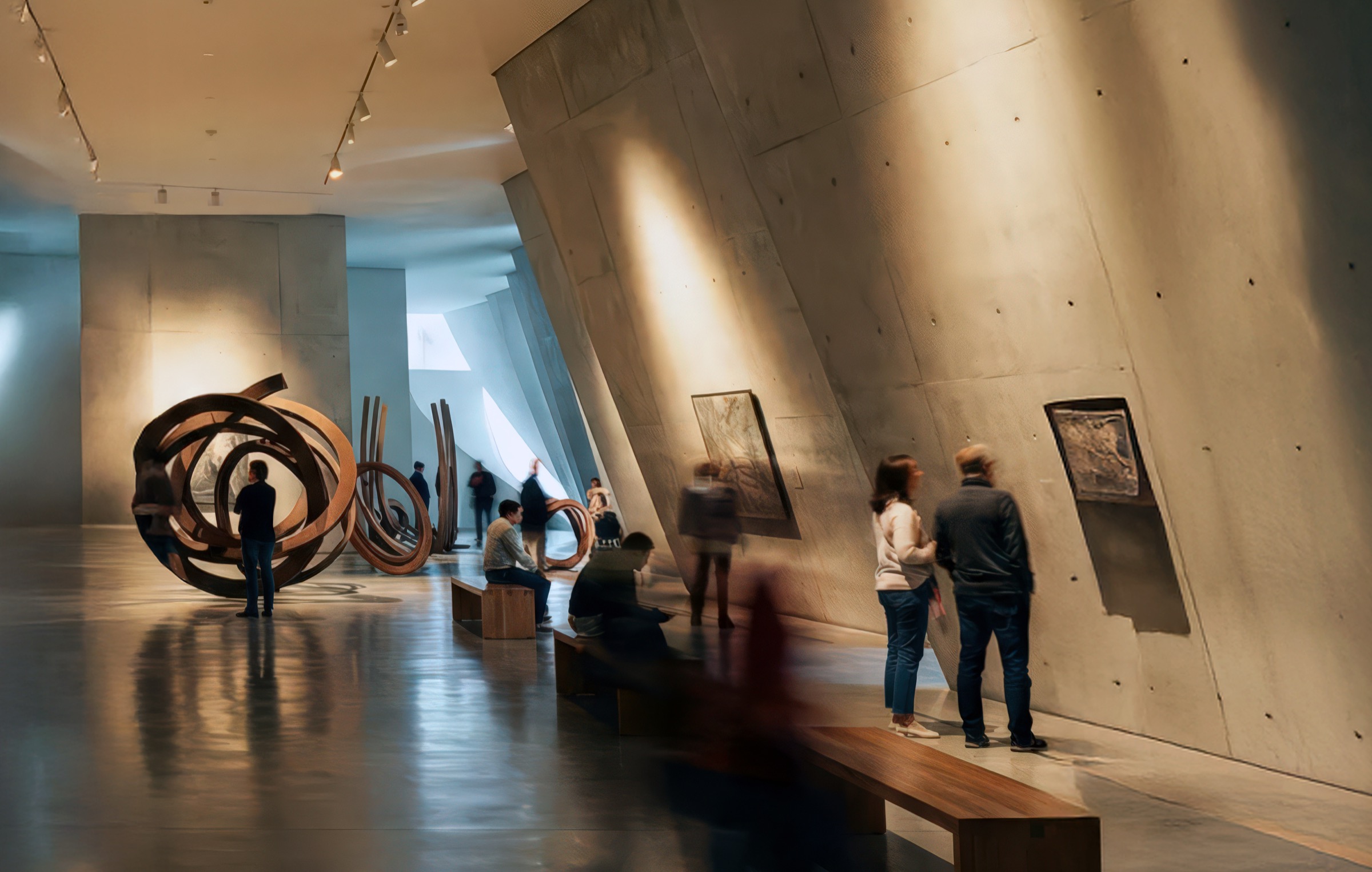
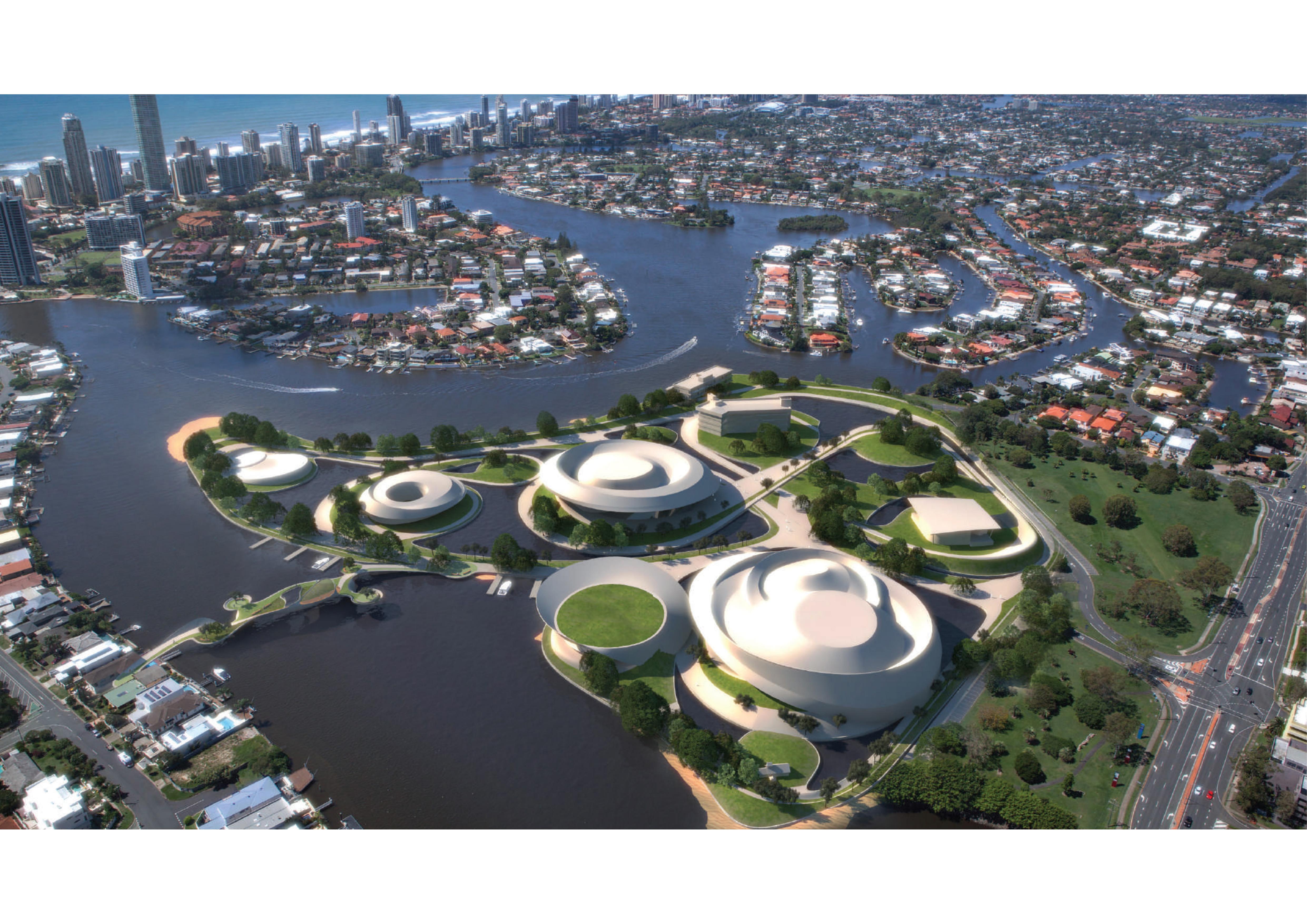
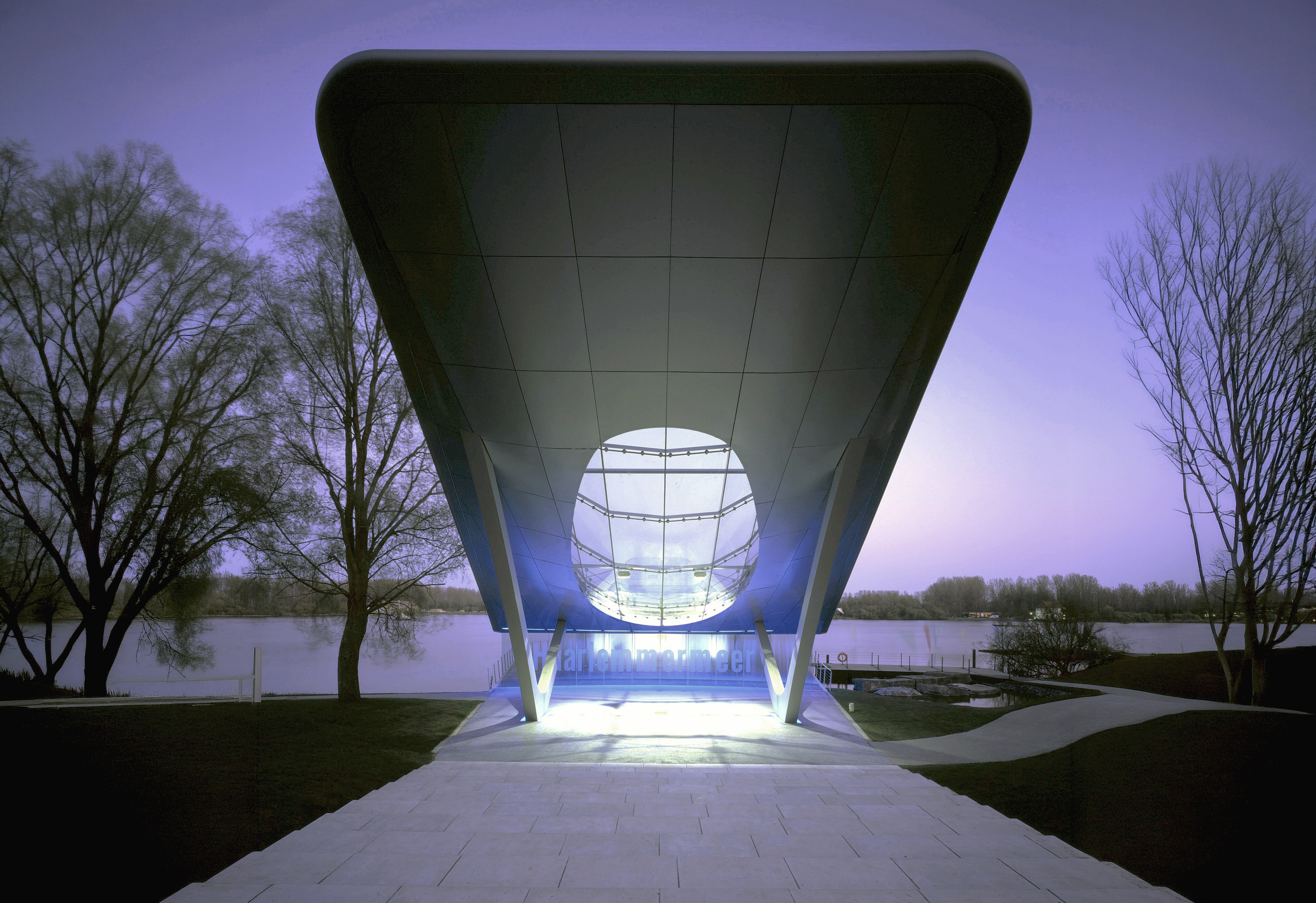
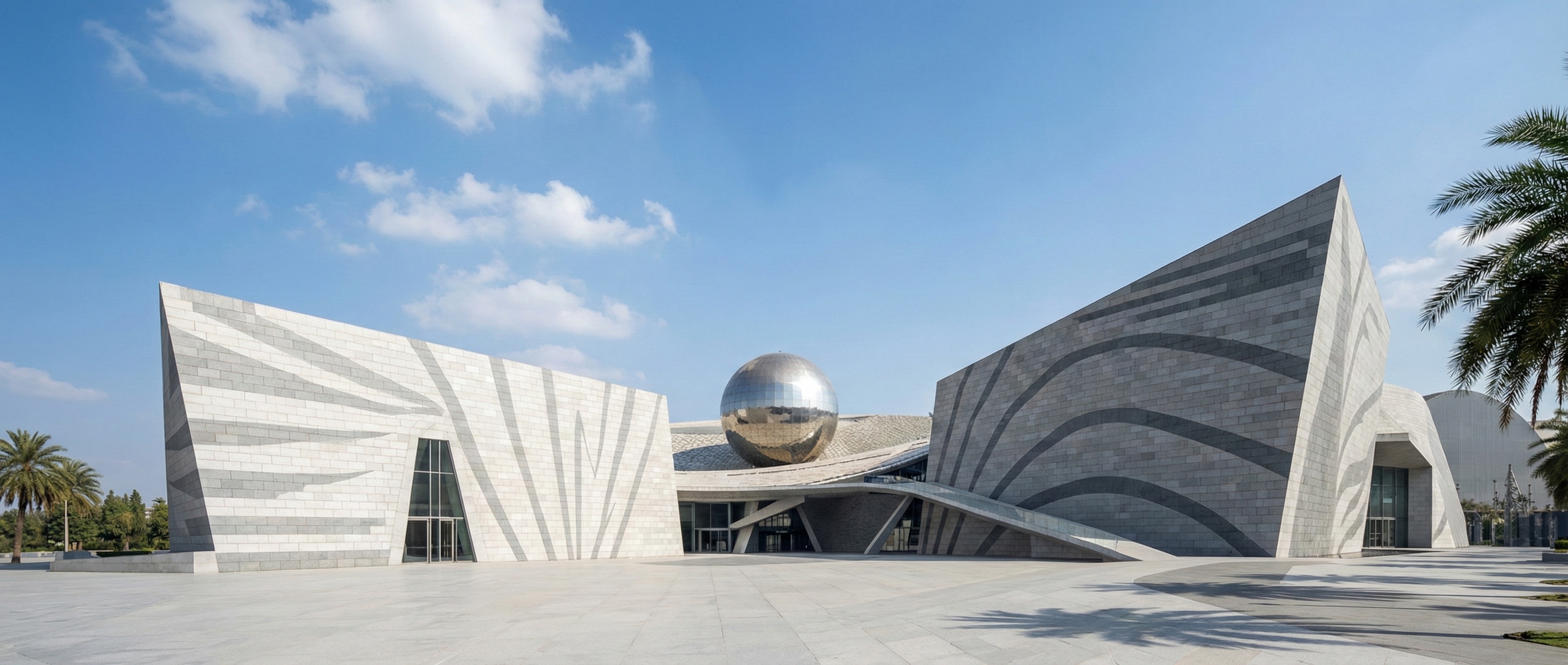
The scheme works in two registers. The existing warehouse is retained, its arched vaults and concrete left exposed and adapted to hold the reception lobby, bookstore, and reading spaces. Over and alongside it, a series of sculptural, wave-like roof forms is built anew, drawn from the coastal topography. The two remain legible as separate: the historic fabric reads as found, the new construction as an addition to it.
Program
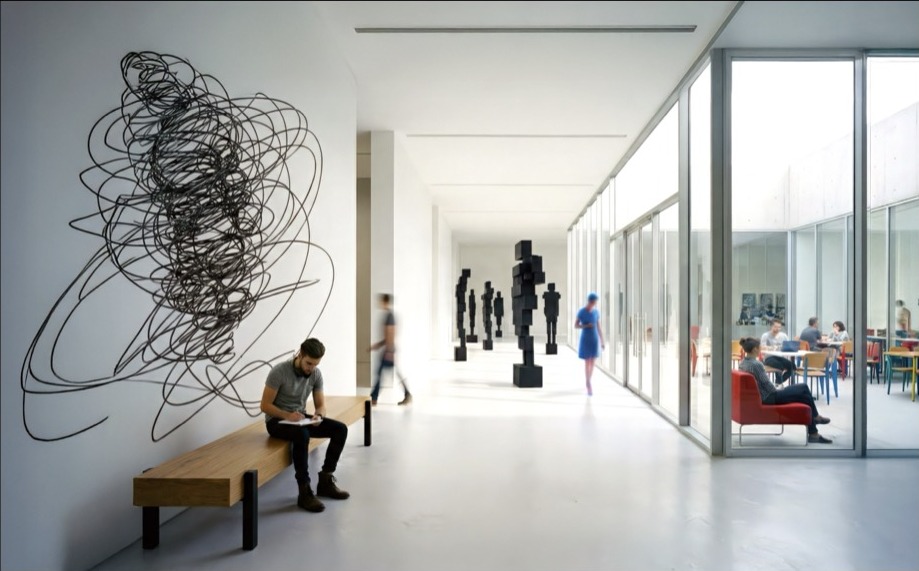
Beneath the new roof volumes are expansive exhibition galleries, a black box theater, media and events halls, and flexible educational spaces. The retained warehouse carries the public rooms of arrival — lobby, bookstore, and gallery corridor — so that visitors enter through the historic structure before moving into the new halls. A new waterfront landscape connects the building to the shoreline.
Vision
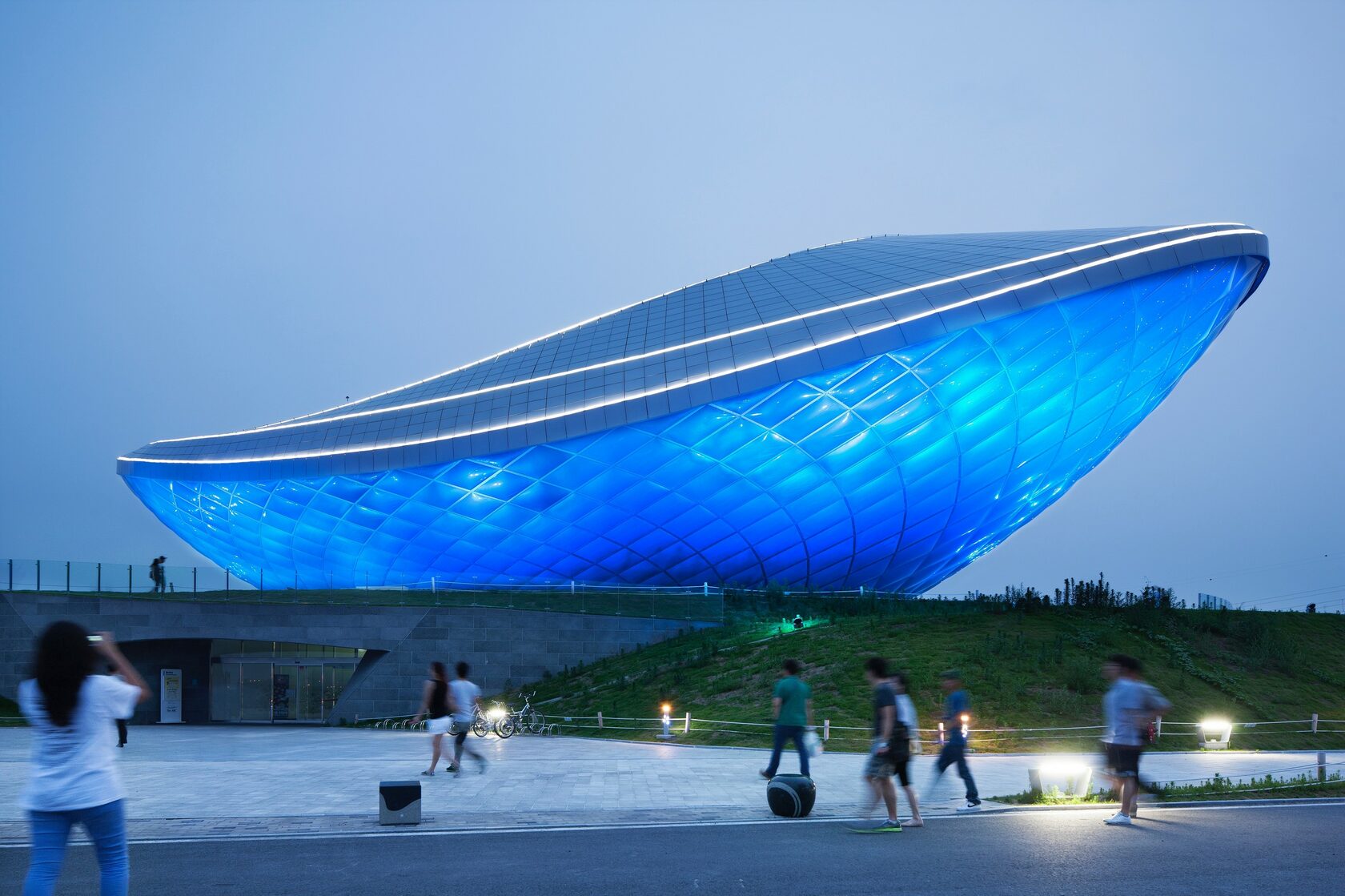
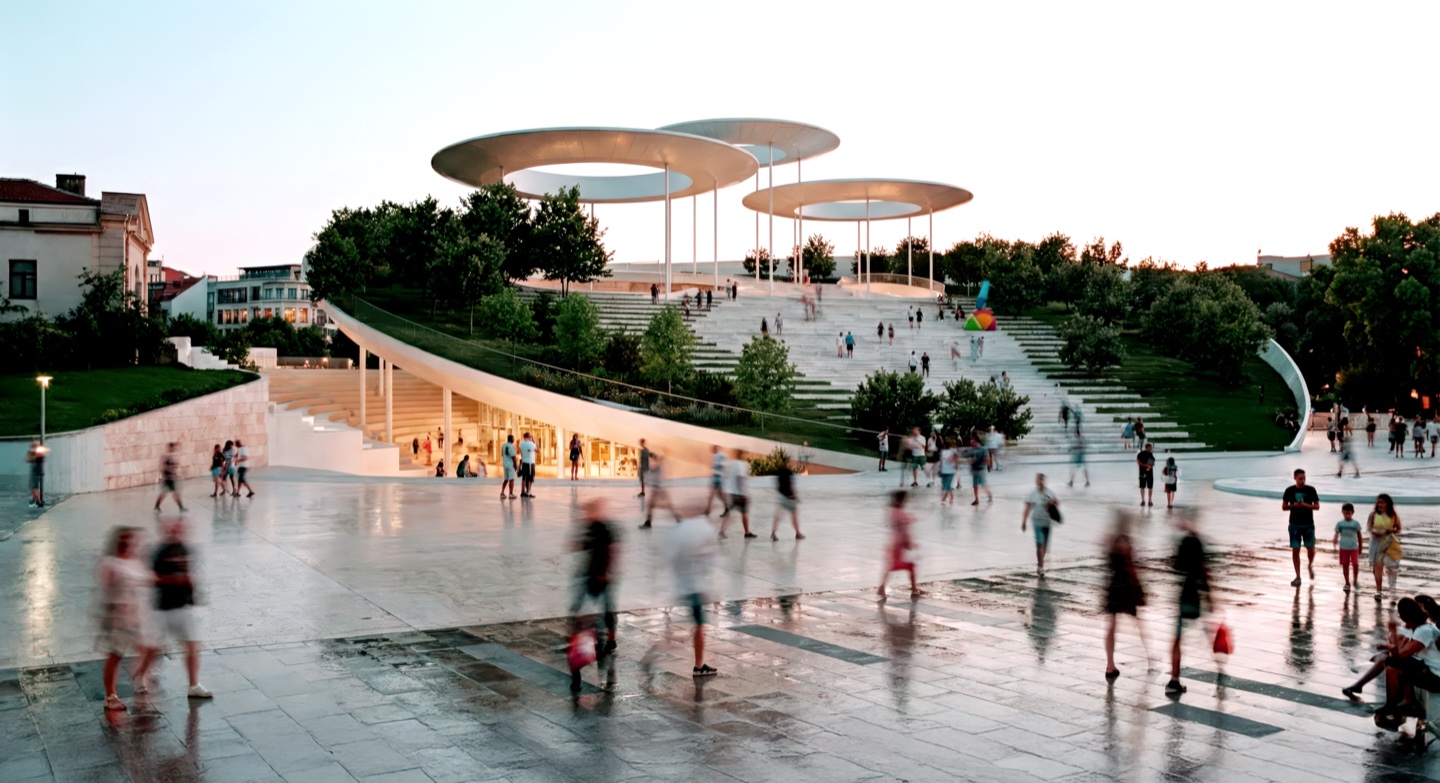
At night the building is lit from within, reading as a cultural marker on the shoreline. Lighting and landscaping extend its civic presence into the public realm, holding the dialogue between architecture, art, and the surrounding city. The project treats cultural architecture as an instrument of urban renewal and civic identity, working by way of what the site already holds rather than by clearing it.