Museums · 1994 · Competition
Tohoku Agrarian Museum
A museum dedicated to the agrarian heritage of the Tohoku region, where angular folded rooflines inspired by the surrounding mountain landscape shelter galleries, a preserved traditional farmhouse, and a monumental hall celebrating the culture of rice cultivation.
About the project
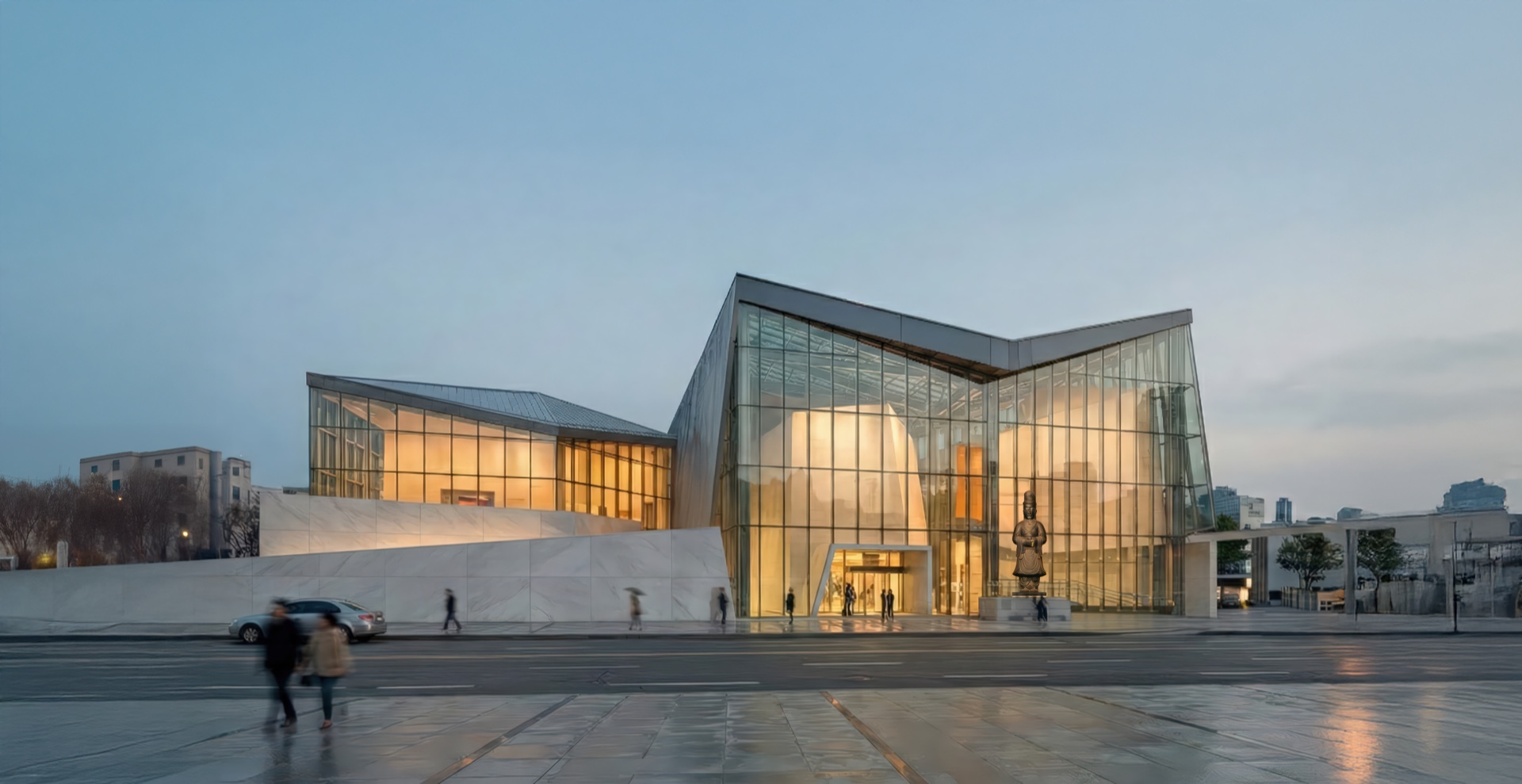
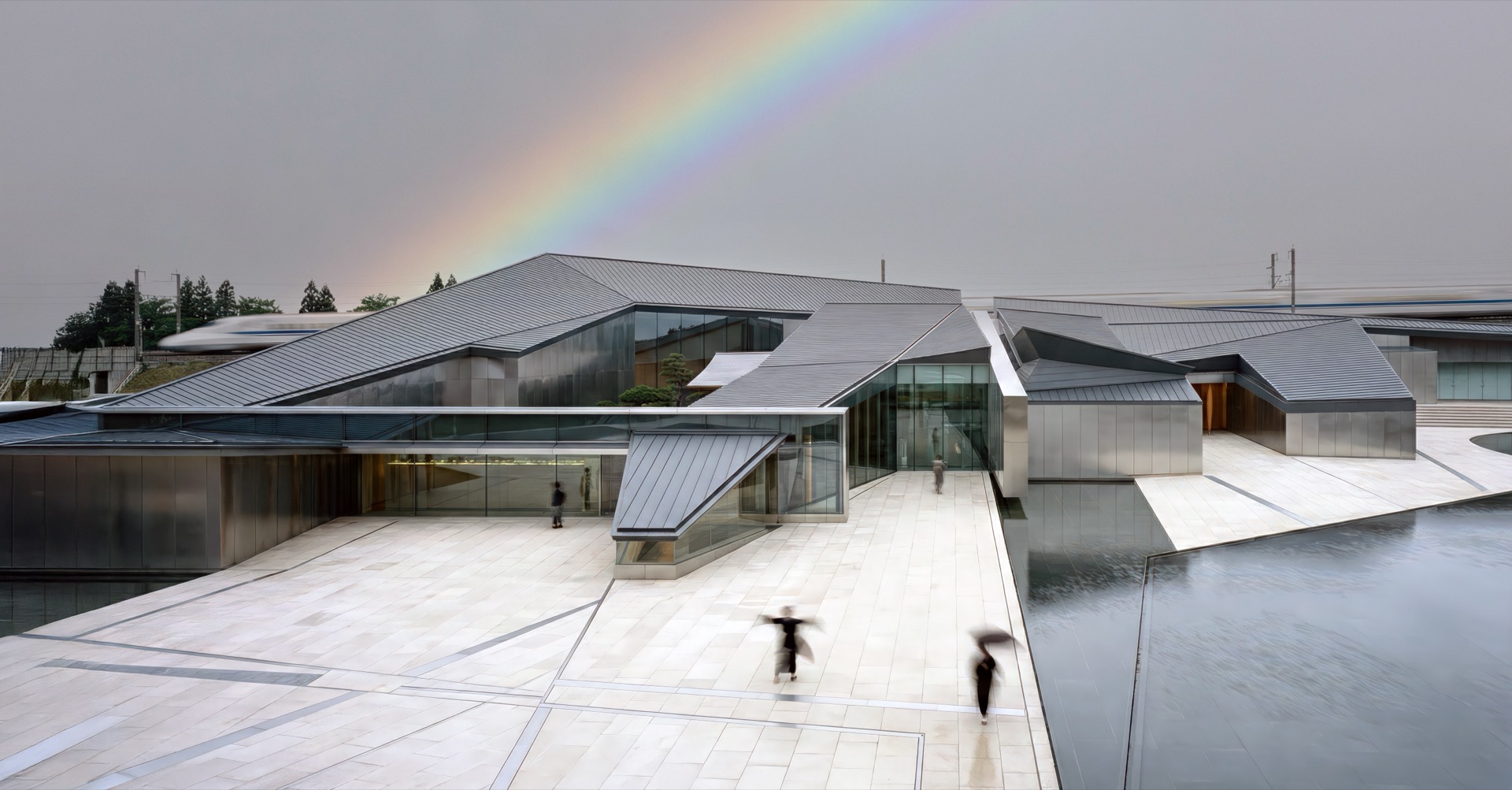
The Tohoku Agrarian Museum is conceived as an architectural landscape that emerges from and responds to the vast agricultural plains of the Tohoku region in northern Japan. The building’s distinctive folded metallic roofscape, a series of interconnected angular volumes of varying scale and pitch, evokes both the mountain ridgelines on the horizon and the pitched roofs of the area’s traditional rural architecture. Situated amid rice paddies and farmland, the museum establishes a deep visual and conceptual connection between its contemporary form and the millennia-old agrarian culture it commemorates.
Architecture & Spatial Experience
The museum is organized as a constellation of interconnected pavilions beneath the continuous folded roof. A central double-height hall, crowned by dramatically converging angular ceiling planes, houses a monumental bronze statue of a farmer, a symbolic anchor for the entire complex. Floor-to-ceiling glass walls dissolve the boundary between interior and exterior, framing panoramic views of the surrounding rice fields and allowing the landscape to become an active part of the exhibition. Reflecting pools along the building’s perimeter mirror the angular rooflines and reinforce the sense of the structure floating within its agrarian setting.
Program & Heritage
Inside, the museum encompasses a richly varied program. The main exhibition galleries, structured by exposed steel frames, present agrarian artifacts, farming implements, scale models of traditional thatched-roof farmhouses, and photographic documentation of Tohoku’s rural heritage. A preserved traditional Japanese farmhouse, enclosed within a glass-walled courtyard garden, serves as both a living exhibit and a gathering space where visitors sit on communal wooden benches surrounded by mature trees and seasonal plantings. A timber-clad auditorium with warm wood paneling and garden views provides a venue for lectures and cultural programming, completing a complex that bridges past and present through architecture.