Museums · 2012 · Competition
PMCA, Perm Museum of Contemporary Art
A 150,000 square meter cultural museum and civic landmark on the banks of the Kama River in Perm, conceived as an inverse topography that fuses building and landscape into a continuous inhabited surface.
About the project
Reflective Culture and Future Vision
Perm has steadily positioned itself as a center for contemporary art and cultural experimentation in Russia, and this 150,000-square-meter museum was conceived to anchor that ambition with permanent architectural presence on the banks of the Kama River. The design operates as a dynamic interplay of materiality, light, and meaning, between reflection and absorption, between landscape and interior life, giving the city both a major cultural institution and a new civic landmark legible at the scale of the surrounding rail and river infrastructure.
Dual-Skin Envelope
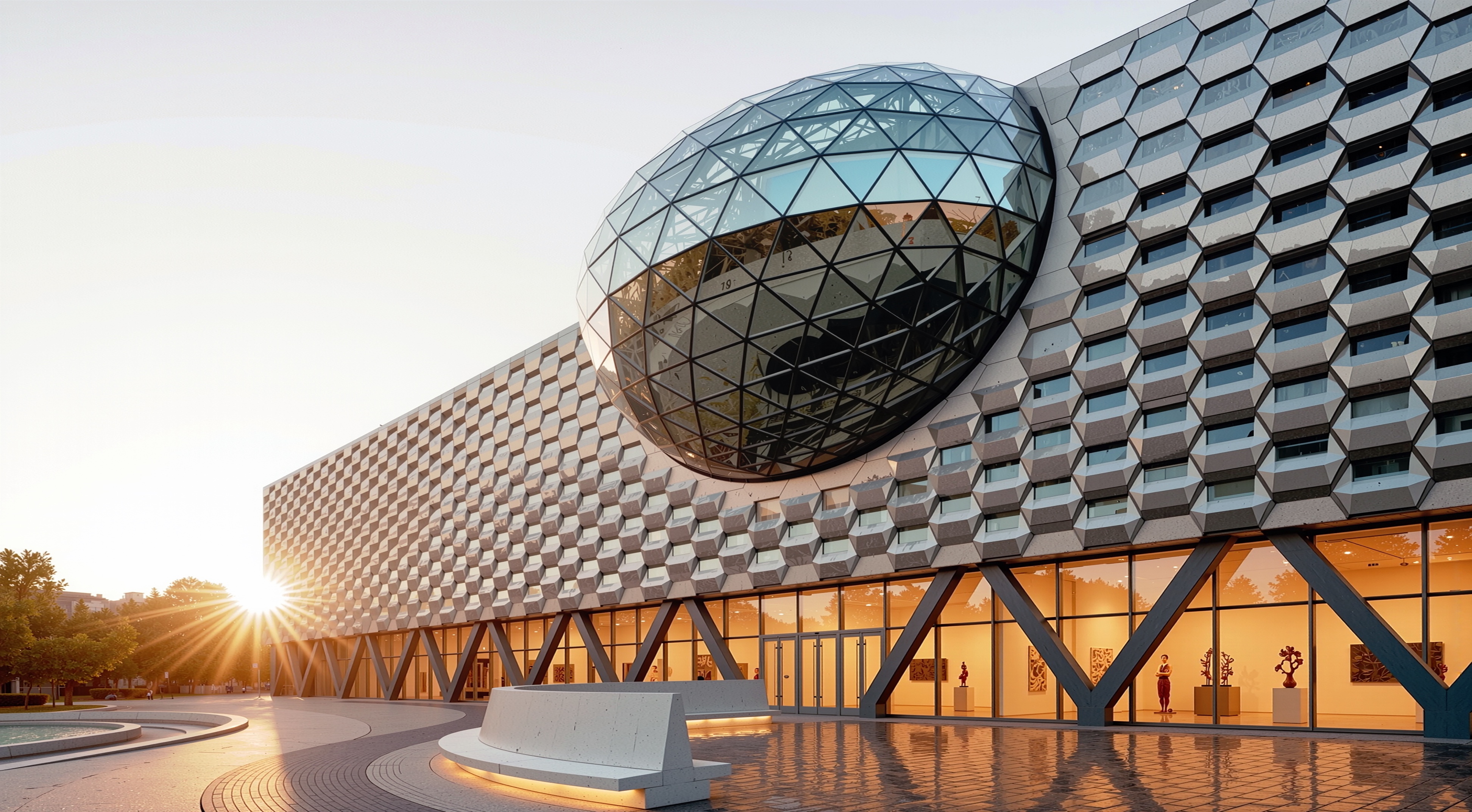
The building envelope consists of two contrasting yet complementary shells. The lower portion is clad in mirrored metal, reflecting and distorting the surrounding landscape to produce a vivid visual dialogue between site, architecture, and viewer. Above, the structure is wrapped in dark timber, absorbing light and evoking a timeless, monumental presence. The contrast between these two material registers, one ephemeral and reflective, the other massive and grounded, gives the museum a character that shifts depending on the season, the weather, and the position of the observer.
The Crease
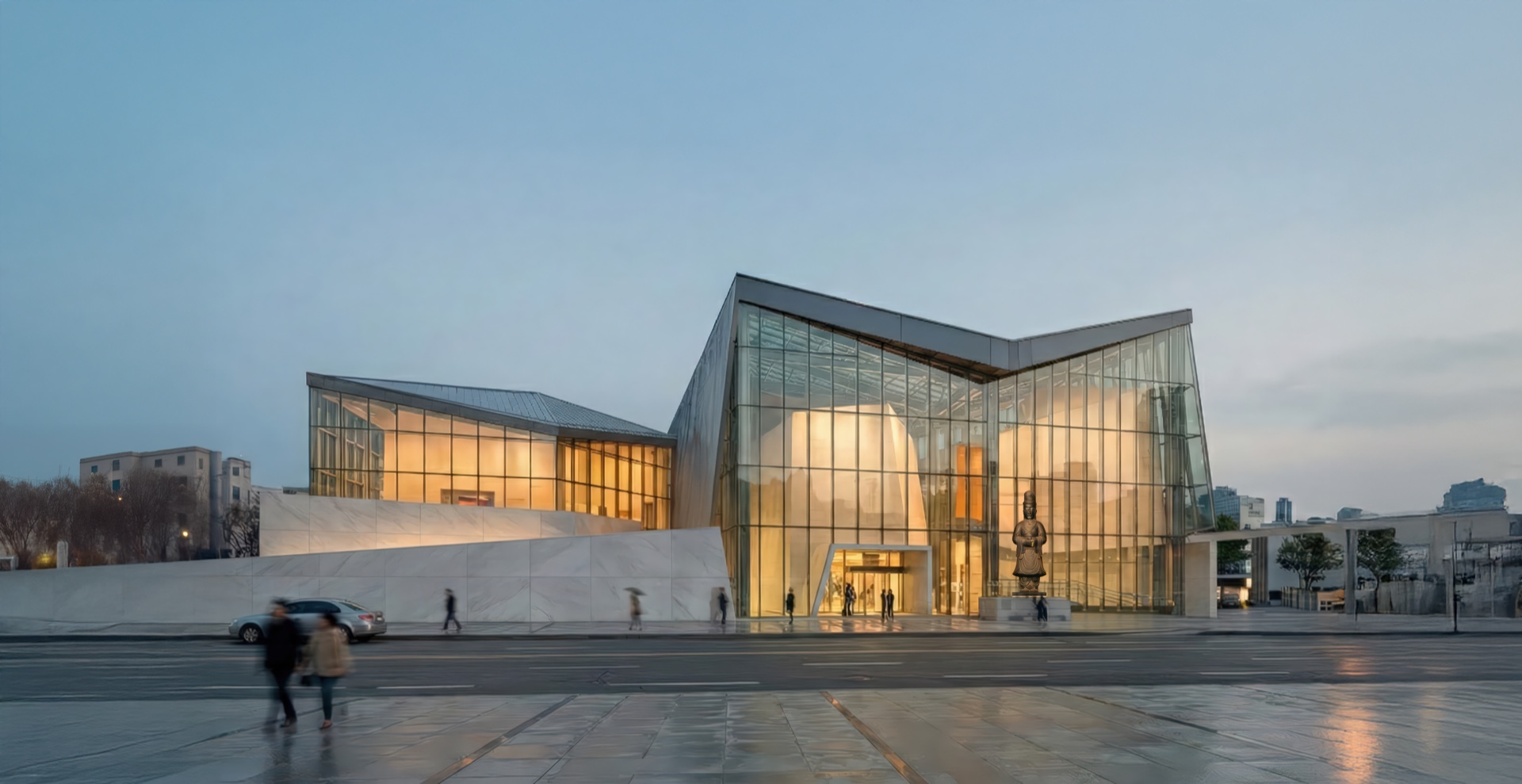
A central crease slices through the building mass, introducing daylight and visual porosity while serving as a symbolic threshold between interior and exterior realms, a spatial metaphor for cultural exchange. Where the two shells part, deep-set apertures frame composed views of the Kama River and the Perm skyline, drawing the city into the museum experience. The crease organizes the building’s internal circulation, connecting upper and lower gallery levels and providing orientation within the vast interior.
Inhabited Roofscape
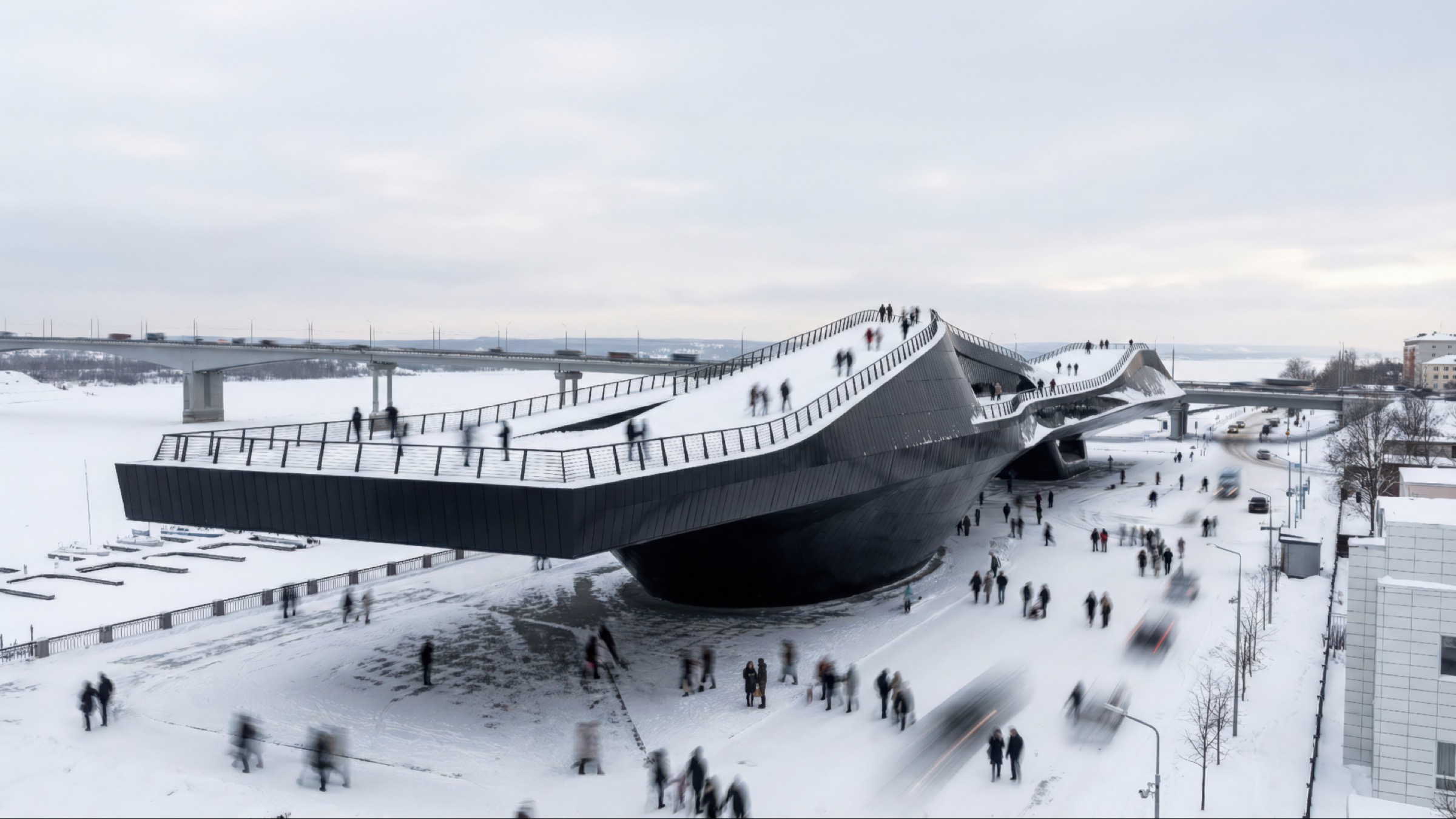
The museum’s form follows the inverse topography of the site, tracing the curve of the riverbank and creating a continuous accessible landscape across its upper surface. Timber boardwalks, planted pockets, seating terraces, and outdoor sculpture platforms wind across the roof, offering visitors a public promenade with panoramic views of the city and the river. The roof is not a terminus but a destination, an extension of the urban ground plane lifted to a new vantage point.
Gallery Environments
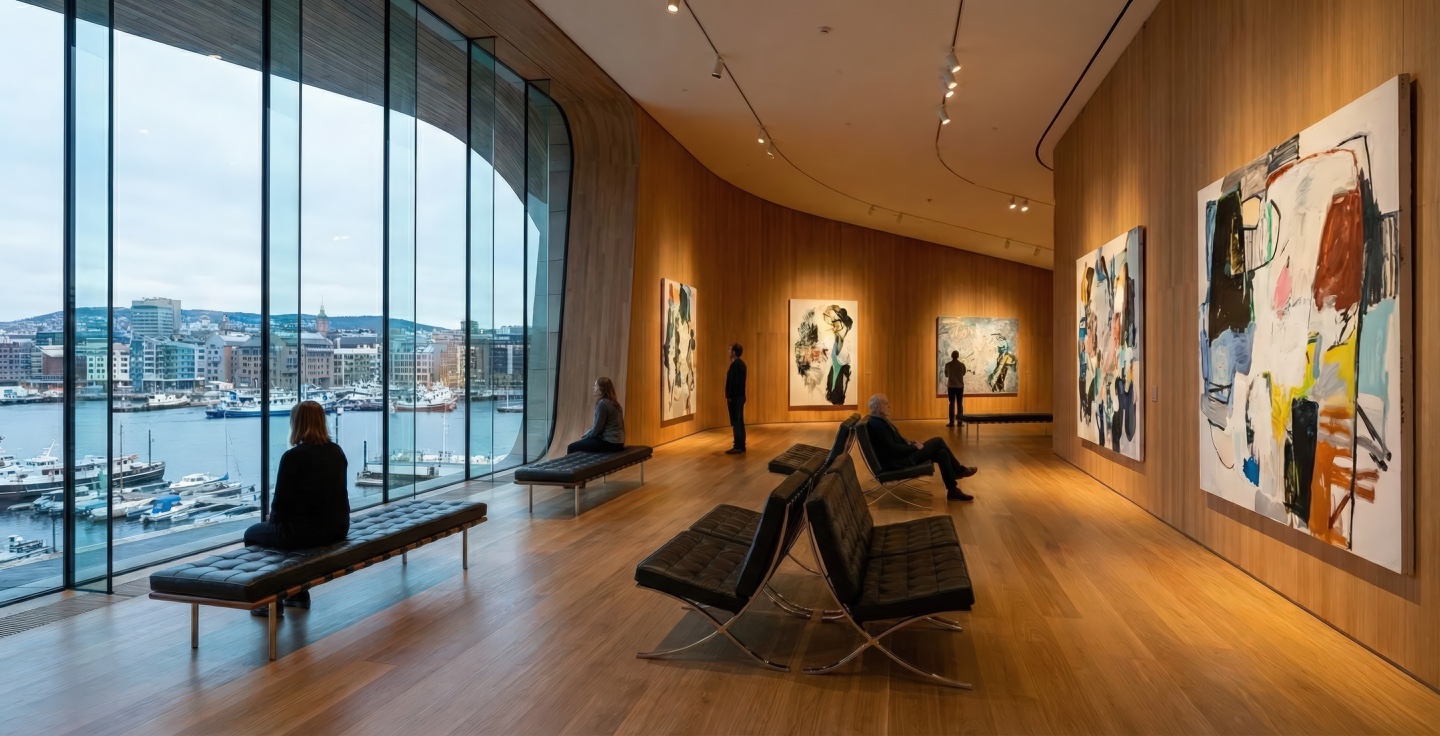
Within the concrete interior, gallery halls of varying scale accommodate Perm’s rich collections, from medieval Orthodox icons and Permian animal-style bronzes to contemporary installations and multimedia works. Sculpted concrete display plinths echo the formal language of the building’s exterior folds, while a system of continuous flowing light channels in the ceilings provides even, controlled illumination. A monumental double-height hall connects the upper promenade to the lower exhibition floors via sweeping concrete stairs, giving the interior a processional, almost geological quality.
Civic Presence
This expressive and integrated architectural gesture strengthens Perm’s evolving cultural identity with clarity and presence. The museum’s relationship to the adjacent railway corridor, its dark mass cantilevering dramatically over the existing platforms, registers the building at the scale of infrastructure, making it legible to the thousands of commuters who pass through the city daily. It is architecture designed not only to house art but to function as an icon of civic ambition.