Museums · 2007 · Competition
Budapest National Gallery of Contemporary Art
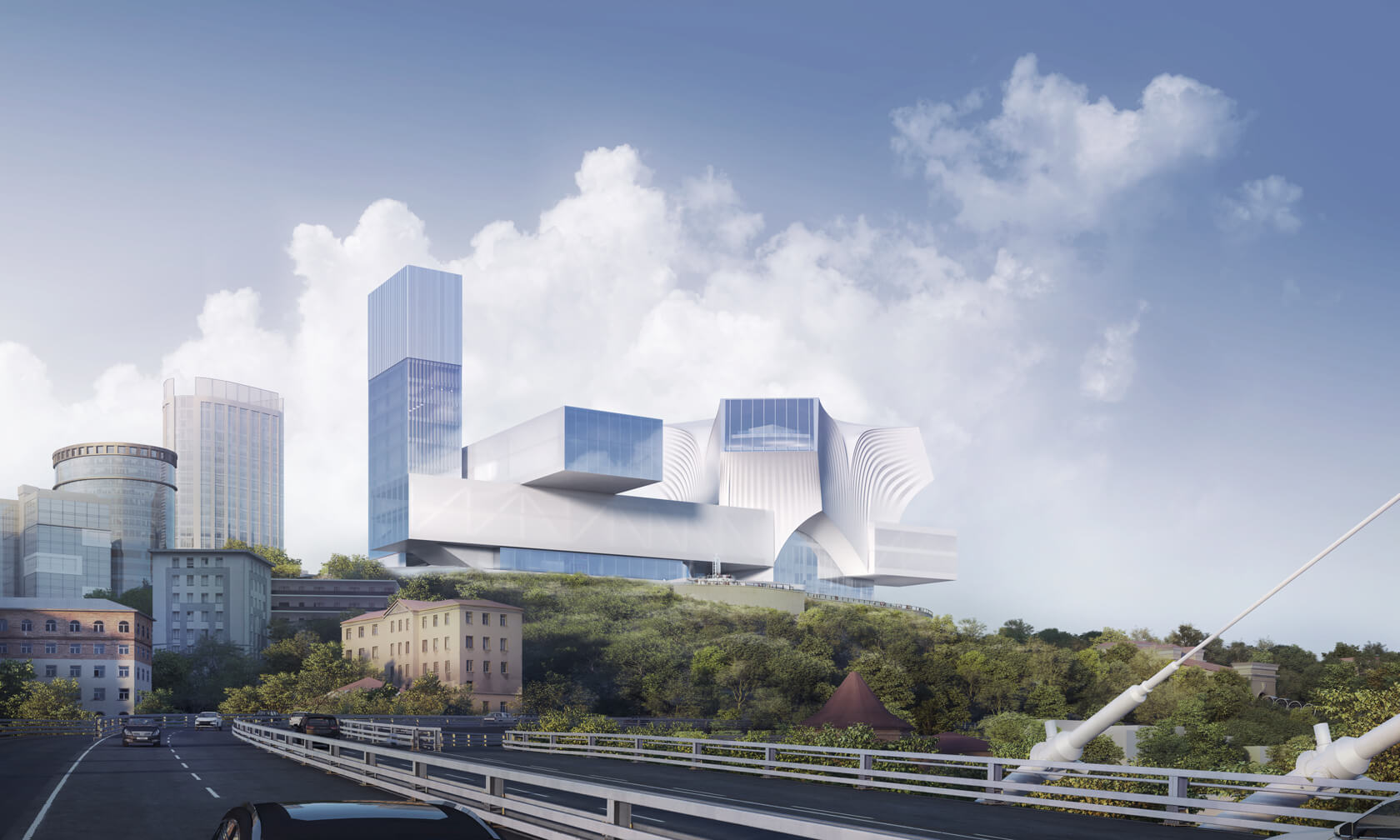
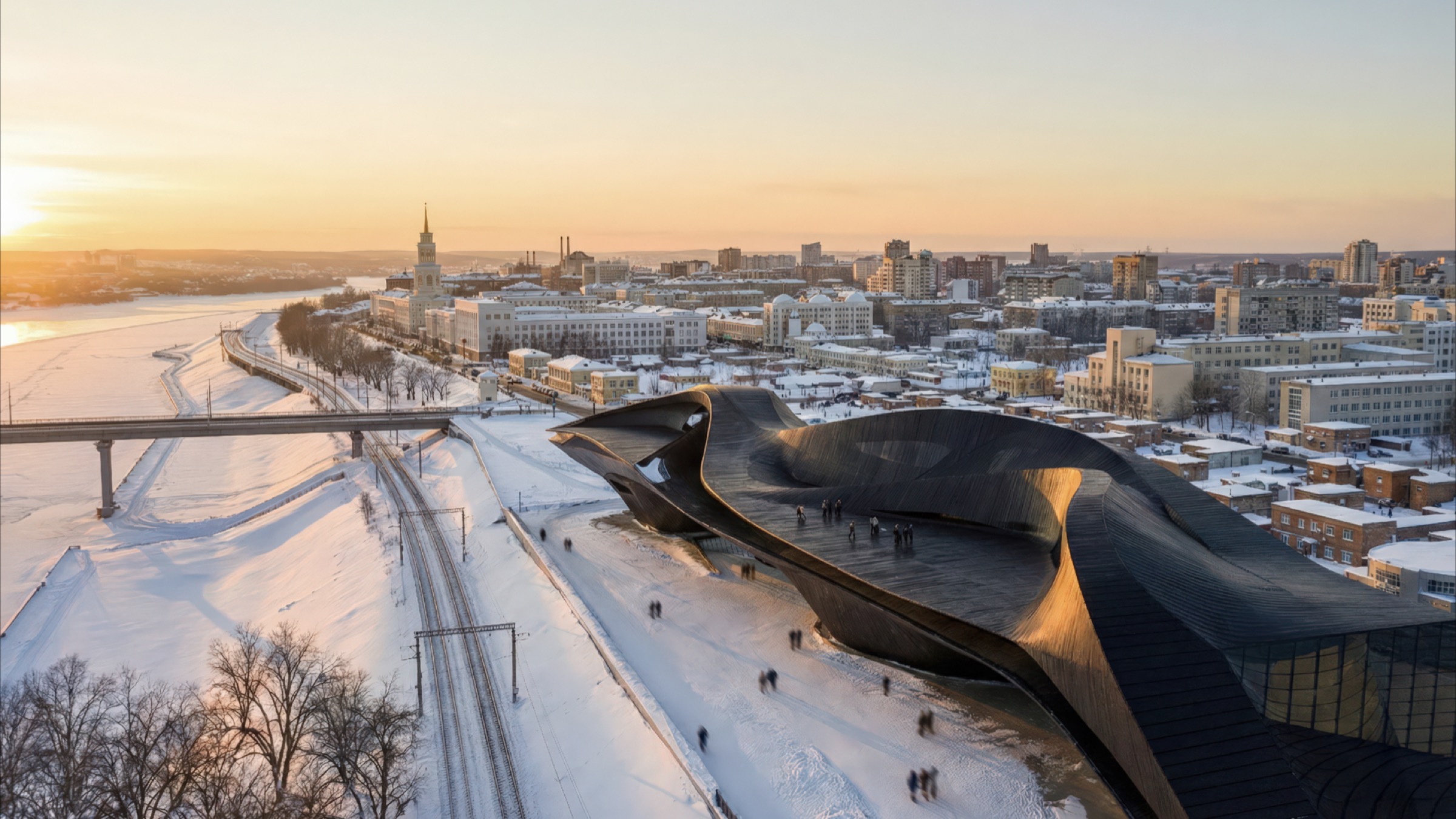
A major cultural landmark within Budapest's Városliget cultural district, bringing together the National Gallery and Ludwig Museum within a unified architectural composition that mediates between the urban edge of the city and the landscape of City Park.
About the project
Budapest’s Városliget, City Park, has served as the cultural heart of the Hungarian capital since the 19th century, home to museums, thermal baths, and public gardens. Asymptote’s competition proposal responds to a brief calling for the consolidation of the National Gallery and the Ludwig Museum into a single institution, addressing both the programmatic challenge of uniting two distinct collections and the urban challenge of mediating between the formal city edge and the open landscape of the park.
Atrium & Organization
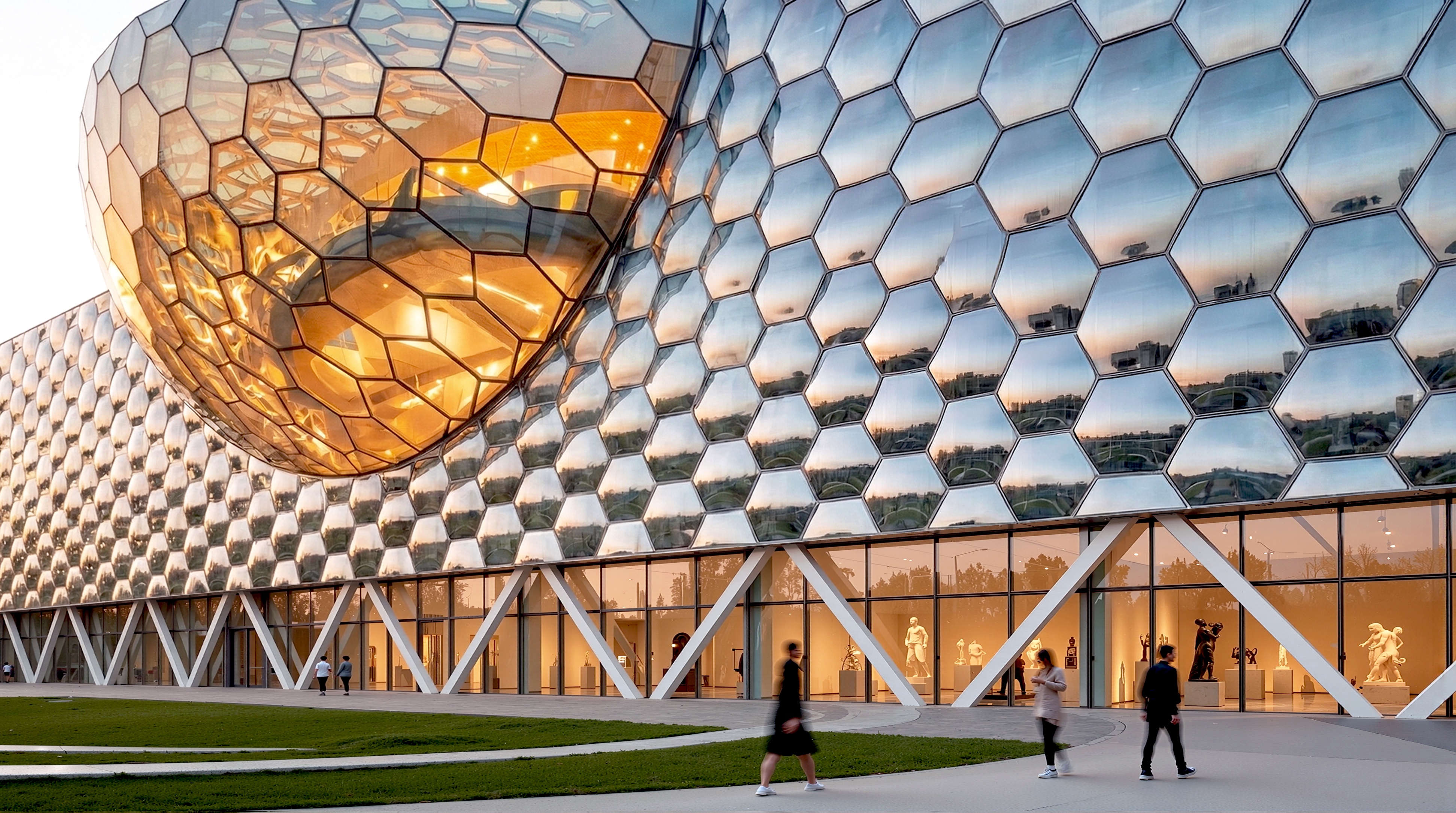
The architecture is organized around a central atrium conceived as a public interior boulevard linking exhibition spaces, public foyers, and cultural facilities. A stone-clad civic facade addresses the city, while a lighter crystalline volume opens toward the park, creating a dialogue between institutional monumentality and landscape transparency.
Gallery & Public Space
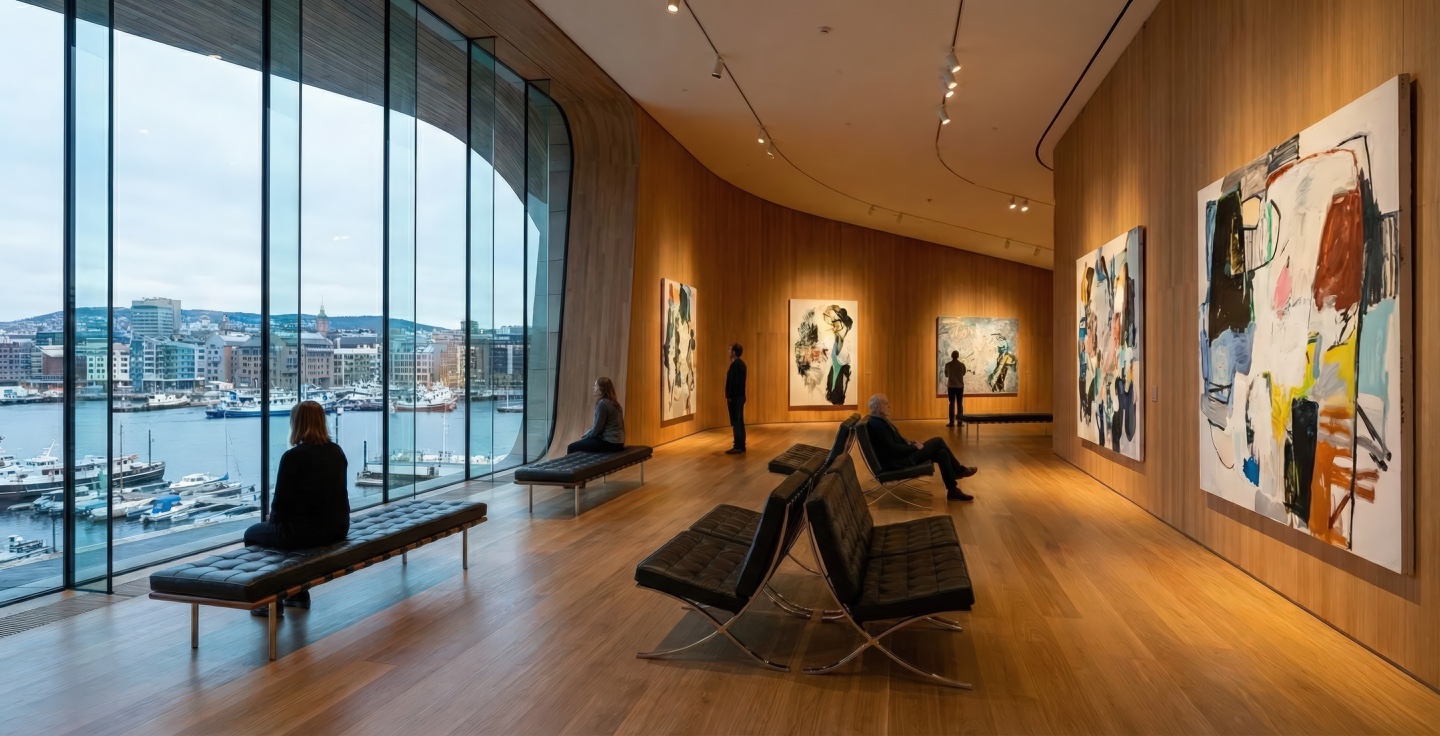
The design establishes a sequence of galleries, public terraces, and civic gathering spaces that extend the cultural life of the museum beyond the exhibition halls. By integrating landscape, public space, and cultural programming, the project positions the museum as both architectural landmark and urban catalyst within Budapest’s evolving cultural park.