Interiors · 1999 · Realized
Guggenheim Center for Art and Technology
A pioneering retail interior for the Guggenheim Museum's e-commerce venture at 575 Broadway in SoHo, designed to merge bricks-and-mortar exhibition with online commerce, housing Guggenheim-curated design objects sold exclusively through guggenheim.com alongside a physical manifestation of Asymptote's Virtual Guggenheim Museum.
About the project
The Dot-Com Store as Cultural Space
At the turn of the millennium, Solomon R. Guggenheim Foundation director Thomas Krens envisioned a radical expansion of what a museum could be. Part of a sweeping global initiative that saw Krens commission projects from architects including Frank Gehry, Zaha Hadid, Jean Nouvel, and Rem Koolhaas, the Guggenheim.com store represented a different kind of ambition altogether, not a new museum building, but a new species of cultural retail. Located at the Guggenheim’s SoHo outpost on Broadway, the space was conceived as the physical home for the museum’s newly launched internet presence and e-commerce platform at a moment when the web was still reshaping the very idea of commerce and cultural access.
Curated Objects and Online Exclusivity
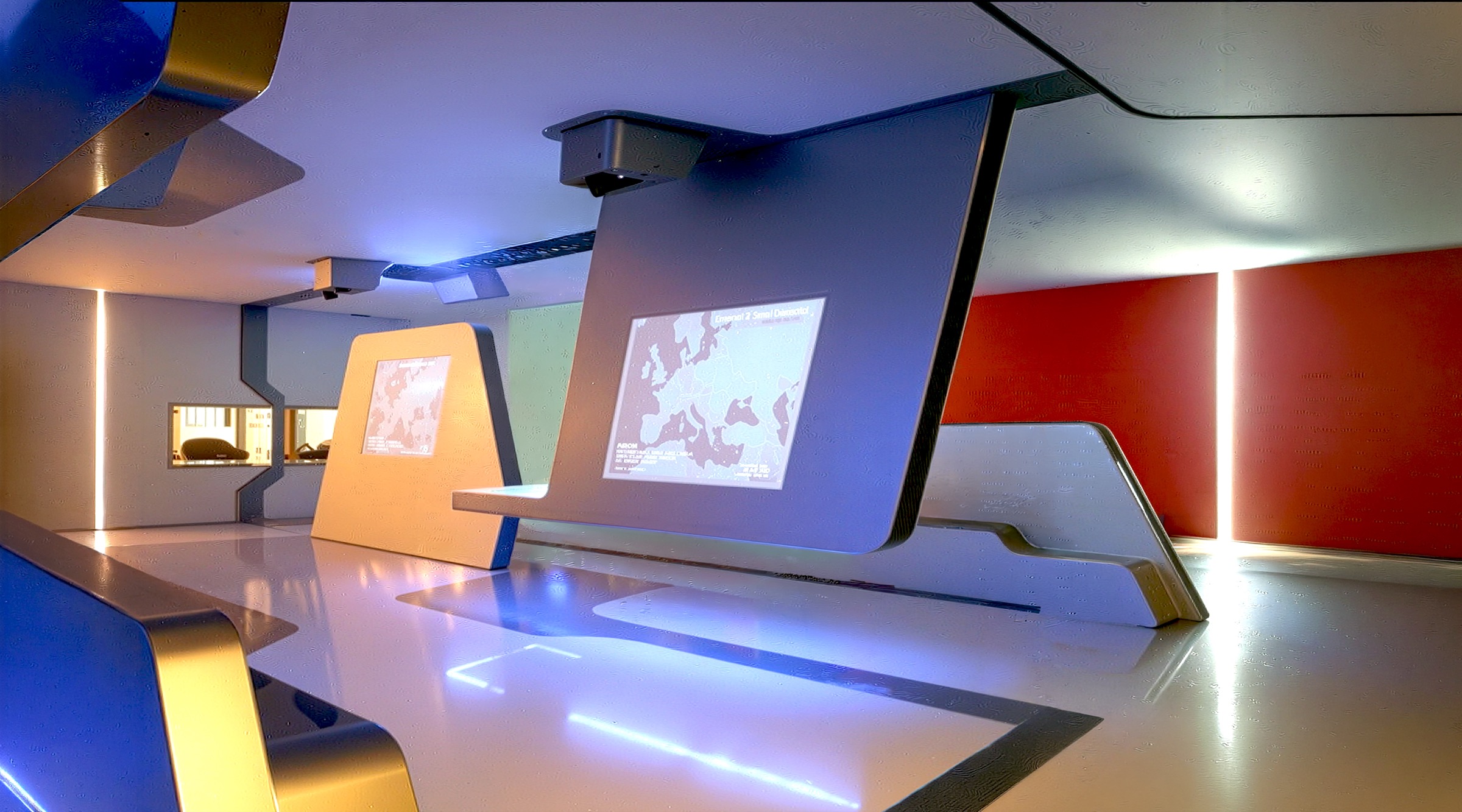
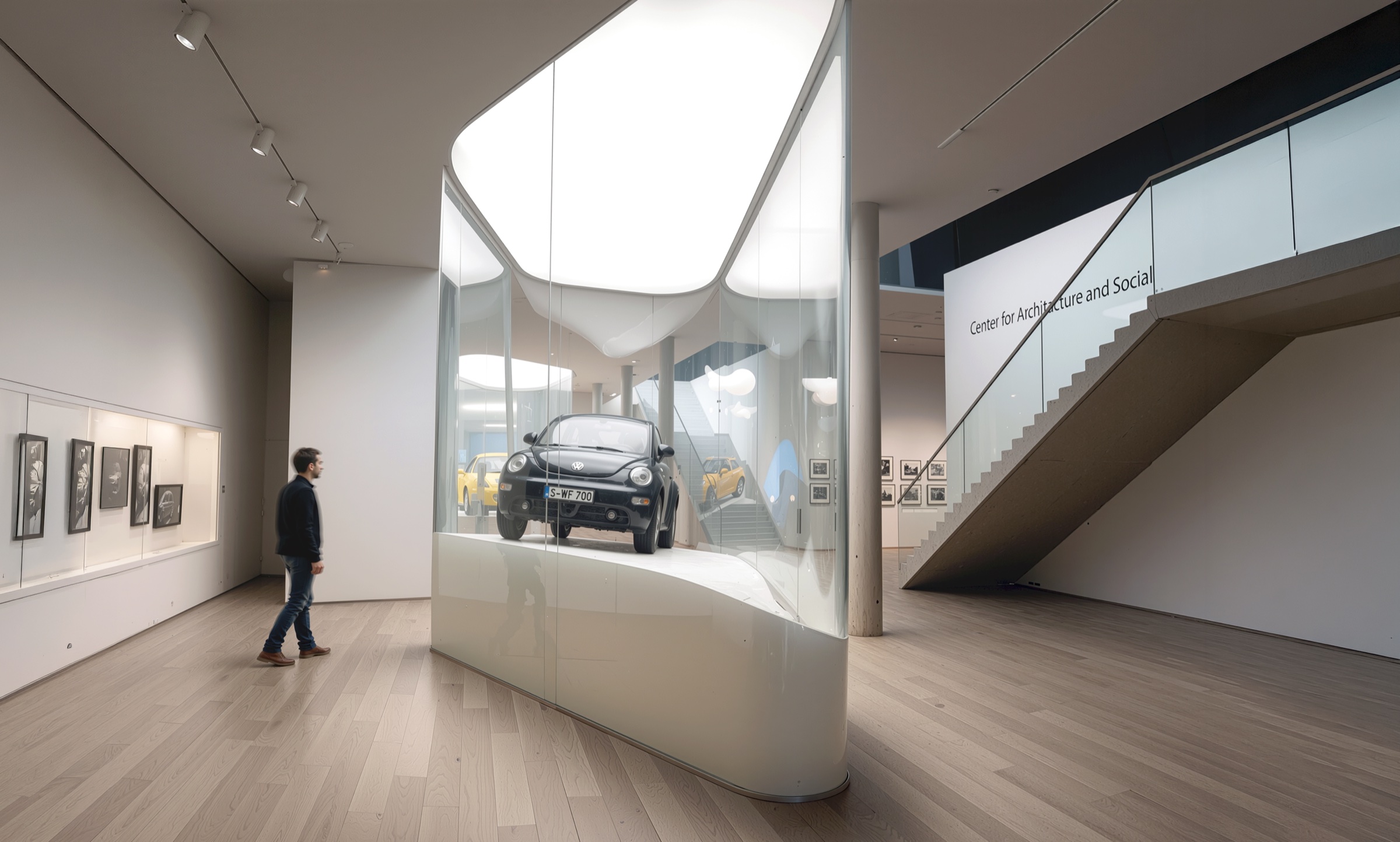
The program called for a ground-floor retail environment dedicated to objects curated by the Guggenheim, design works, limited editions, and cultural artifacts selected with the same curatorial rigor applied to the museum’s exhibitions. These objects were to be sold exclusively through the guggenheim.com platform, making the physical store function simultaneously as showroom, gallery, and portal. Visitors would encounter the objects in person, then complete transactions online, collapsing the distinction between browsing a gallery and browsing a website. Large-scale glass vitrines with sculpted luminous canopies elevated each object to the status of exhibited artwork, while interactive kiosks and a central media wall connected the physical space directly to the digital storefront.
A Venue for the Virtual Museum
The store was also intended to serve as a bricks-and-mortar venue for Asymptote’s Virtual Guggenheim Museum, a groundbreaking navigable digital environment that the firm had designed for the foundation beginning in 1999. Where the Virtual Museum existed as a fully immersive online space for experiencing the Guggenheim’s collection, the Broadway store would give that virtual architecture a physical address. A series of articulated arm-mounted screens along a sweeping branded wall invited visitors to browse the virtual collection in real time, creating a feedback loop between the online museum and its SoHo counterpart. The gesture anticipated by two decades the hybrid physical-digital exhibition strategies that would become commonplace in the post-pandemic era.
Interior Architecture
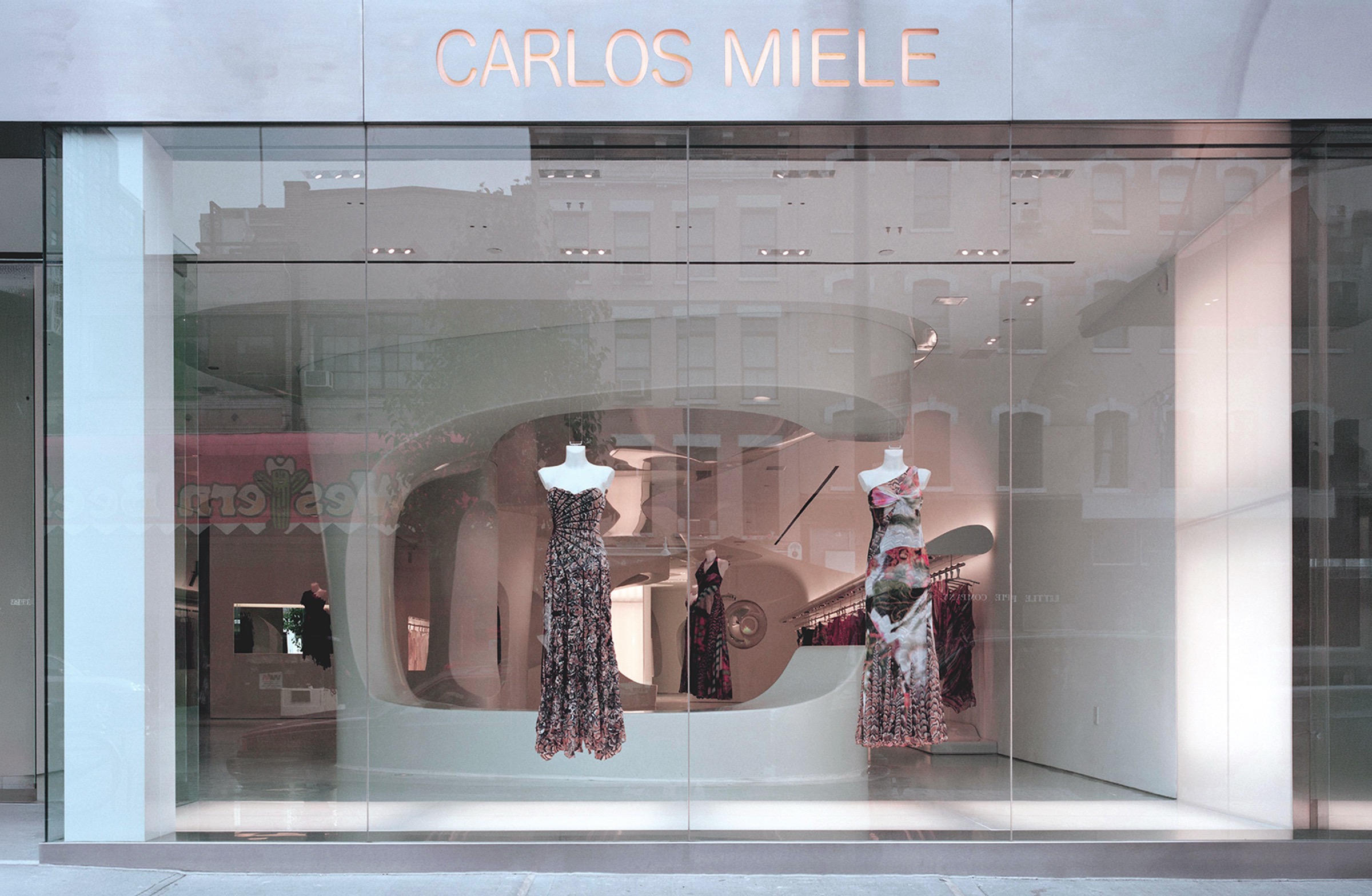
The interior treated the SoHo loft space as a continuous landscape rather than a conventional retail grid. Curved glass enclosures and flowing white surfaces created a seamless datum connecting display, circulation, and media. The storefront facade maintained the rhythm of the existing cast-iron building while opening the full width of the ground floor to Broadway through floor-to-ceiling glazing, allowing the interior to function as a vitrine visible from the street. An angular staircase and mezzanine level connected the retail floor to upper programming areas, its geometric language echoing the digital morphologies of Asymptote’s concurrent virtual projects. Materials were deliberately restrained, oak flooring, white plaster, glass, and brushed metal, allowing the curated objects and digital projections to command the visual field.
The Krens Initiative
The Guggenheim.com store sat within a broader constellation of projects that Thomas Krens pursued during his ambitious tenure as director of the Guggenheim Foundation. Krens had already transformed the institution into the first truly global museum brand with the Bilbao Guggenheim, and the dot-com venture represented an extension of that logic into the emerging territory of the internet. It was among the earliest attempts by a major cultural institution to create a dedicated physical space for online commerce, a concept that would later be adopted by technology companies and luxury brands but was, in 2000, genuinely unprecedented for a museum. Though the SoHo branch would ultimately close in 2002 as part of a broader institutional restructuring, the ideas embedded in the Guggenheim.com store, cultural curation as retail strategy, physical space as interface for digital content, the museum as platform, have only grown more relevant in the decades since.