Design · 2006 · Realized
Alessi Desktop Architecture
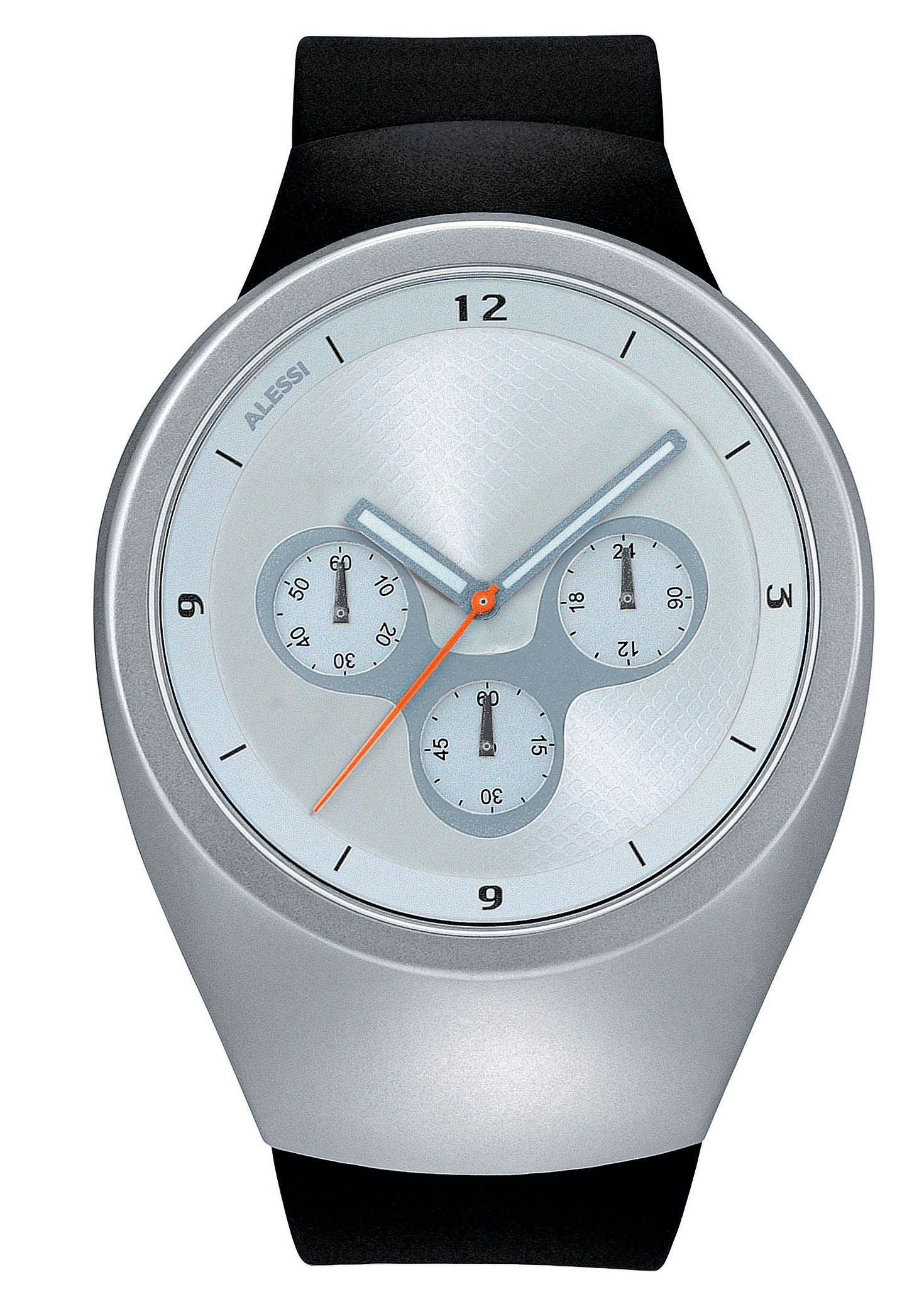
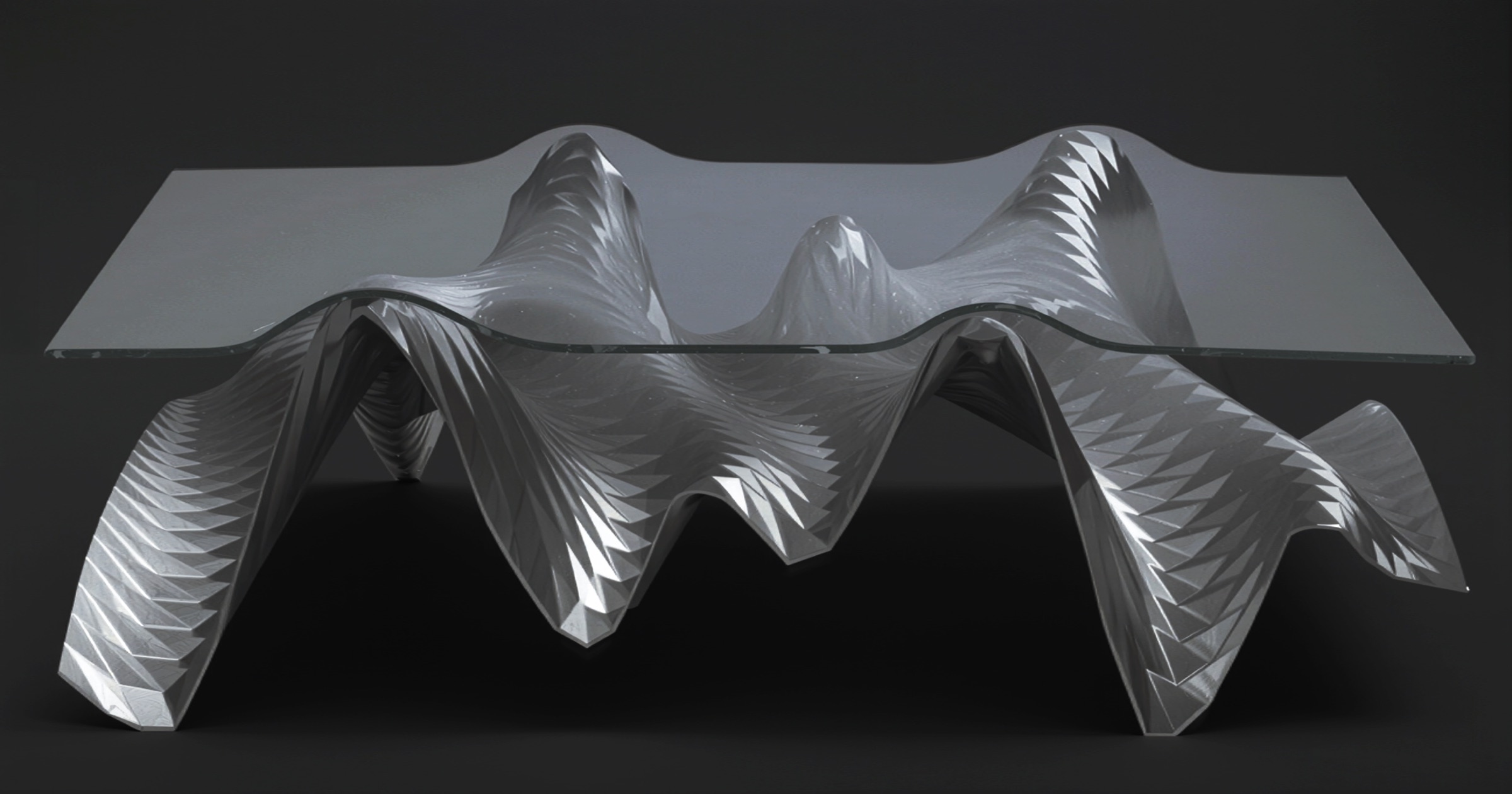
A collection of desk objects, pens, and vessels designed for Alessi under the rubric Desktop Architecture, each piece a micro-cosmos in stainless steel that treats the workspace as an architectural site, blurring the line between functional object and sculptural artifact.
About the project
The Desktop Architecture collection for Alessi represents Asymptote’s most sustained engagement with industrial design at the scale of the hand. Conceived not as isolated products but as a family of objects that together constitute a miniature built environment, the collection treats the desktop as an architectural site, a terrain of surfaces, edges, and voids to be inhabited by artifacts that are as much spatial propositions as they are functional tools. The collaboration grew from a broader relationship with Alessi that also included the design of the company’s flagship store on Greene Street in SoHo, New York, which opened in 2006 to considerable acclaim, winning Travel + Leisure’s Best Retail Space and an AIA New York Chapter Design Award.
The Collection
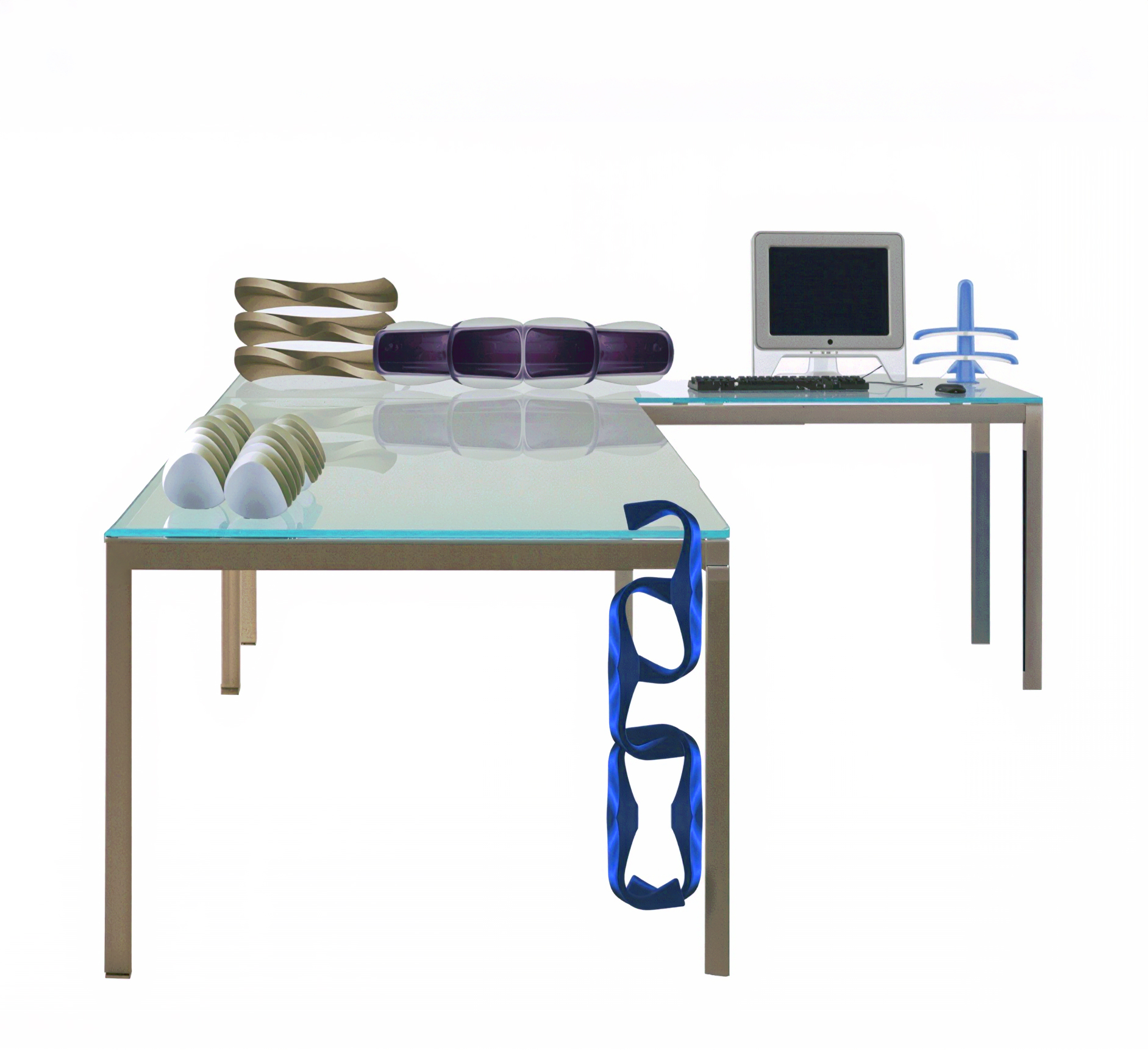
The Desktop Architecture series comprises a range of objects unified by a shared formal language drawn from Asymptote’s digital design practice, fluid topographies, parametrically derived surfaces, and a rigorous economy of material. The desk objects include Parq, a tray whose surface folds and undulates like a miniature landscape; Scup, a stainless steel desk organizer with a mirror-polished finish that reads less as a utilitarian container than as a reflective sculptural field; Trina, a pencil holder that distills the act of vertical containment into a single, precisely formed gesture; and Stila, whose tapered geometry transforms the most elementary of desk implements into an object of considered proportion. Each piece is executed in stainless steel with Alessi’s characteristic attention to finish and manufacturing precision.
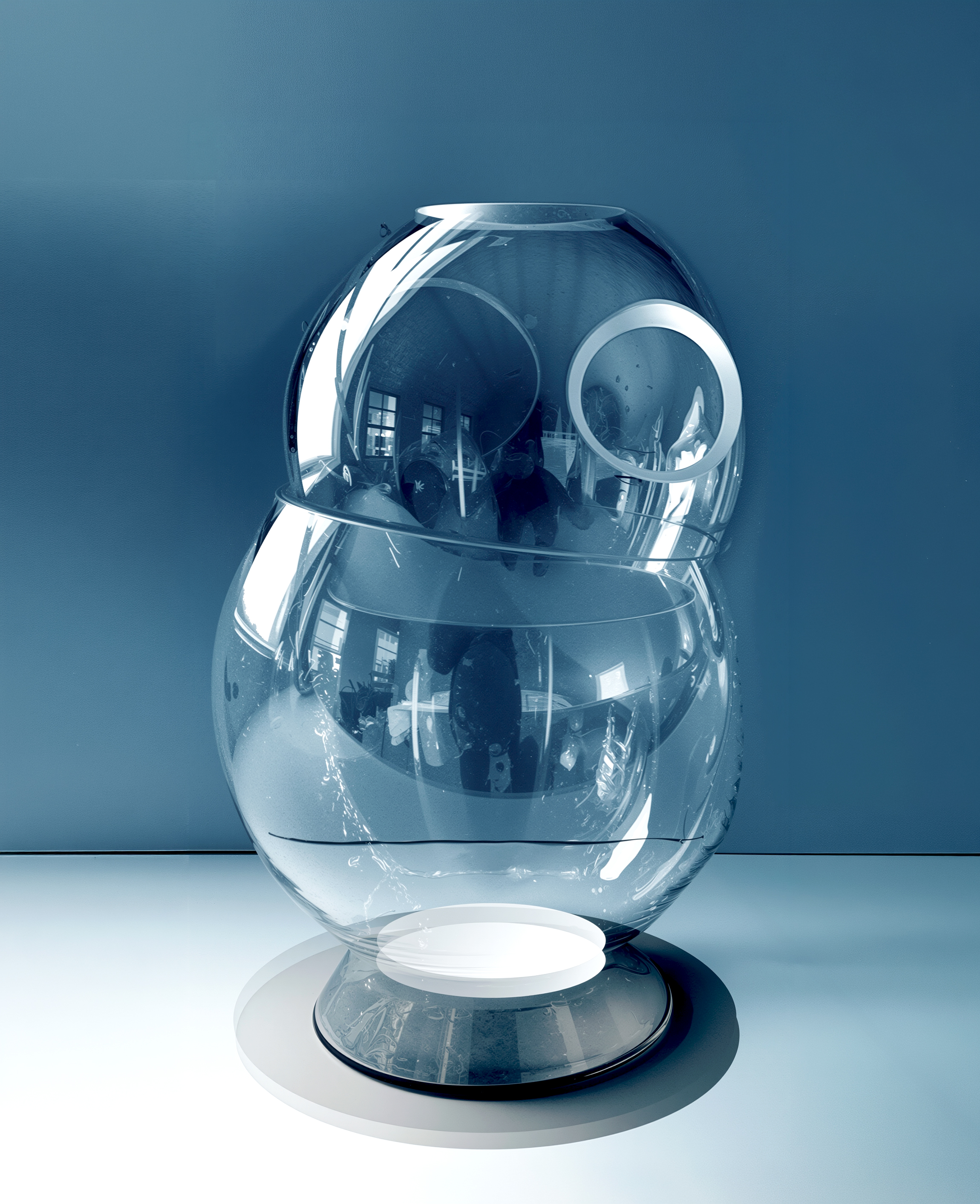
Beyond the desktop objects, the collection extends into other territories: the Ares pen, whose body translates architectural sectional logic into the ergonomics of writing; and the Trianava vase, a vessel whose folded surface negotiates between the demands of holding water and the ambition of spatial form. Together these pieces articulate the premise at the heart of the project, that architecture is not bound to a particular scale, and that the intelligence brought to the design of a building can, and perhaps should, operate at the scale of the objects nearest to the body.
Process
The formal vocabulary of the collection emerged from the same computational methods Asymptote applies to its buildings, parametric modeling, surface optimization, and the study of minimal surfaces and ruled geometries. But where a tower or a museum can absorb complexity through sheer scale, a pen or a tray demands that every curve resolve into a holdable, manufacturable, stackable thing. The translation from screen to stainless steel required close collaboration with Alessi’s production engineers in Crusinallo, the company’s historic base in the Piedmont region of Italy, where a century of metalworking expertise meets contemporary CNC and stamping technology. The result is a set of objects whose digital origins are legible in their surfaces but whose tactile qualities, weight, temperature, the slip of polished steel under the thumb, are irreducibly physical.
Significance
Alberto Alessi has long sought out architects for product collaborations, recognizing that designers trained to think about space, structure, and human habitation bring a fundamentally different sensibility to the domestic object than those trained primarily in industrial design. The Desktop Architecture collection sits within this tradition alongside contributions by Aldo Rossi, Michael Graves, Zaha Hadid, and others, but Asymptote’s particular contribution is the explicit proposition that the workspace is itself an architectural landscape, and that the objects on a desk are not incidental accessories but the buildings of a micro-city.