Vitoria Center for Contemporary Art and Music Hall
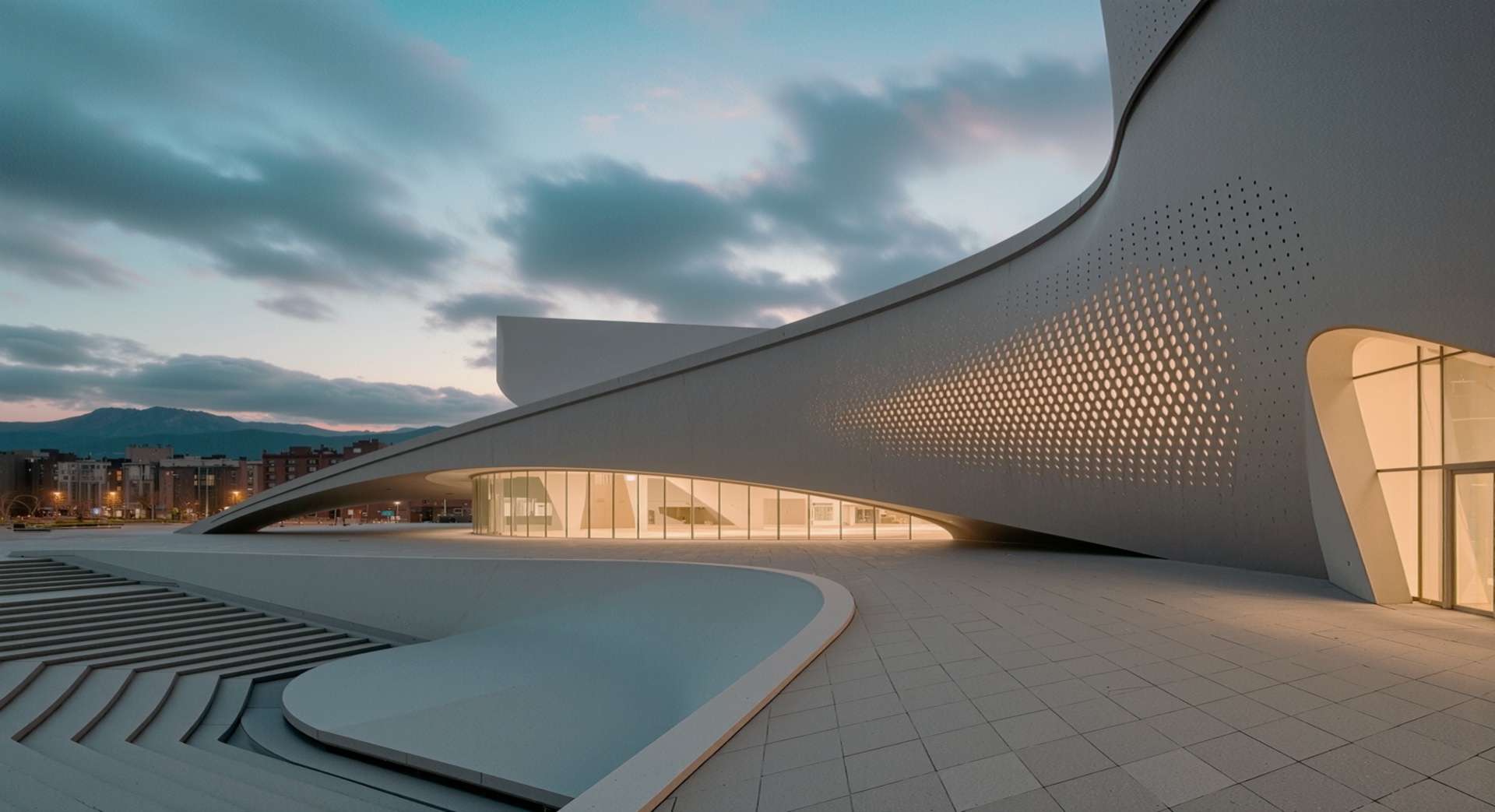
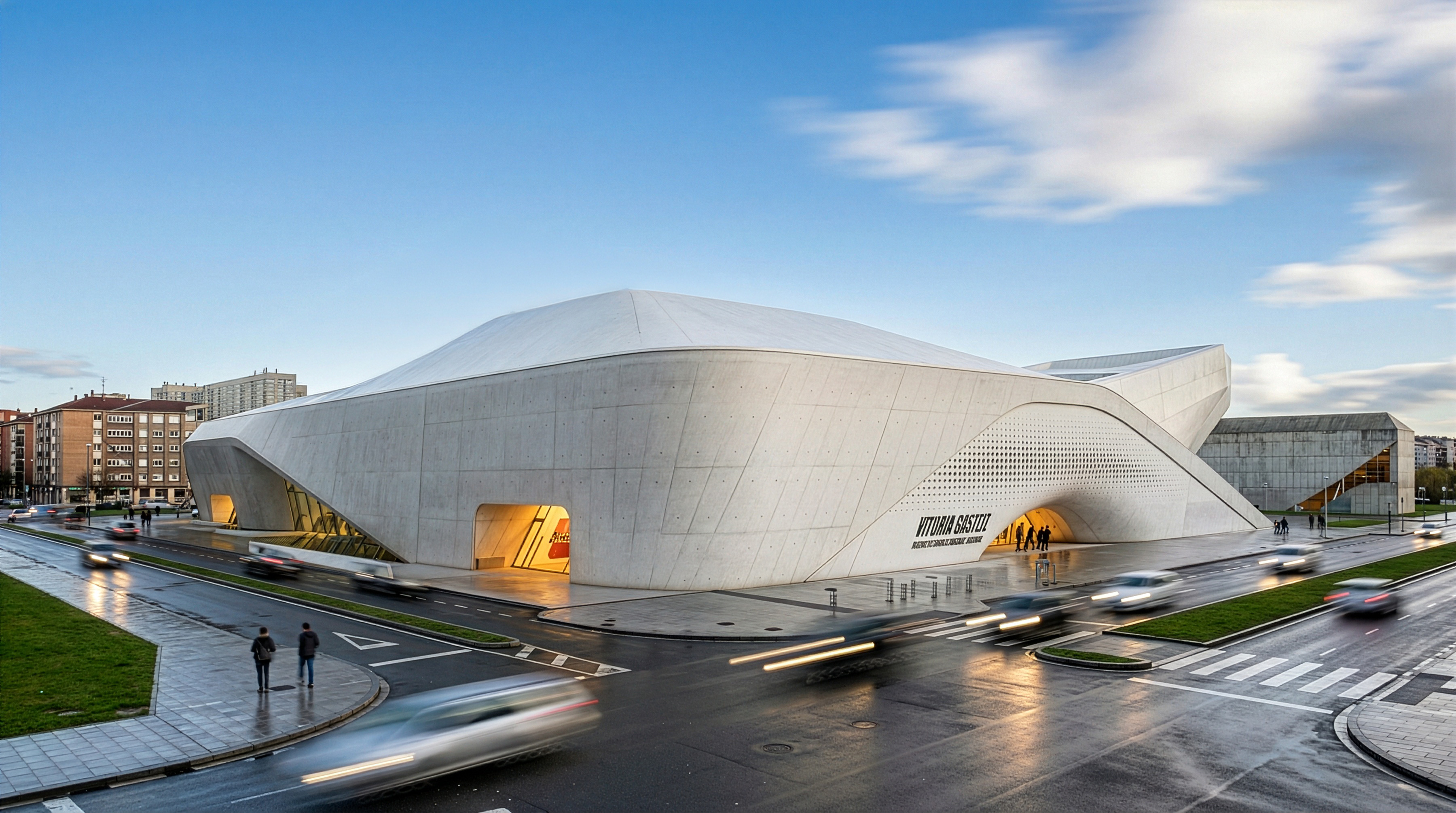
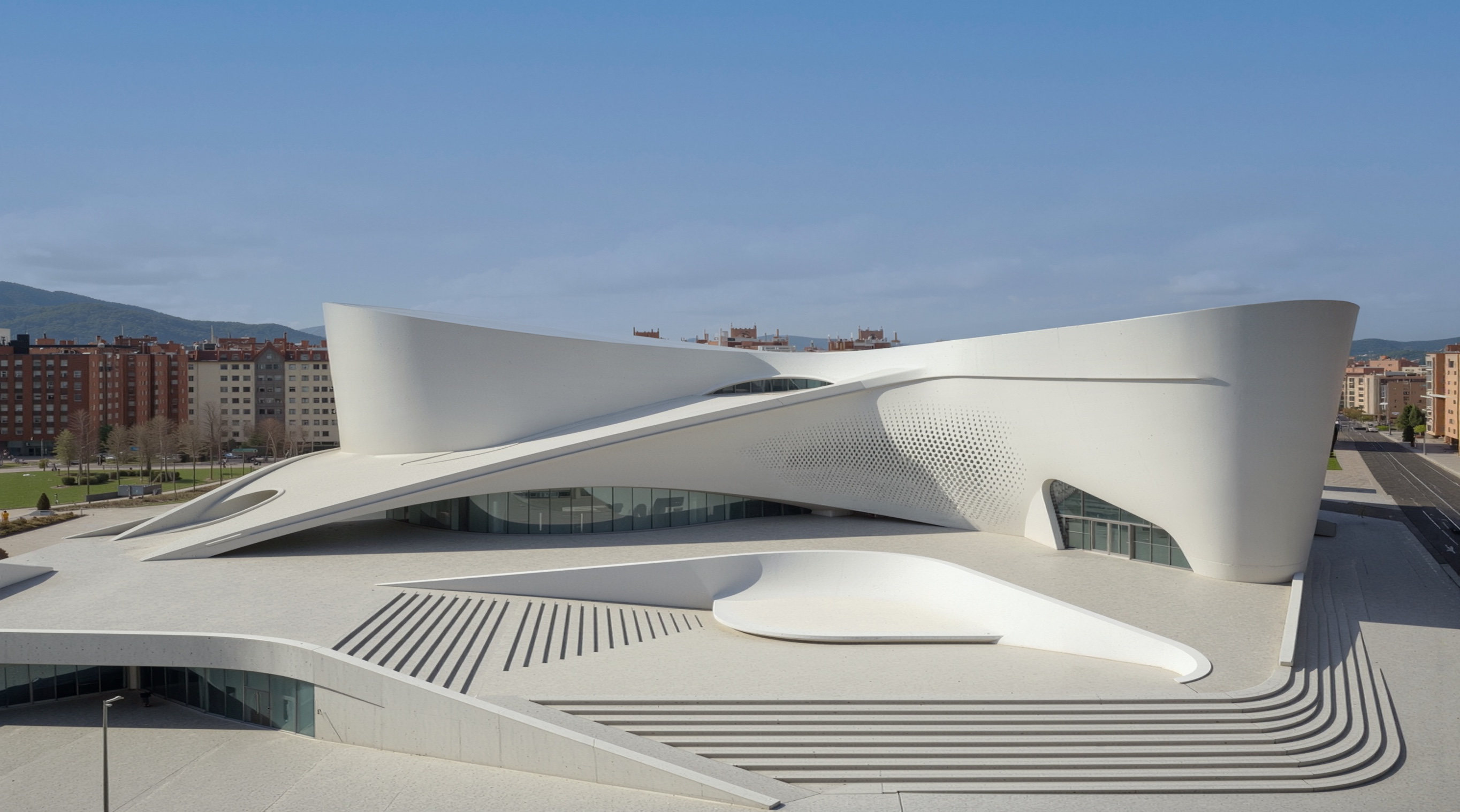
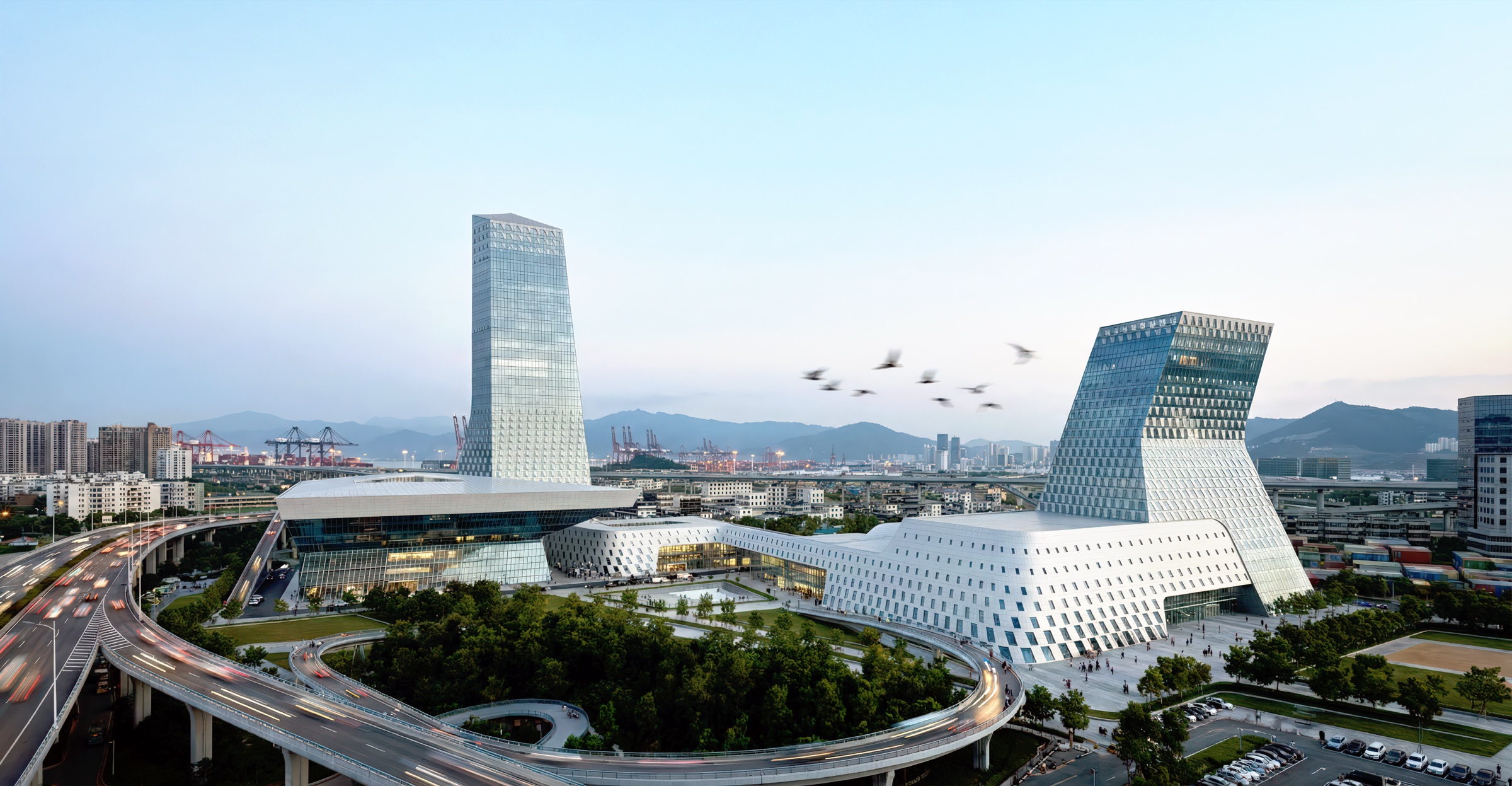
A competition entry for a center for contemporary art and music hall in Vitoria-Gasteiz, Spain — a sweeping sculptural form of perforated white concrete that merges landscape, public promenade, gallery spaces, and a concert auditorium into a single fluid civic gesture.
As the capital of the Basque Country, Vitoria-Gasteiz has positioned itself as a center for sustainability and cultural investment in northern Spain. This competition entry responds to that ambition by proposing a center for contemporary art and music that operates not as an isolated institutional object but as a continuous topographic surface — rising from the surrounding urban landscape, folding and twisting to create a series of interlocking volumes for exhibition, performance, and public gathering.
Architecture
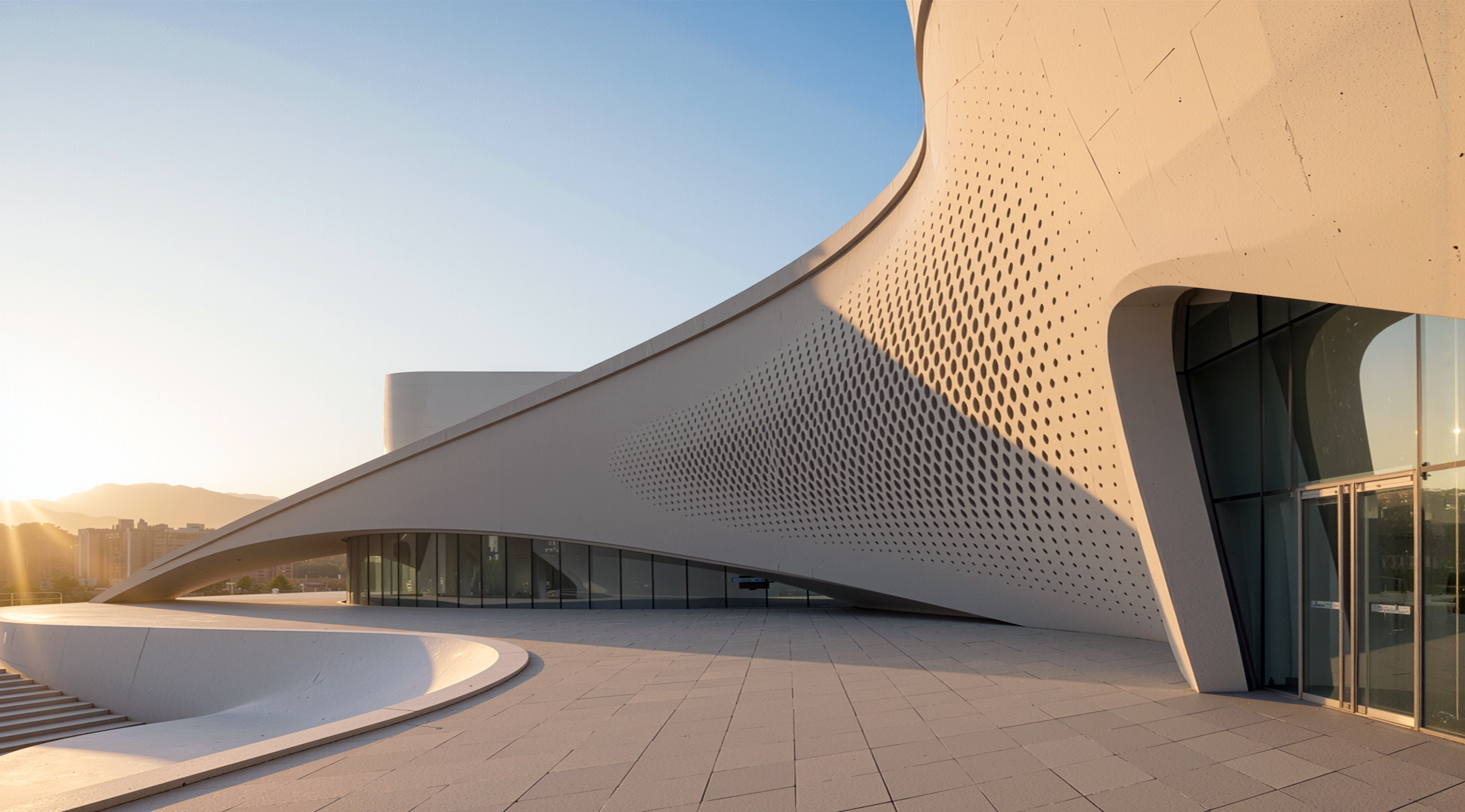
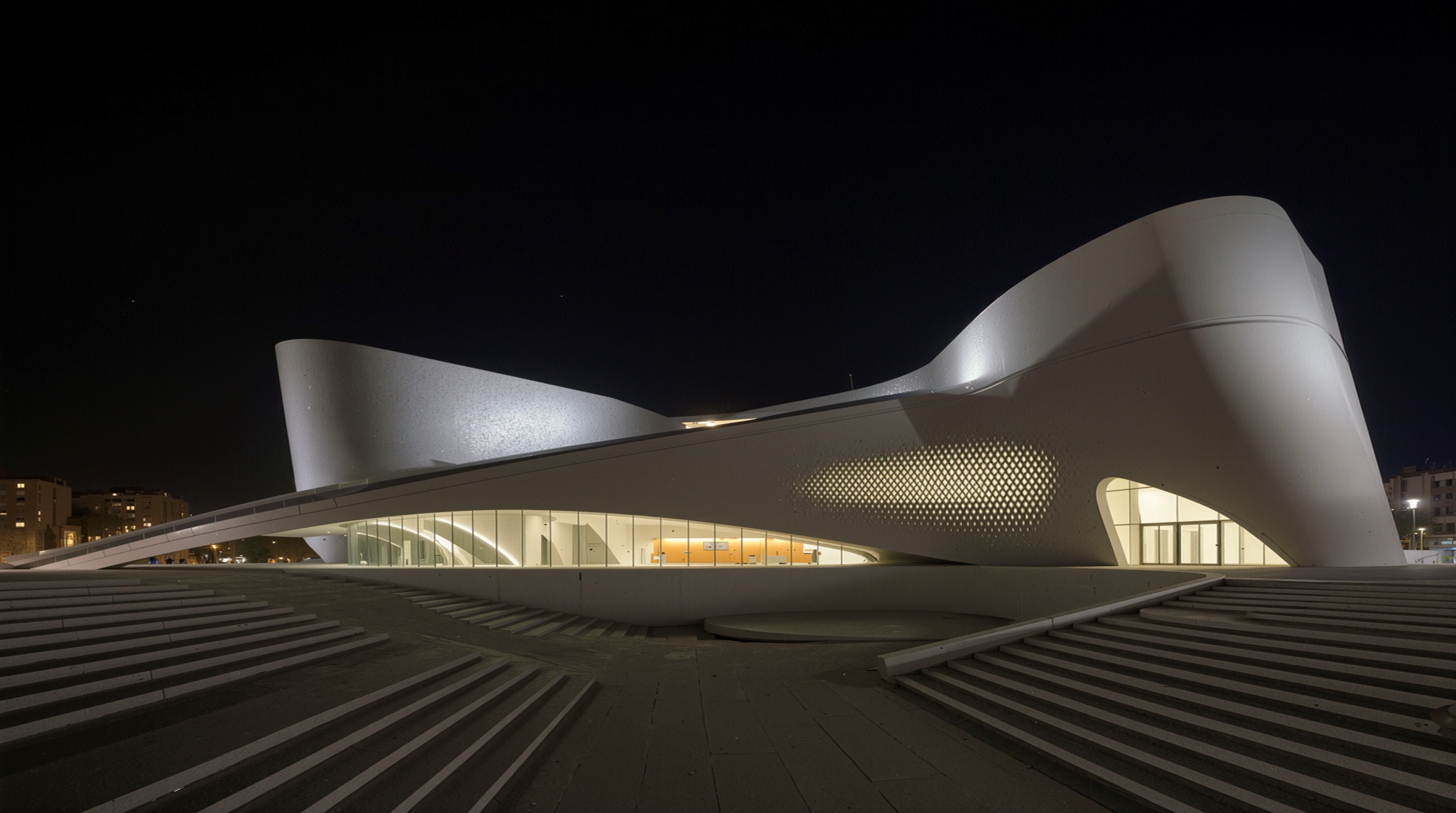
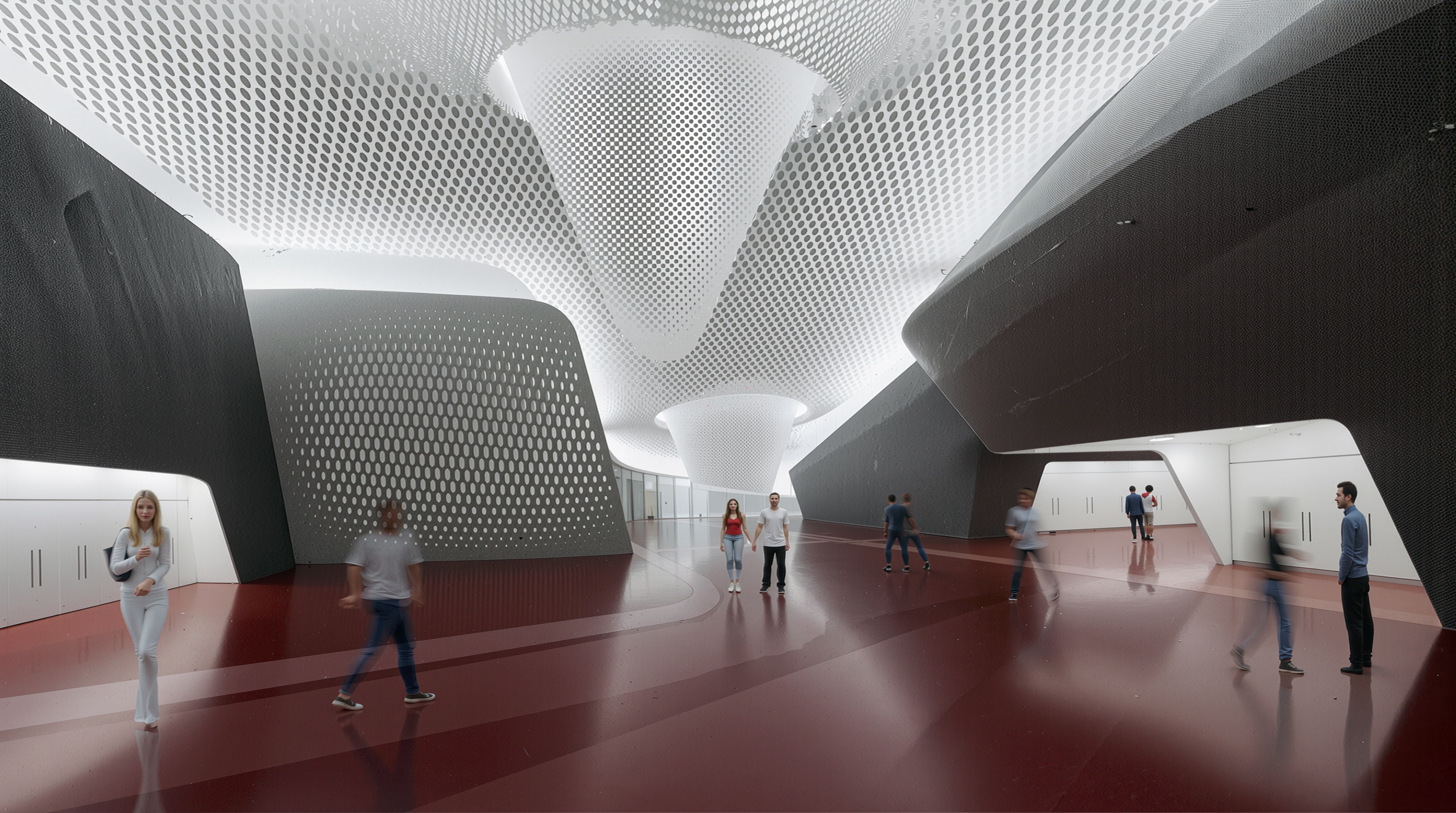
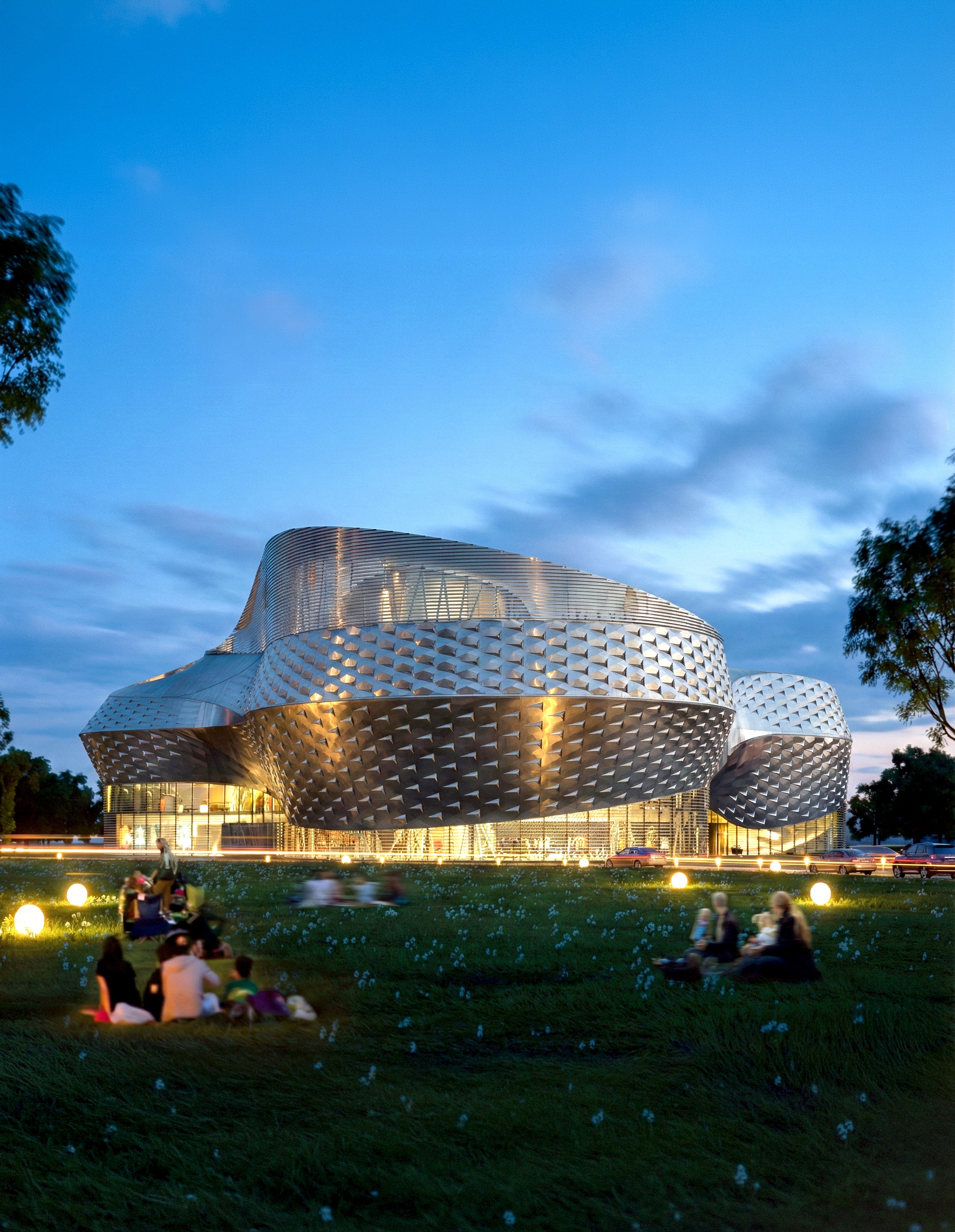
The building’s exterior is defined by a smooth, flowing white concrete shell perforated with hundreds of circular apertures that graduate in density across the facade. This perforated skin serves as both a shading device and an expressive surface, filtering daylight into the interior galleries while creating a mesmerizing pattern of light and shadow that shifts throughout the day. At night, the effect is reversed: interior illumination radiates outward through the openings, transforming the building into a glowing civic lantern visible across the city.
Program and Public Space
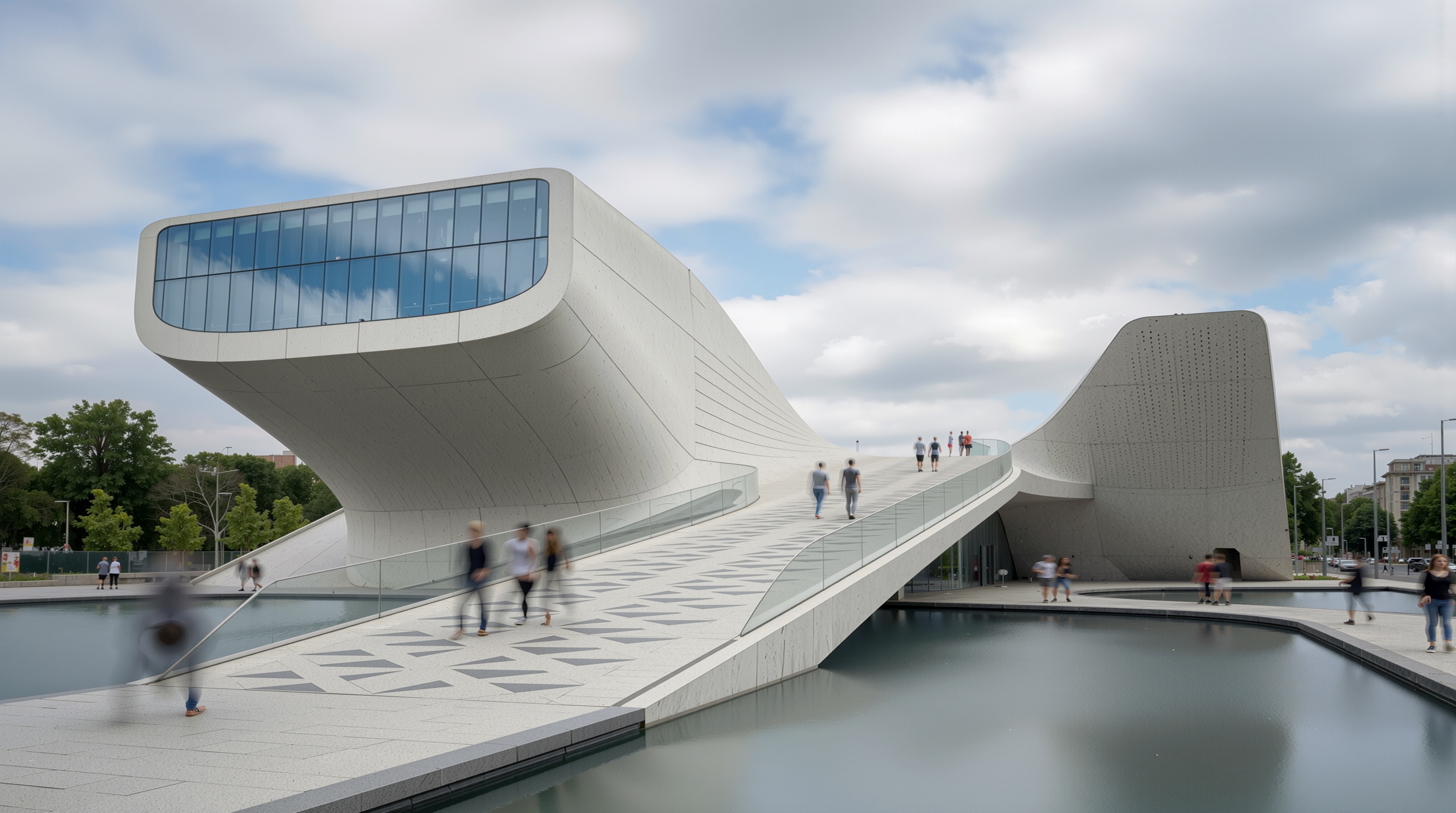
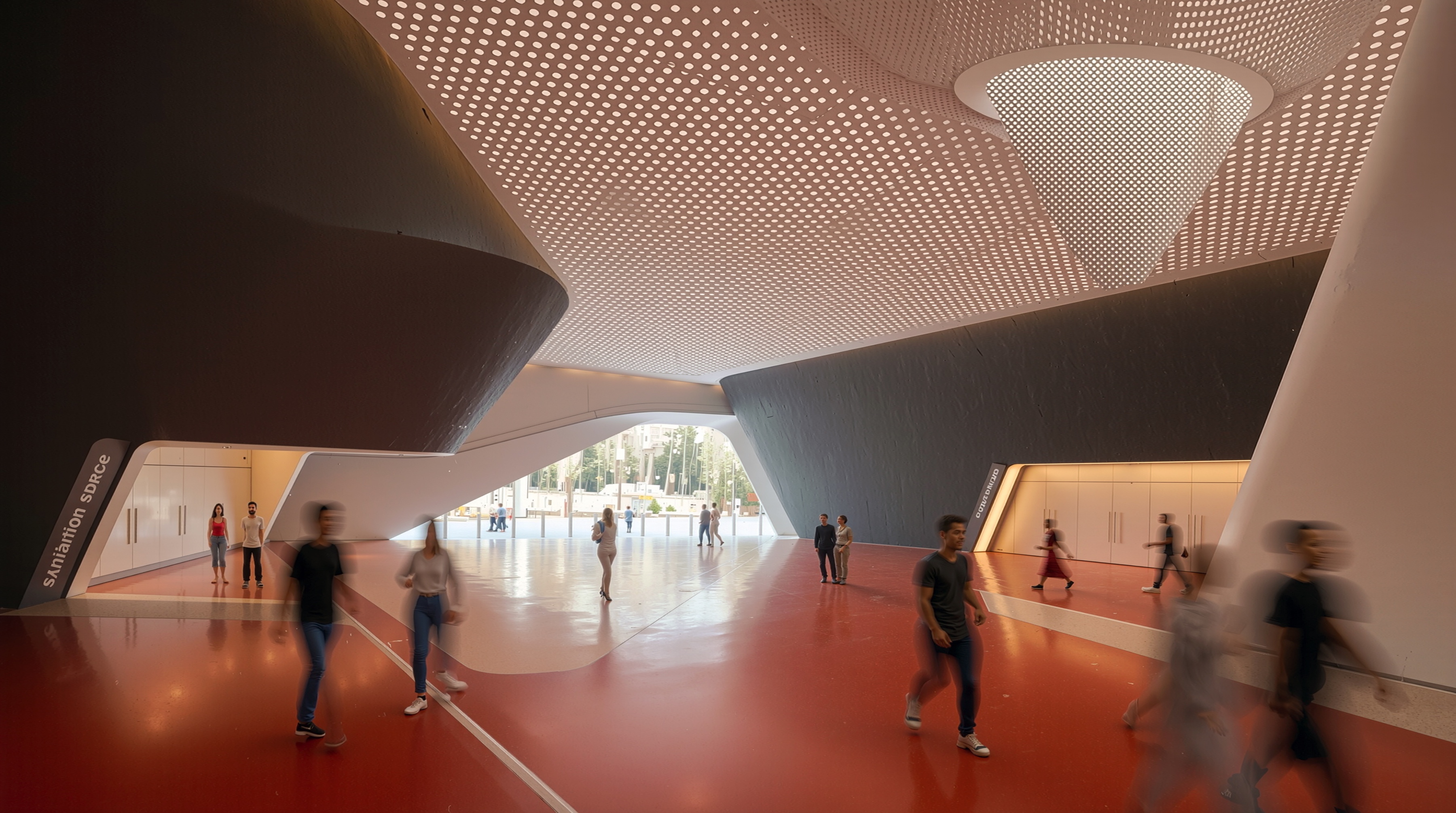
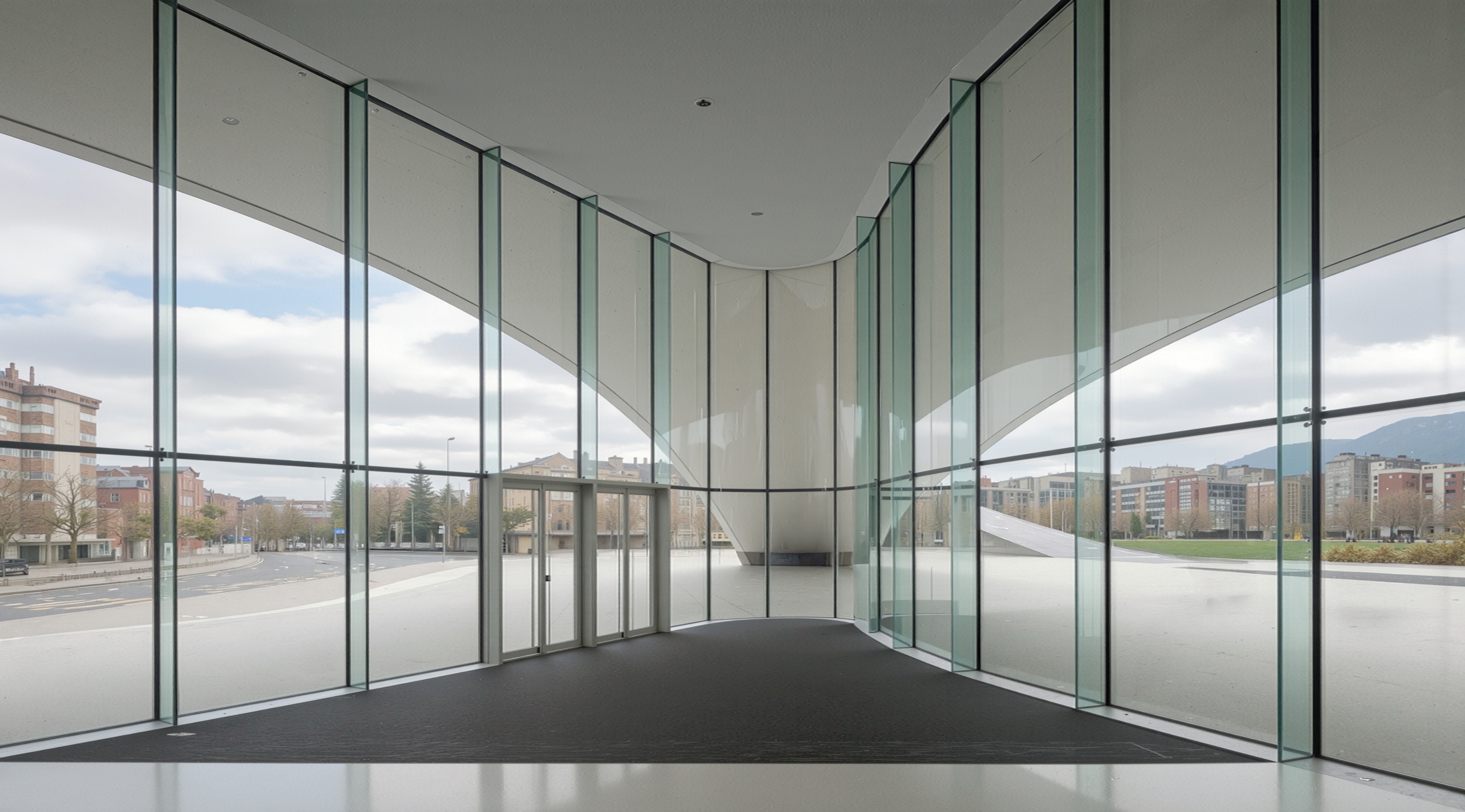
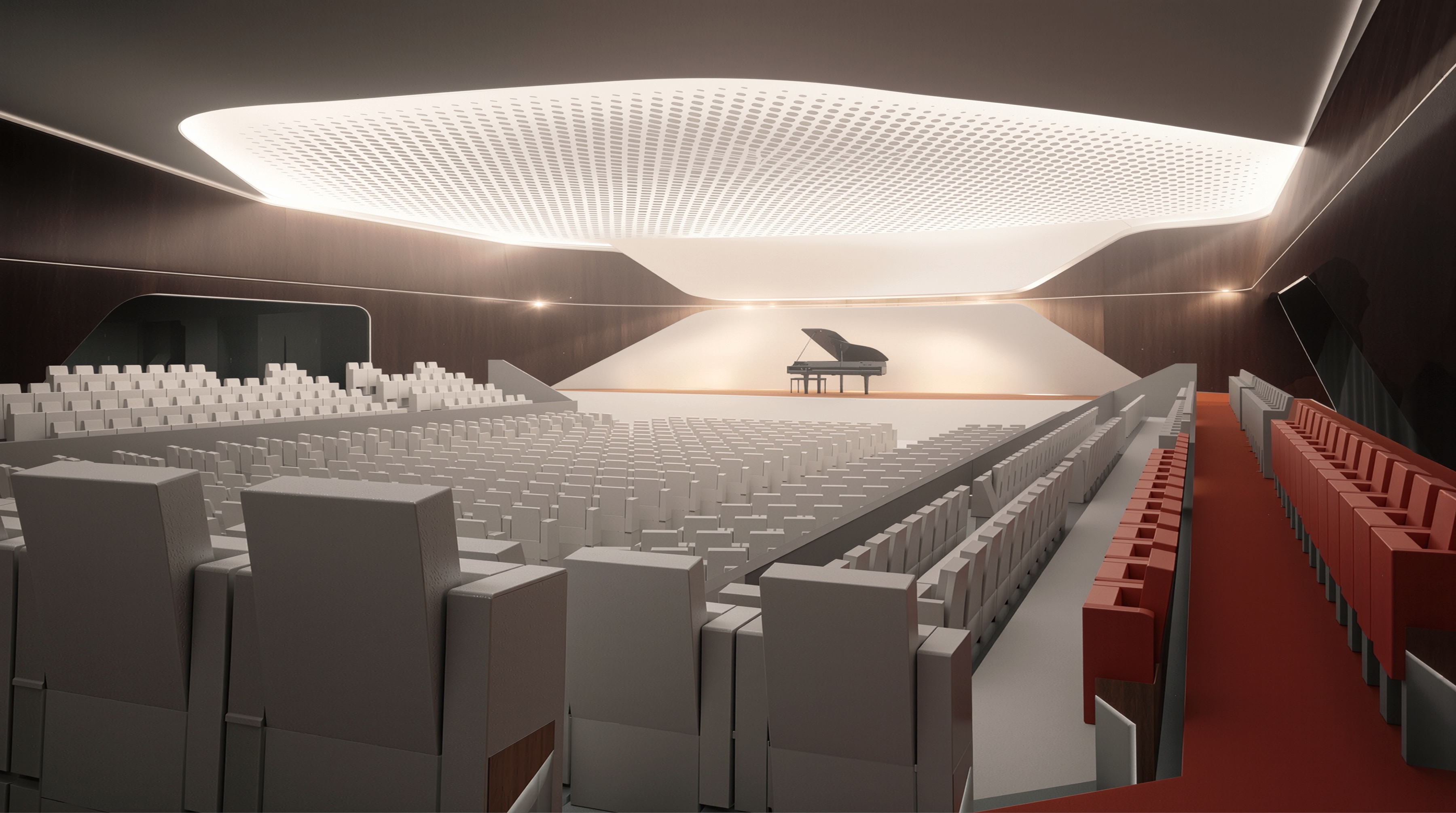
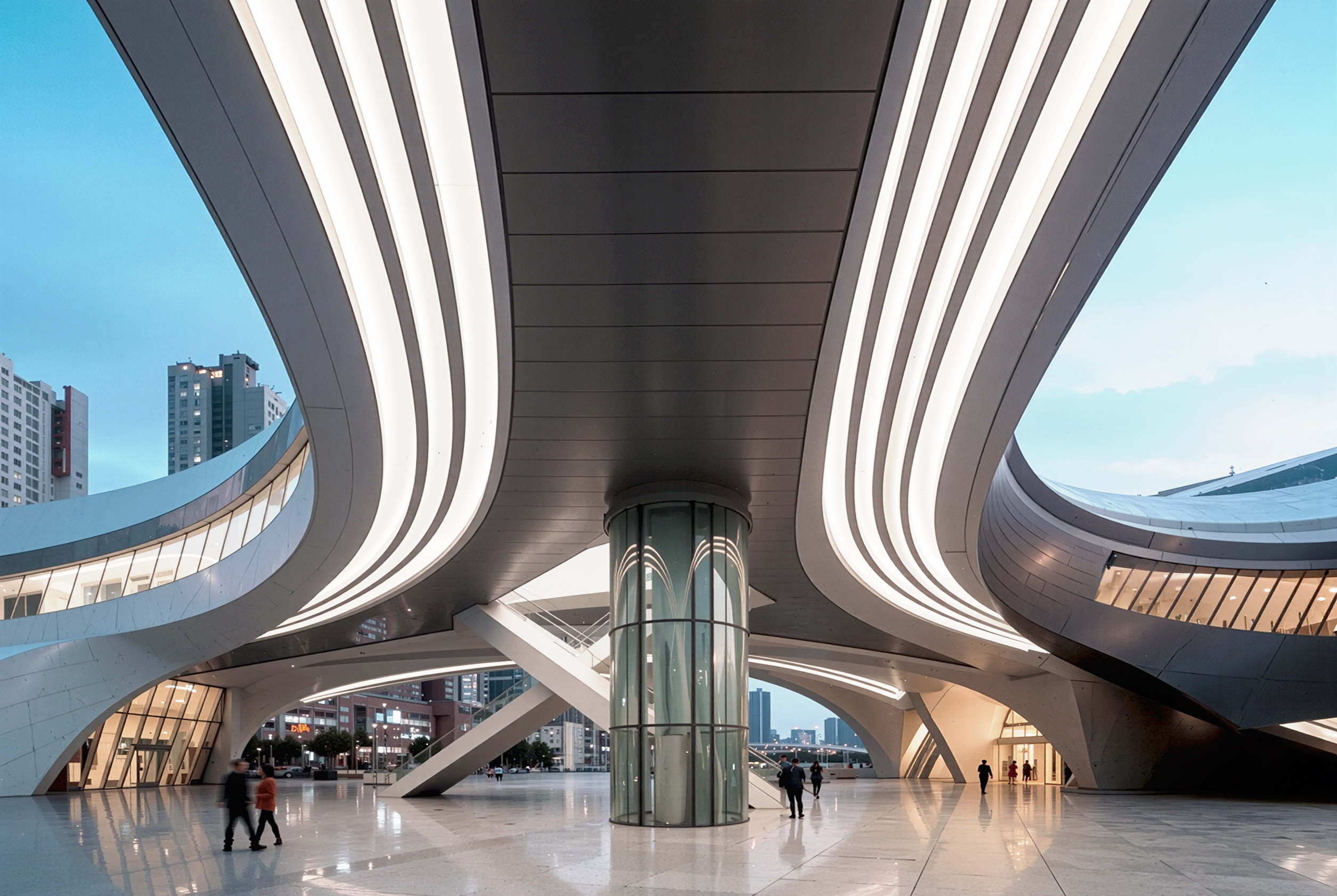
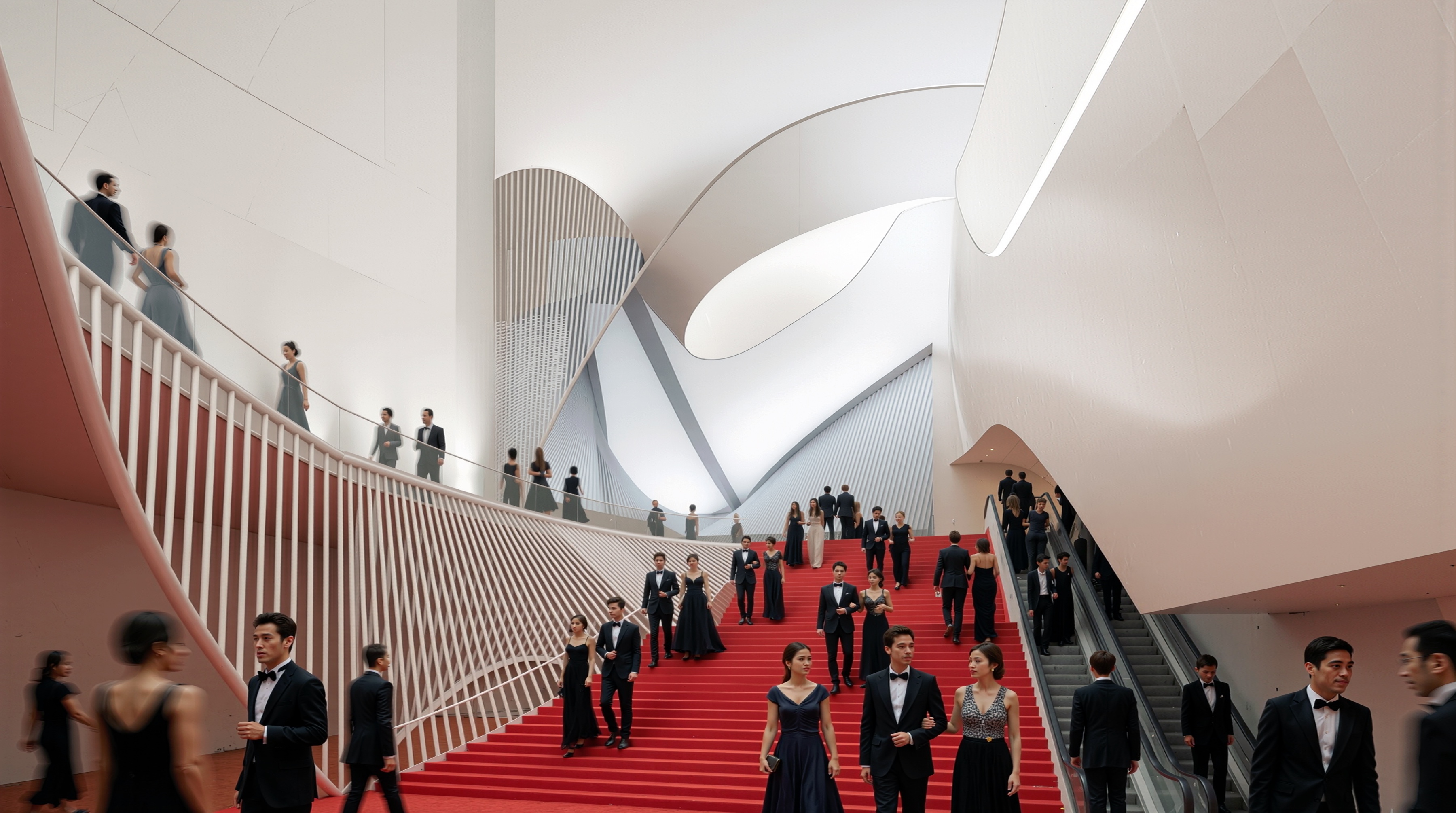
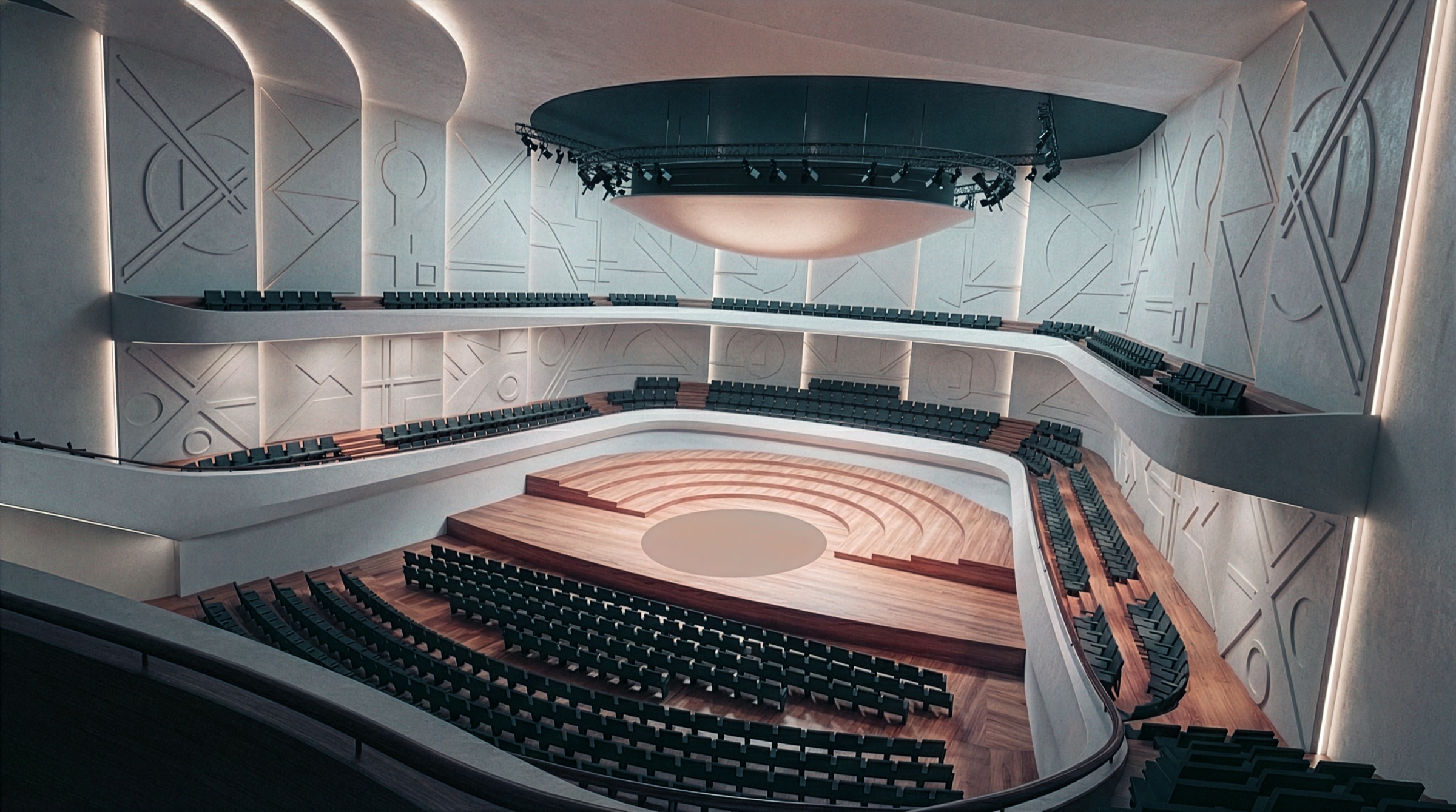
A sweeping elevated promenade extends from the urban edge over a reflecting pool and up along the roofline, blurring the distinction between public plaza and architectural envelope. Below this accessible landscape, the program unfolds across flexible gallery halls, a concert auditorium crowned by a luminous perforated ceiling disk, a ground-floor lobby with a vivid red floor plane, and fully glazed circulation corridors that frame panoramic views of the Basque mountains. The result is a building that is simultaneously architecture and landscape, object and infrastructure — a civic institution that invites the city in and projects art and music outward.