Steel Cloud
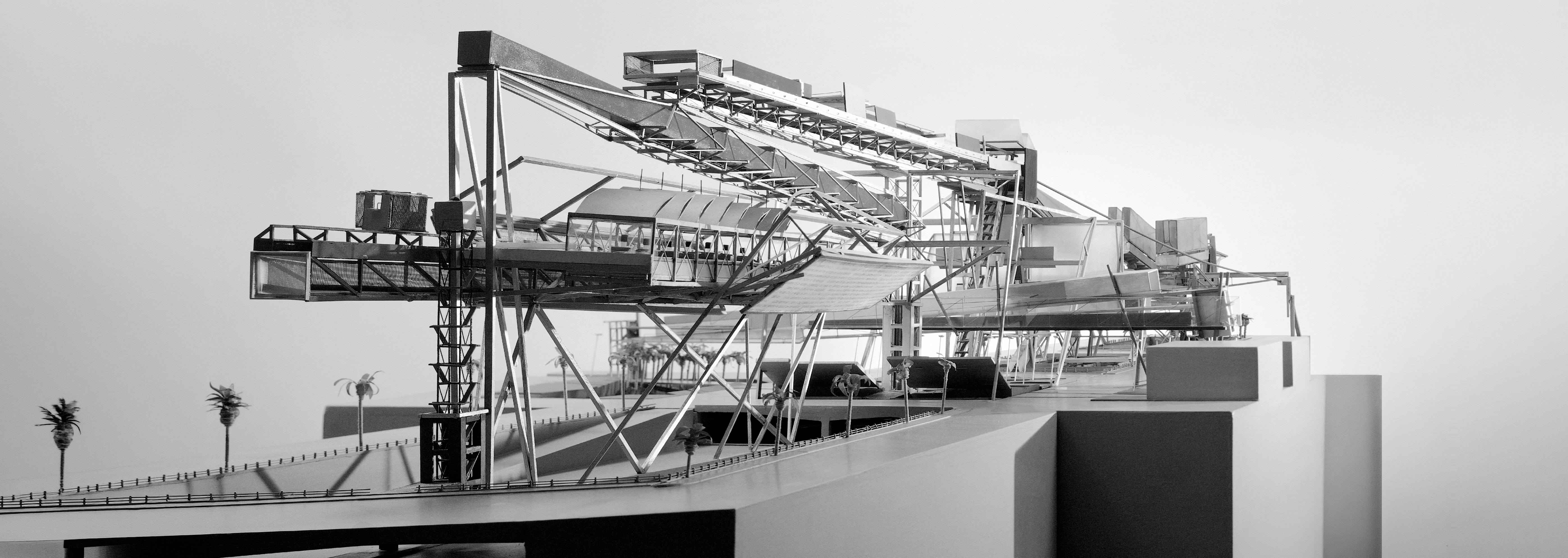
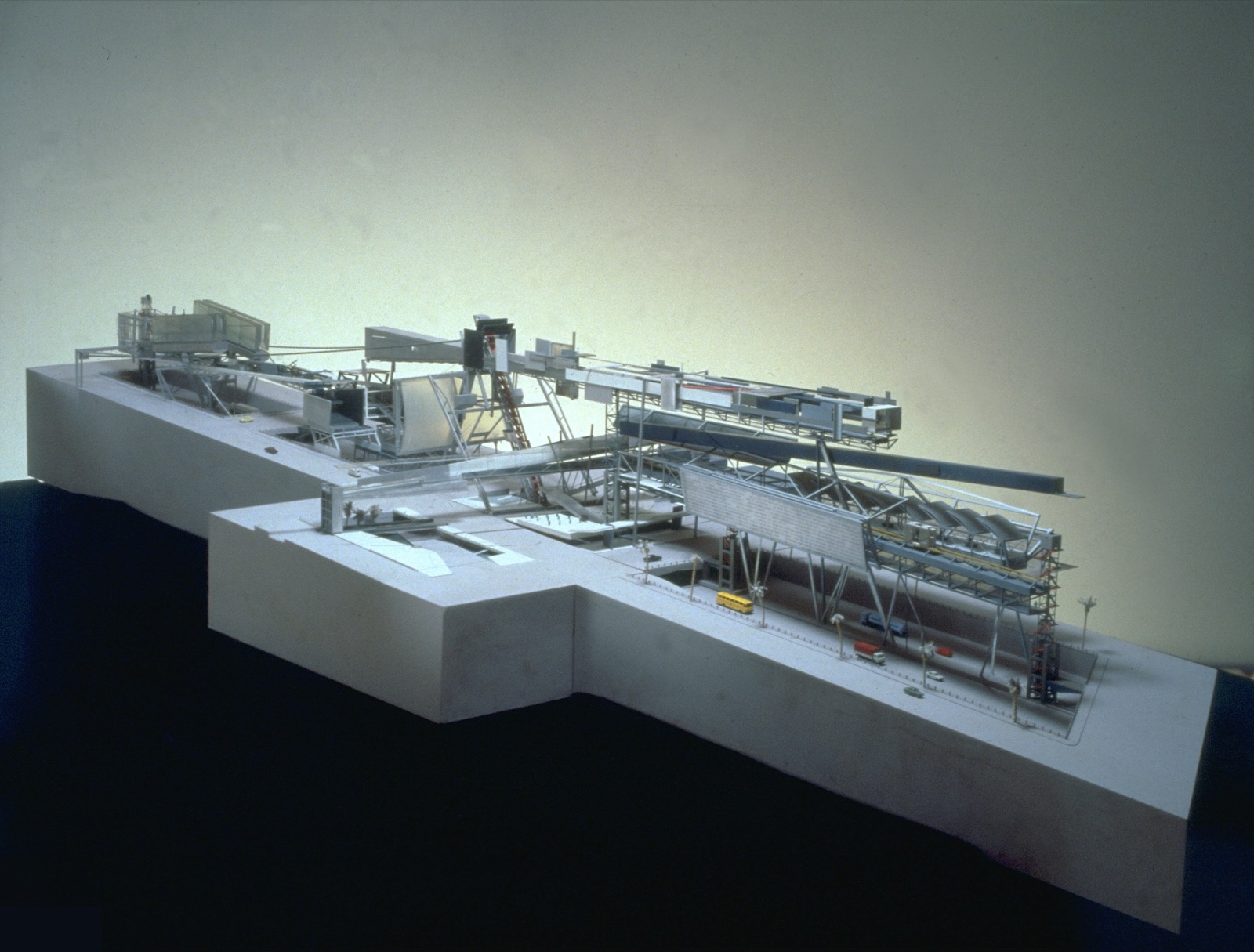
Winner of the international competition for a West Coast counterpart to the Statue of Liberty — a 500-meter inhabited steel structure suspended above the Hollywood Freeway, housing cinemas, theaters, parks, aquaria, and the world's first proposed all-digital library.
The Steel Cloud is where it all began. When Hani Rashid and Lise Anne Couture moved from Milan to New York City to establish Asymptote, this was the studio’s first building project — a competition entry that would announce a radically new voice in architecture.
The Competition
In 1988, the city of Los Angeles launched an international competition for a West Coast Gateway — a monument to Pacific Rim immigration intended as the western counterpart to the Statue of Liberty on the East Coast. The jury was extraordinary: Octavio Paz, the Nobel laureate poet; Robert Wilson, the legendary performance artist; George Takei of Star Trek fame; Sverre Fehn, the important Scandinavian architect; and Christine Feireiss of AEDES Berlin. Asymptote’s entry won first prize, beating out conventional proposals — including a monumental Marilyn Monroe standing above a street grate — a testament to the jury’s intellectual bravery and the city’s desire to transcend its superficial Hollywood branding.
The Project
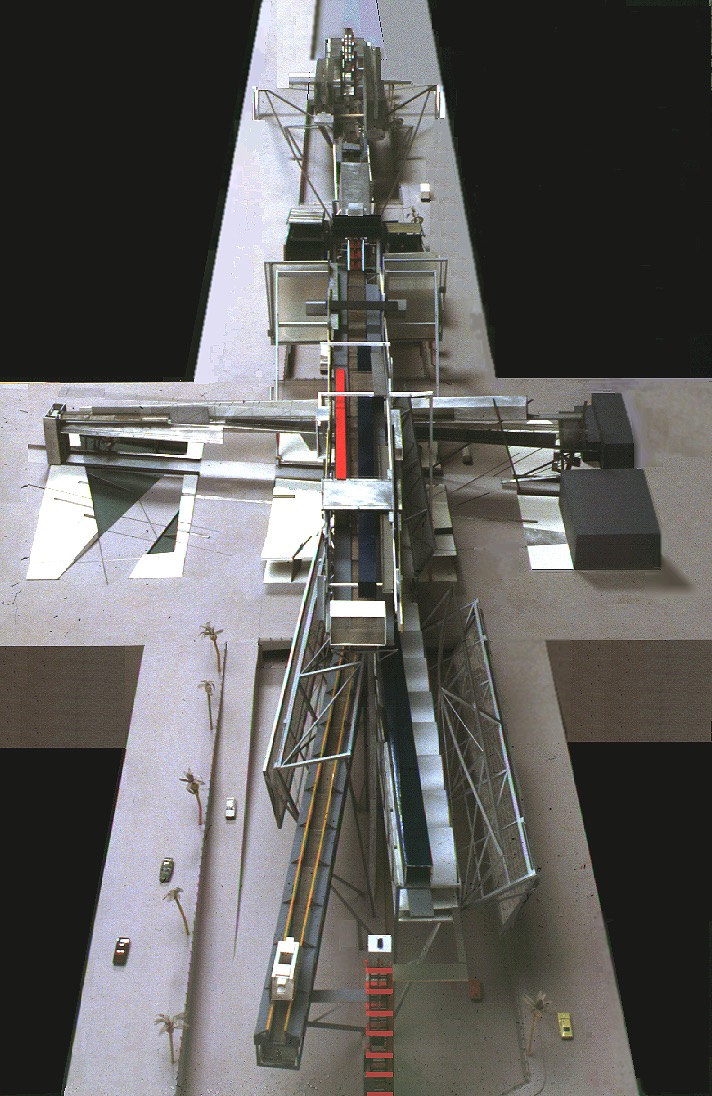
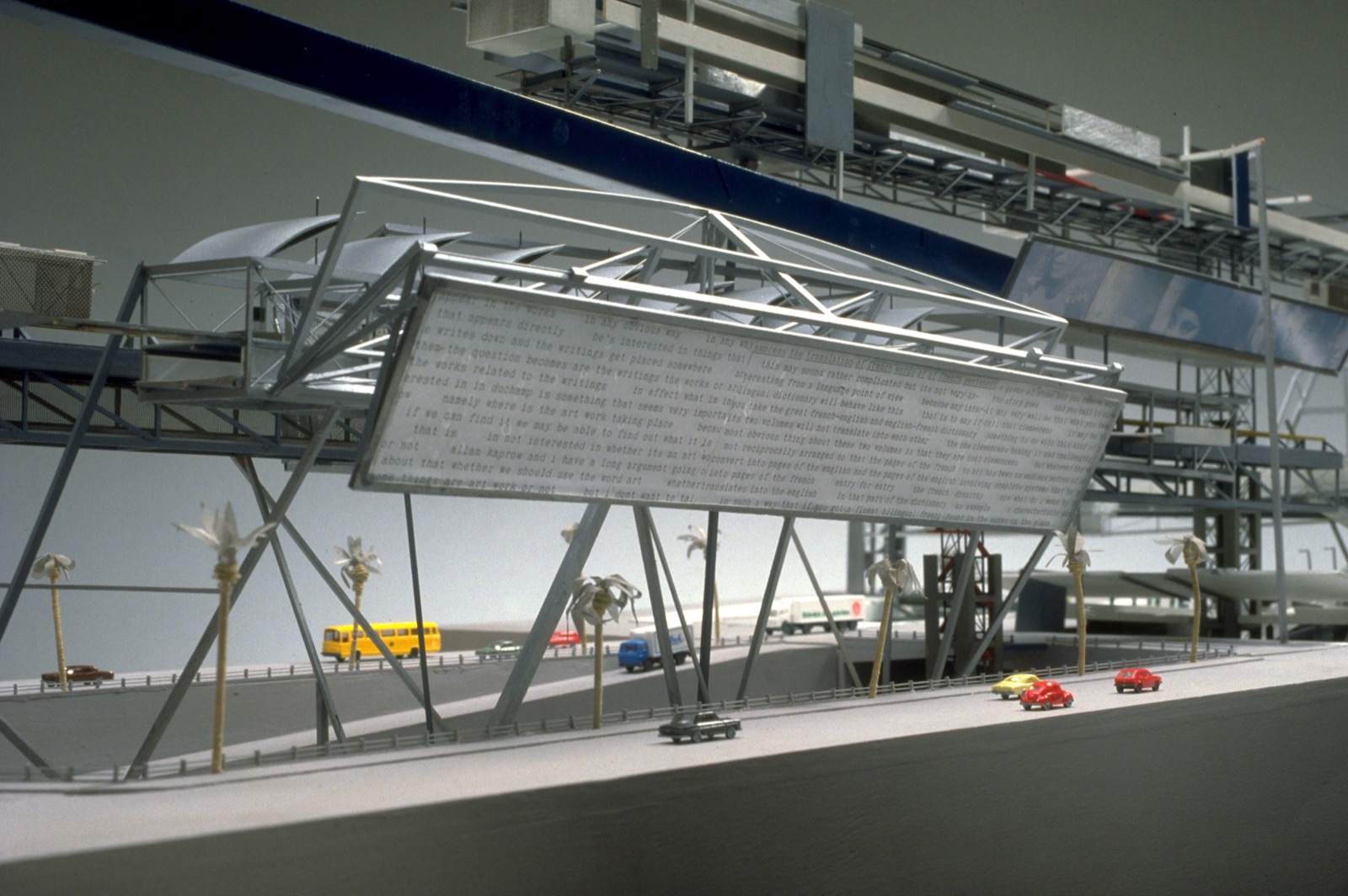
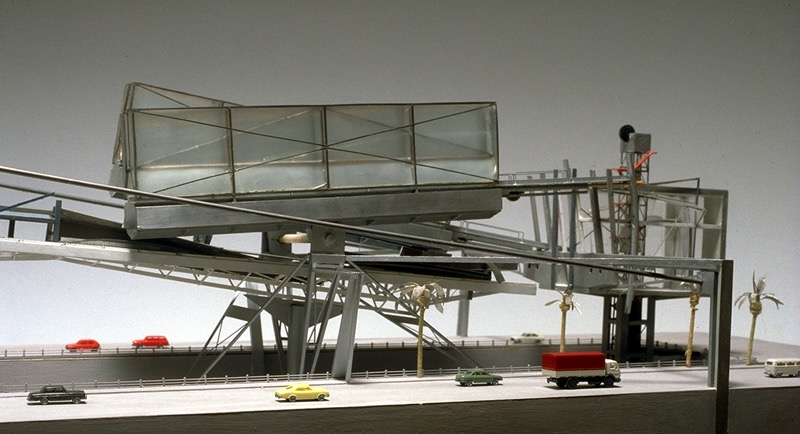
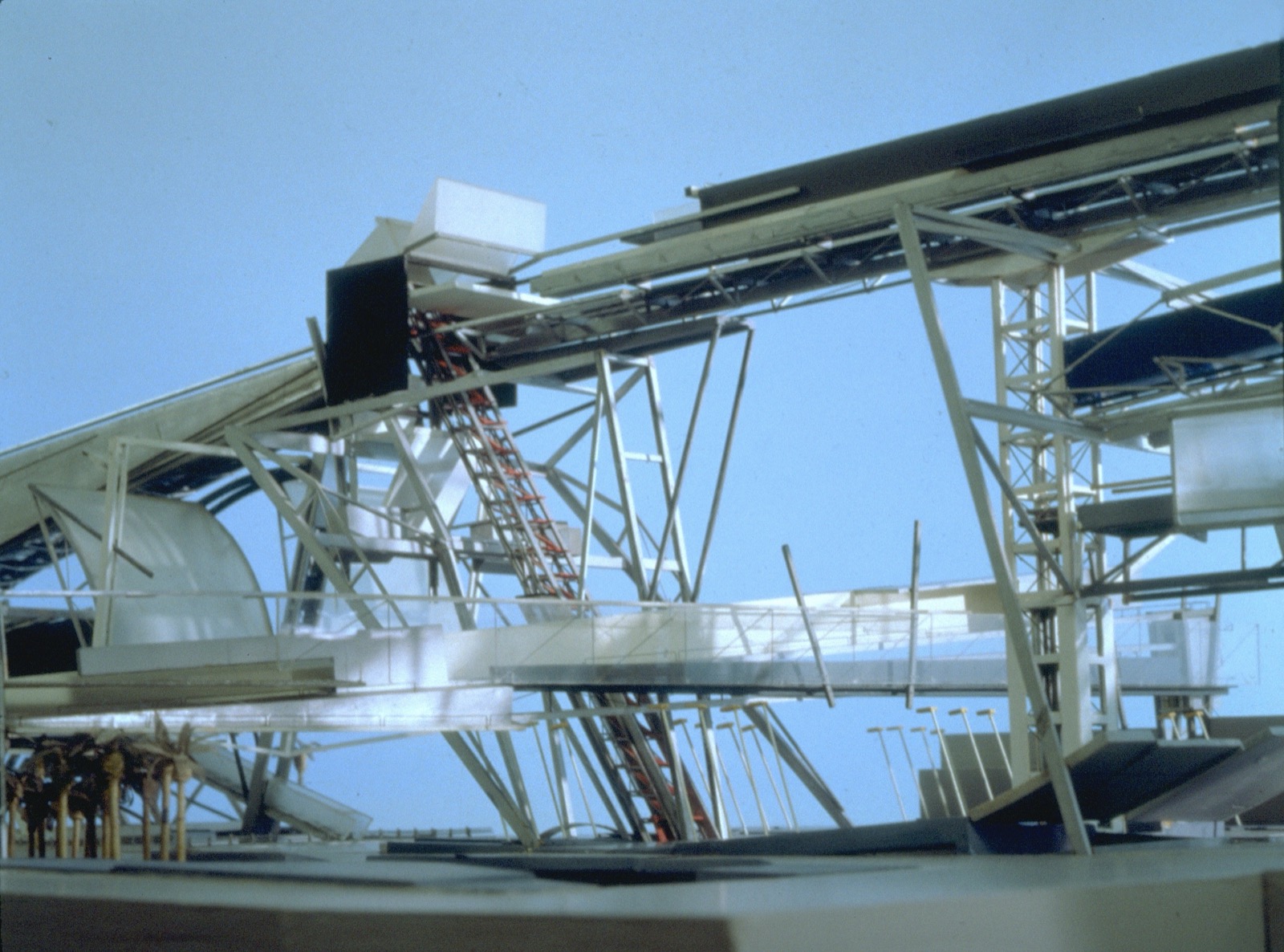
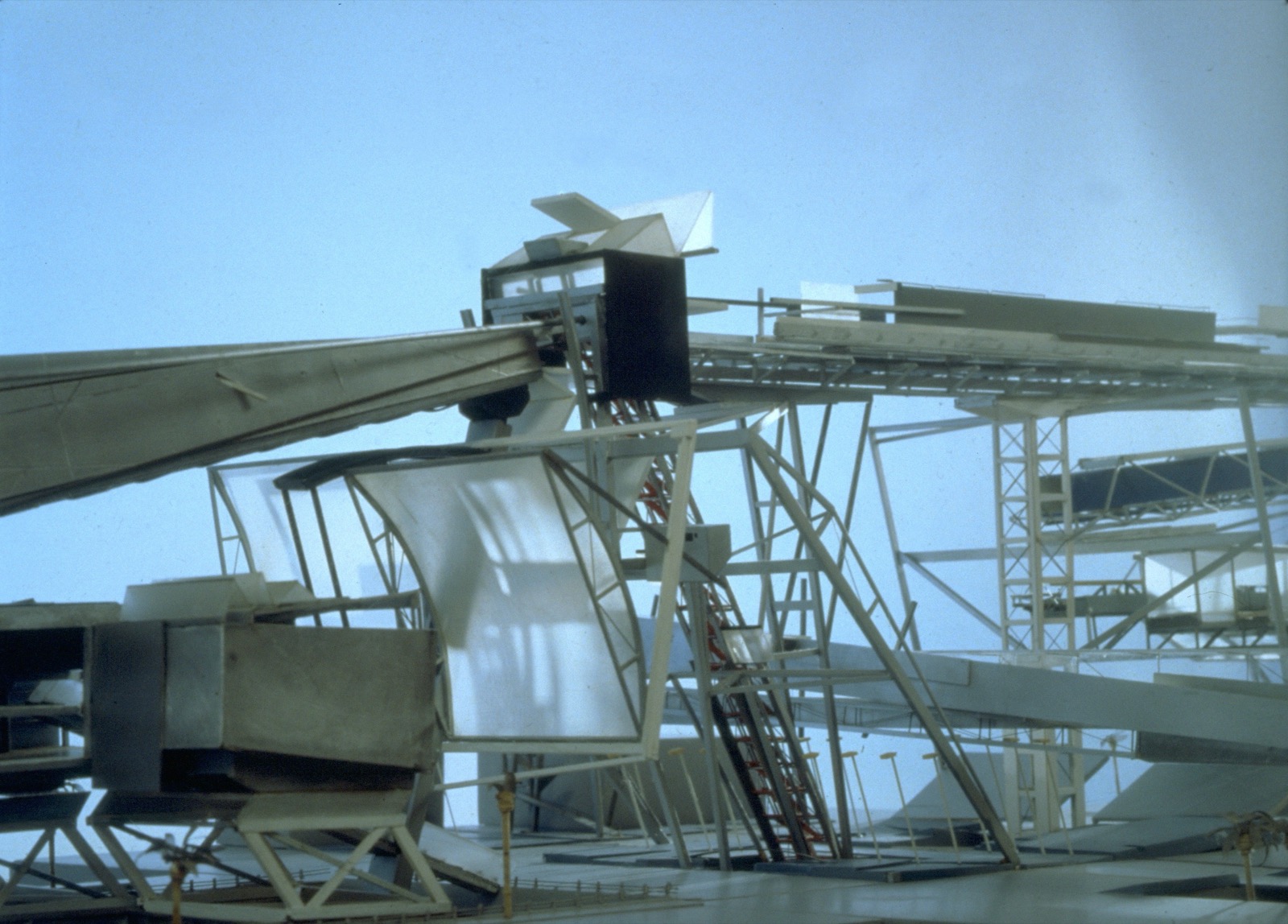
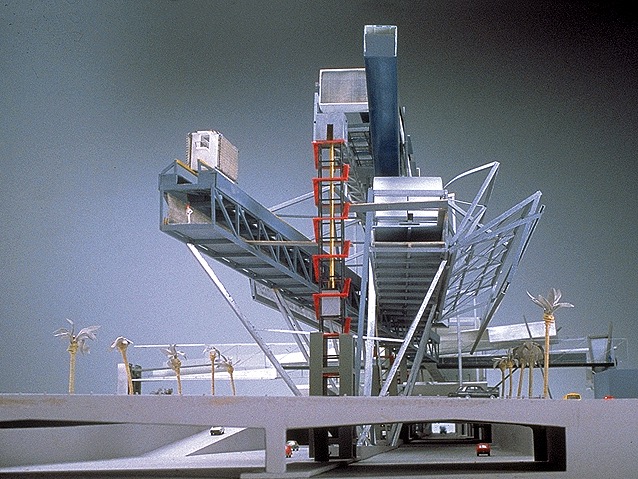
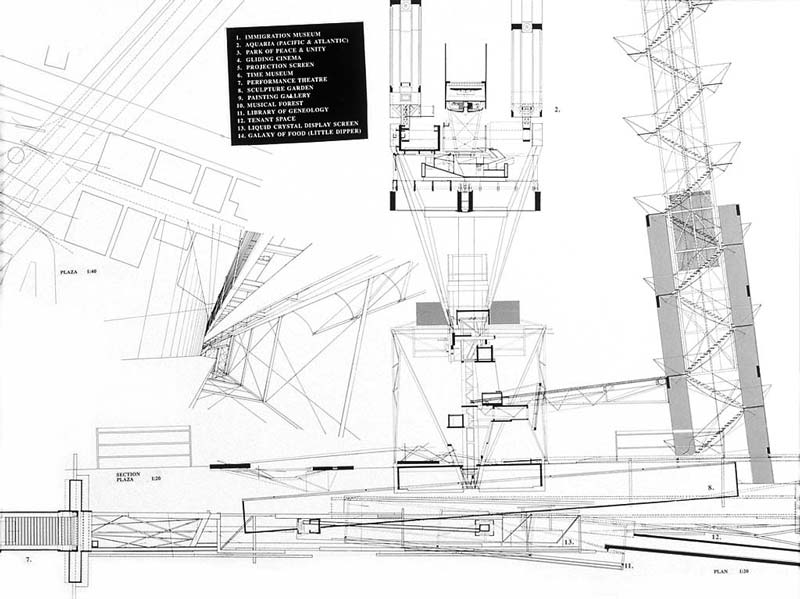
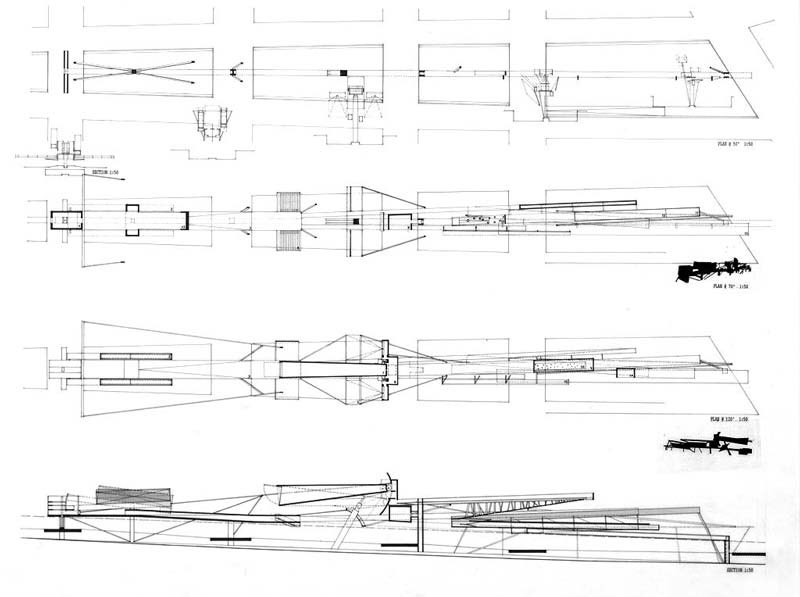
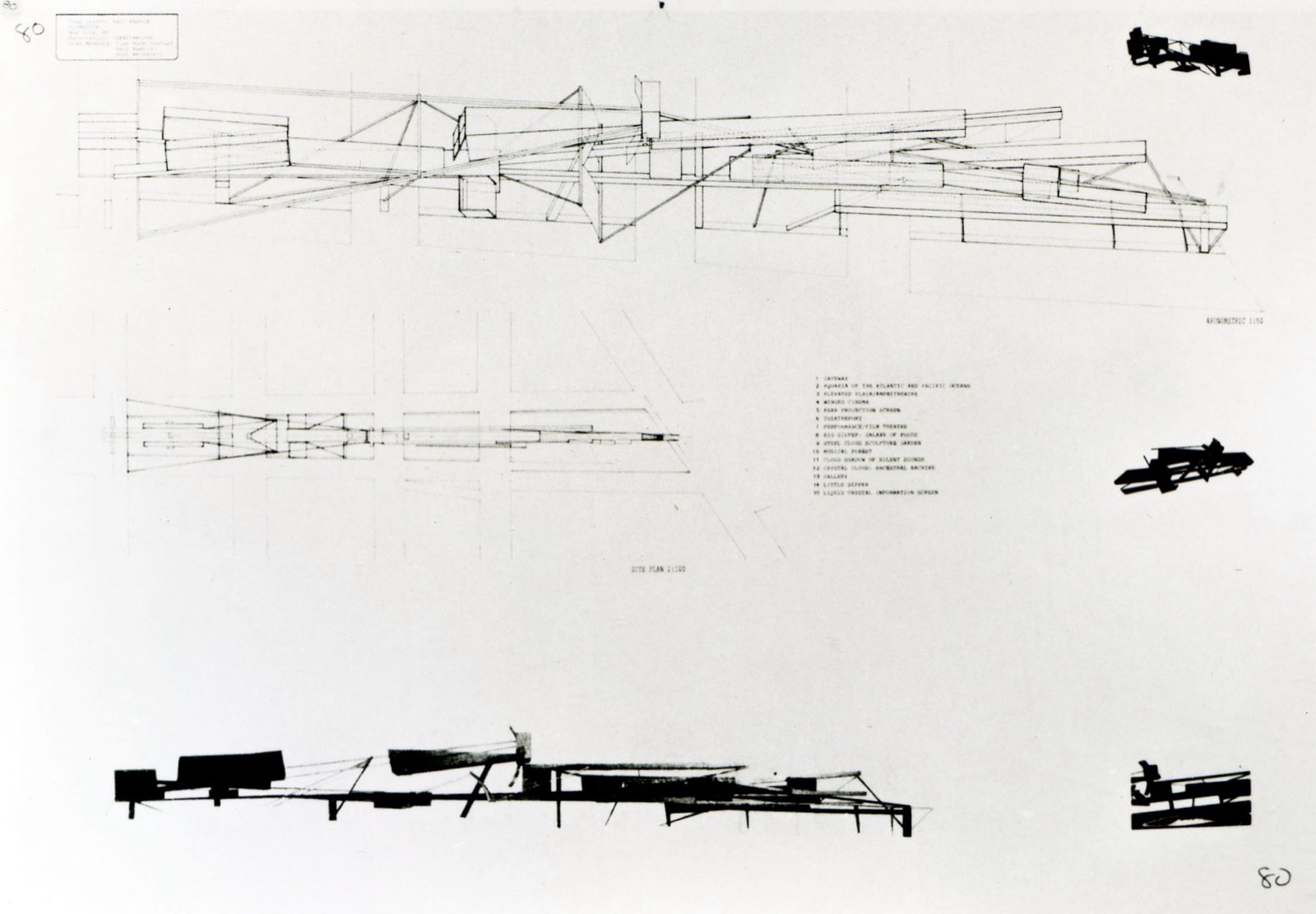
The Steel Cloud is a 500-meter horizontal inhabited structure suspended directly above the median strip of the Hollywood Freeway. It turns the dead space above the highway upside down, transforming it into a city above a city. The cruciform structure is composed of overlapping inclined planes without parallels — a park (a precursor by more than a decade to New York City’s High Line), cinemas, theaters, aquaria spanning Pacific and Atlantic marine life, and the world’s first proposed all-digital library. The library would generate random searches from visitors’ queries and broadcast them onto massive digital billboards above the freeway.
The structure can be experienced in two fundamentally different ways: slowly, on foot along elevated promenades; or at 70 miles per hour from the freeway below, where drivers catch the entire spectacle in just 18 seconds.
Inspirations
The project emerged from Hani Rashid’s immersion in the nascent cyberpunk imagination — William Gibson’s Neuromancer, the graphic worlds of Moebius, the stage sets and production design of Syd Mead, and the atmosphere of Ridley Scott’s Blade Runner. The Steel Cloud channeled these influences into an architectural proposition unlike anything the discipline had seen before.
Legacy
The competition win generated massive media coverage — Dan Rather on CBS, CBC Toronto News, and press worldwide. Reactions were polarized, ranging from fascination to bewilderment, because the project was something genuinely unprecedented. It was ultimately too radical a proposal for a city that, despite the jury’s foresight, could not overcome a populist mentality that favored the familiar. The scheme was never realized.
Yet in its unbuilt state lies its enduring power. The Steel Cloud has become one of the most influential unrealized projects in contemporary architecture, held in the permanent collection of the FRAC Centre-Val de Loire in Orléans, and exhibited at ArchiLab in both Orléans (1999) and the Mori Art Museum in Tokyo (2004–05). For Lise Anne and Hani, this project brought them into the public eye and made them more committed than ever to experimental and radical architecture as the way forward.