Commercial · 2007 · Competition Winner
Solomon Tower, World Business Center Busan
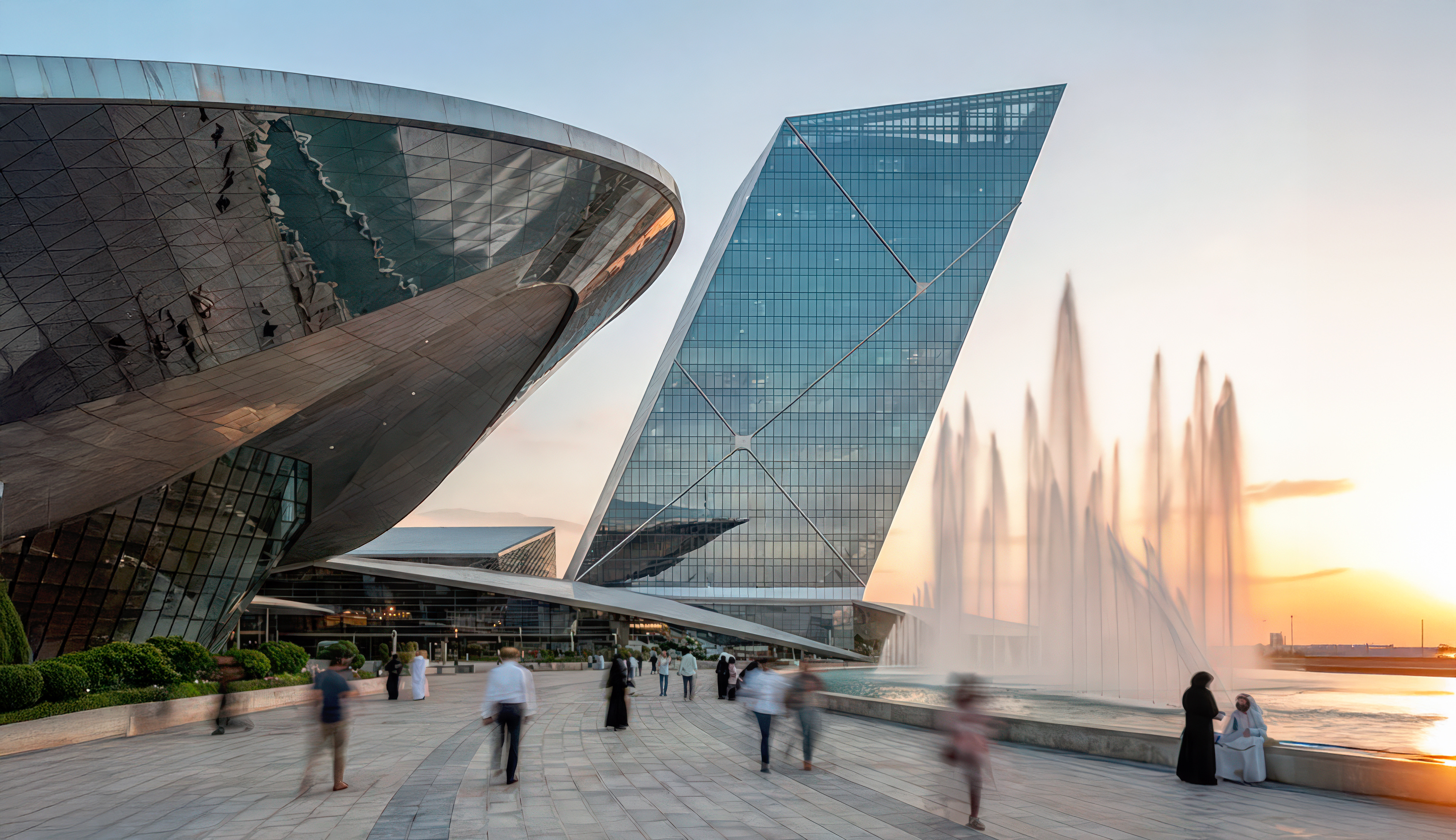
A 560-meter supertall mixed-use tower for the Solomon Group in Busan, three tapered volumes rise from a shared base around a central void, establishing a new presence on the Korean coastline.
About the project
Three Towers, One Form
The Solomon Tower was commissioned through an international design competition organized by the Busan International Architectural Culture Festival and sponsored by the Municipality of Busan and the Solomon Group. Rather than proposing a single monolithic extrusion, the design splits the program into three distinct tapered volumes that rise from a shared base around a dramatic central void. Each tower is given over to a separate program, hotel, luxury residential, and commercial office, while the base and sky lobbies provide shared public and cultural amenities. At 560 meters and 289,000 square meters of program, the completed tower would have ranked among the tallest structures in Asia. The competition jury, which included entries from Foreign Office Architects and UN Studio, selected the Asymptote design unanimously.
The Central Void
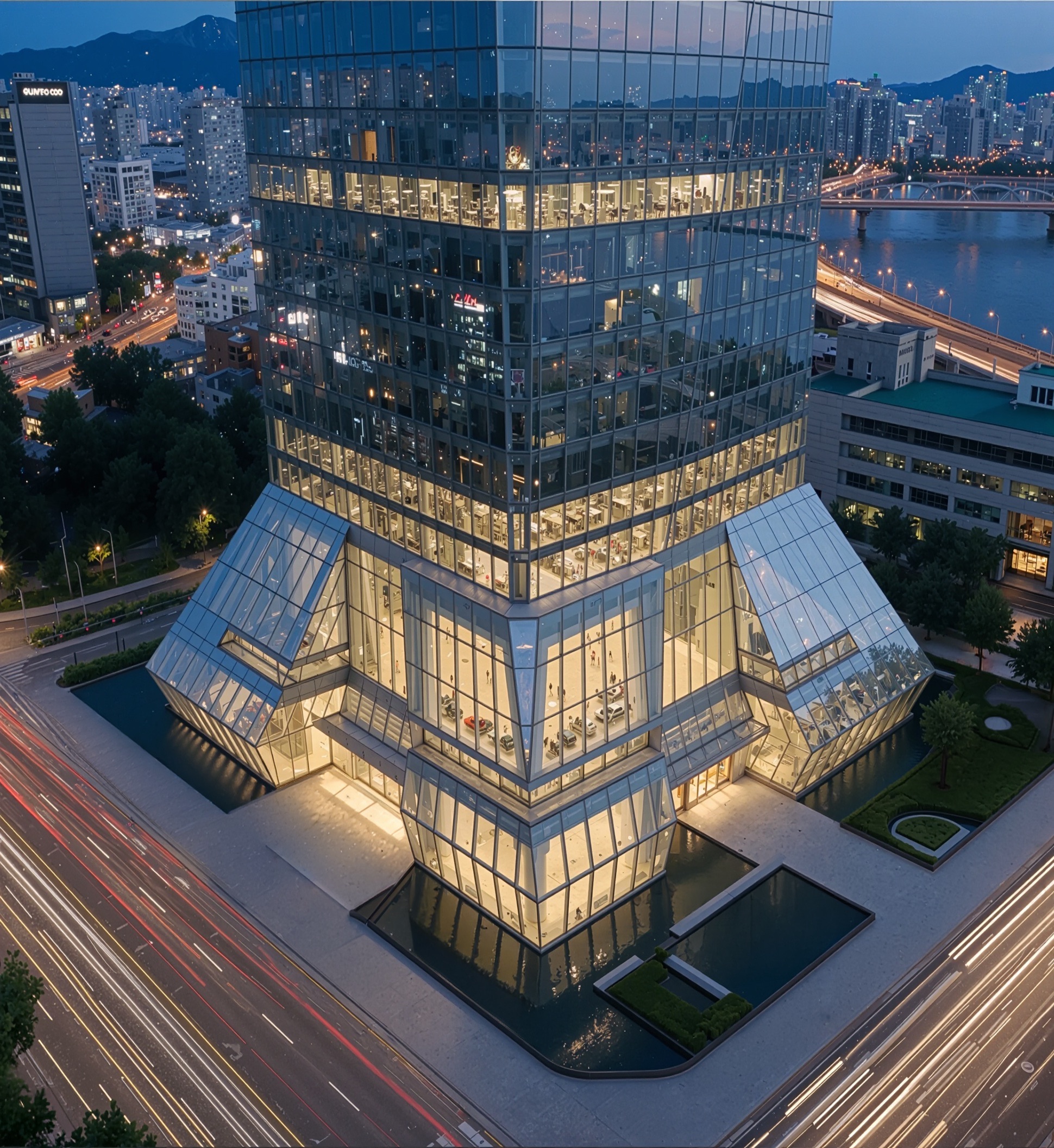
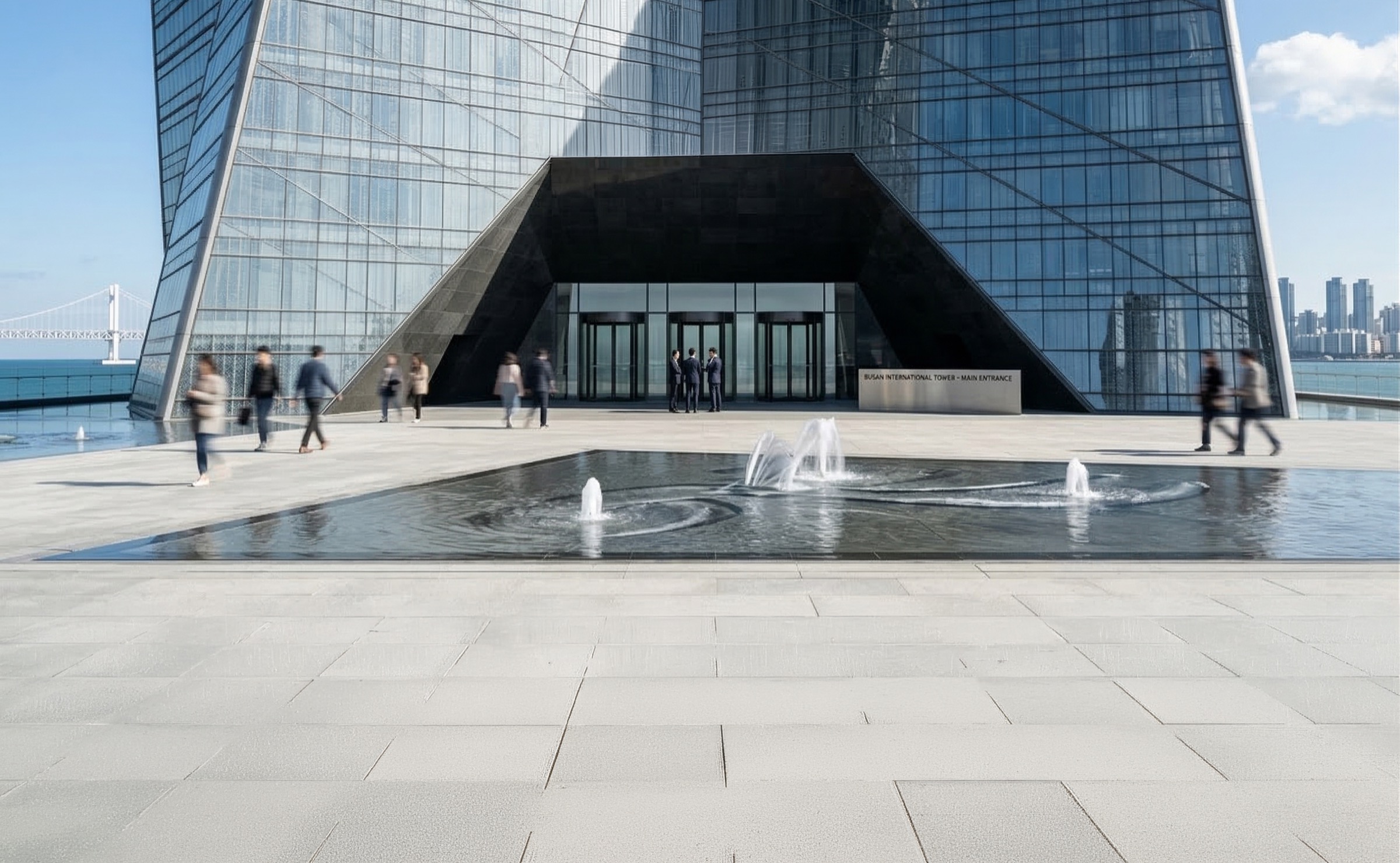
The most striking formal gesture is the vertical cleft that opens between the three towers as they rise from a single massive plinth. At ground level this void becomes a monumental threshold, scaled to the surrounding waterfront landscape and framed by gold-finished structural fins that are exposed where the glass curtain wall parts. The void functions as an organizing principle: it introduces light and air deep into the plan, allows views through the building from multiple directions, and gives the tower a profile that changes dramatically when seen from different positions around the city.
Waterfront Ground Plane
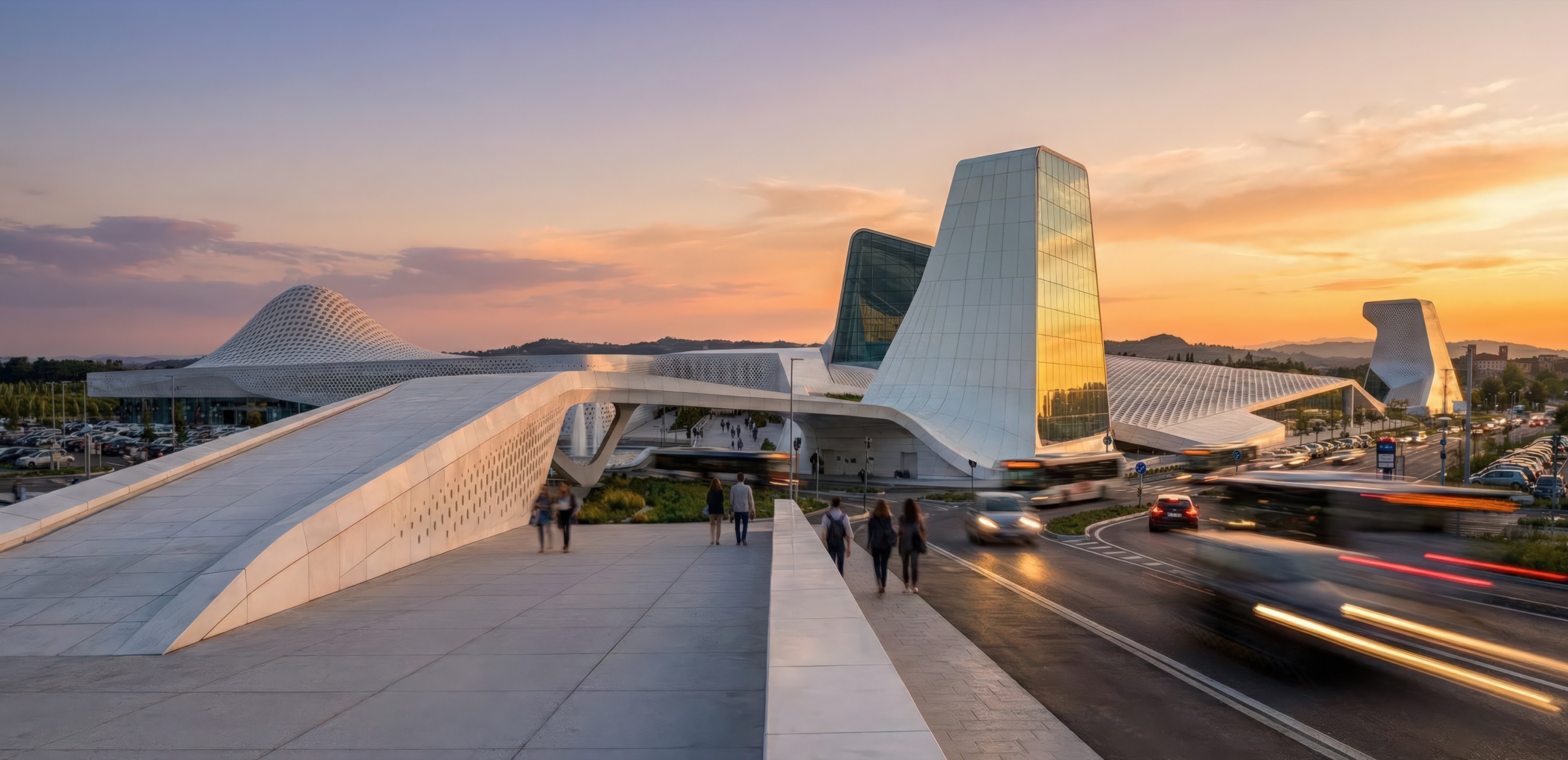
The tower’s base dissolves into a sculpted public landscape that extends to the water’s edge. Organic teardrop-shaped reflecting pools are carved into a continuous concrete ground plane that flows between the diverging tower volumes, creating a public territory that belongs neither entirely to the building nor to the city but mediates between the two. Stepped terraces, planted zones, and covered passages below the tower’s cantilevers offer varied conditions for gathering, circulation, and contemplation of the harbor.
Curtain Wall and Materiality
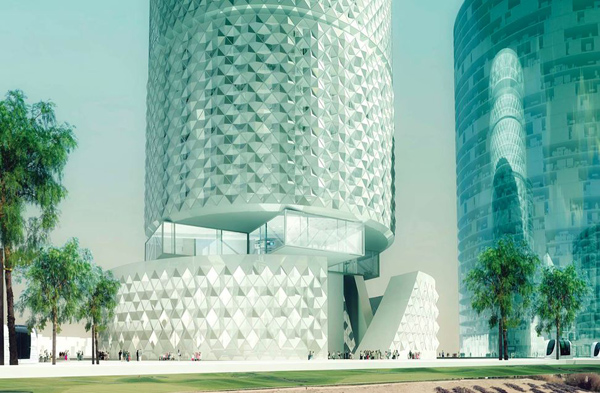
The facade is conceived as a single continuous glass skin that wraps all three volumes without interruption, reinforcing the reading of the tower as one form that has been split open rather than three separate buildings. The glass transitions in opacity and tone across the height of the building, becoming lighter and more transparent as the towers taper toward their peaks. At the base, where the volumes meet and separate, the structural system is expressed in gold-anodized steel fins that serve as both lateral bracing and a formal marker of the threshold between interior and exterior, solid and void.
Urban Context
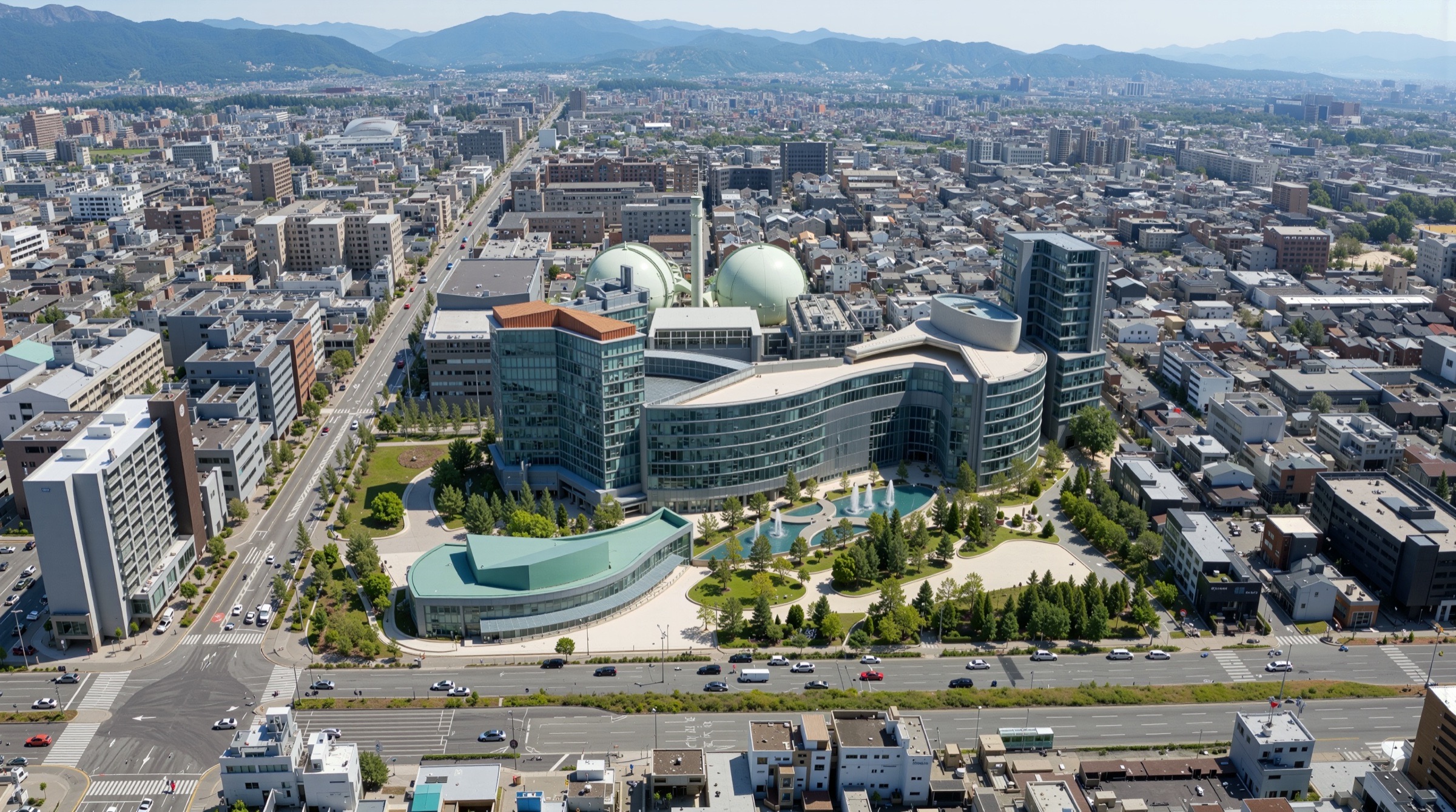
Busan’s topography, the dramatic interplay of coastline, harbor, and mountain ridgeline, informed the tower’s silhouette and orientation. The three peaks echo the mountainous backdrop while the waterfront plaza extends the city’s public realm to the water. The project was awarded the 2008 American Architecture Award by the Chicago Athenaeum Museum of Architecture and Design, recognizing the design’s ambition to redefine the supertall typology through the introduction of porosity, program separation, and civic space at an unprecedented vertical scale.