SO/ Budapest Hotel
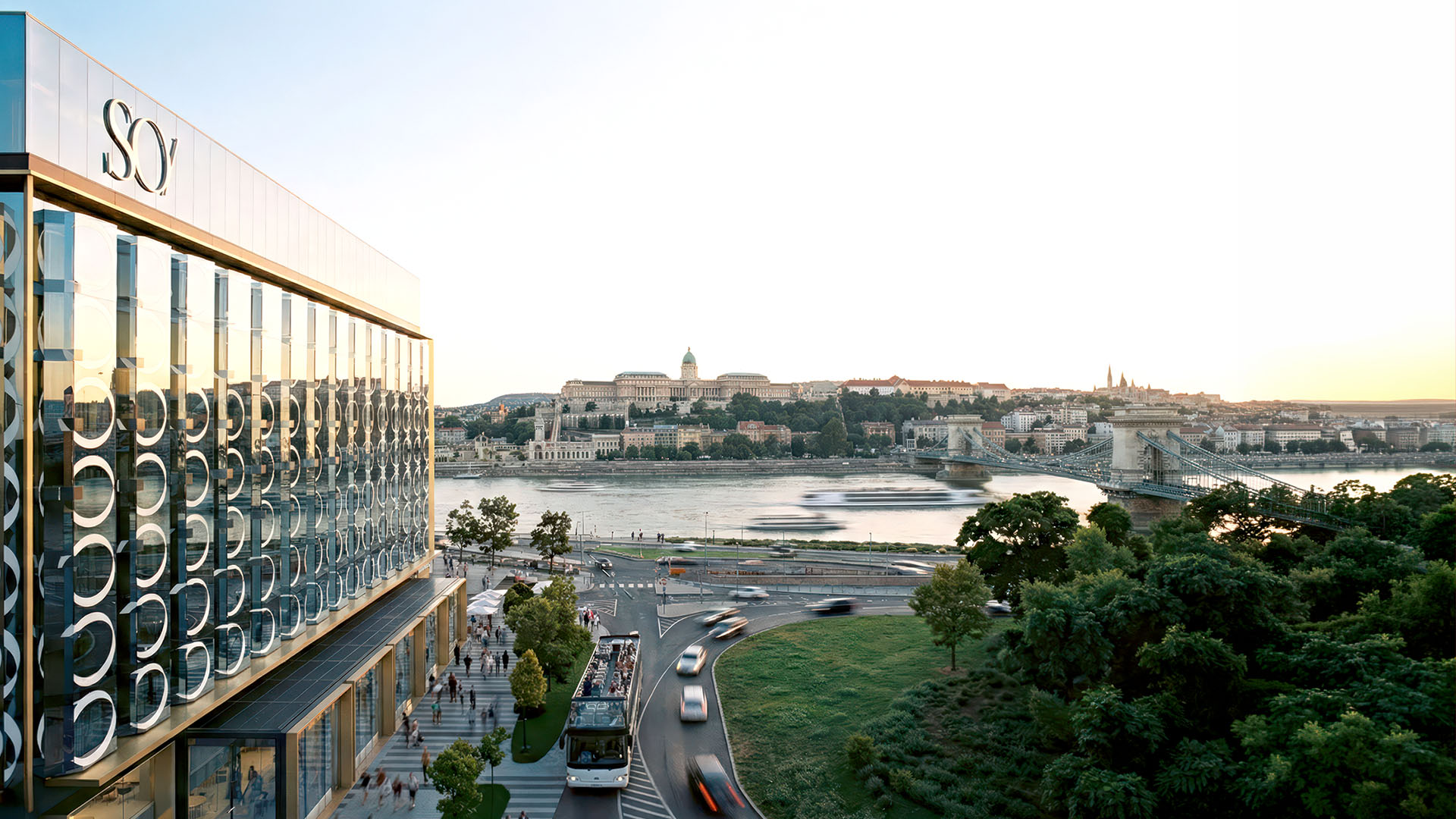
A deep adaptive reuse of the former Sofitel Budapest Chain Bridge on the UNESCO-protected Danube riverfront -- the 1982 building retained and reorganised behind a new patterned-glass envelope.
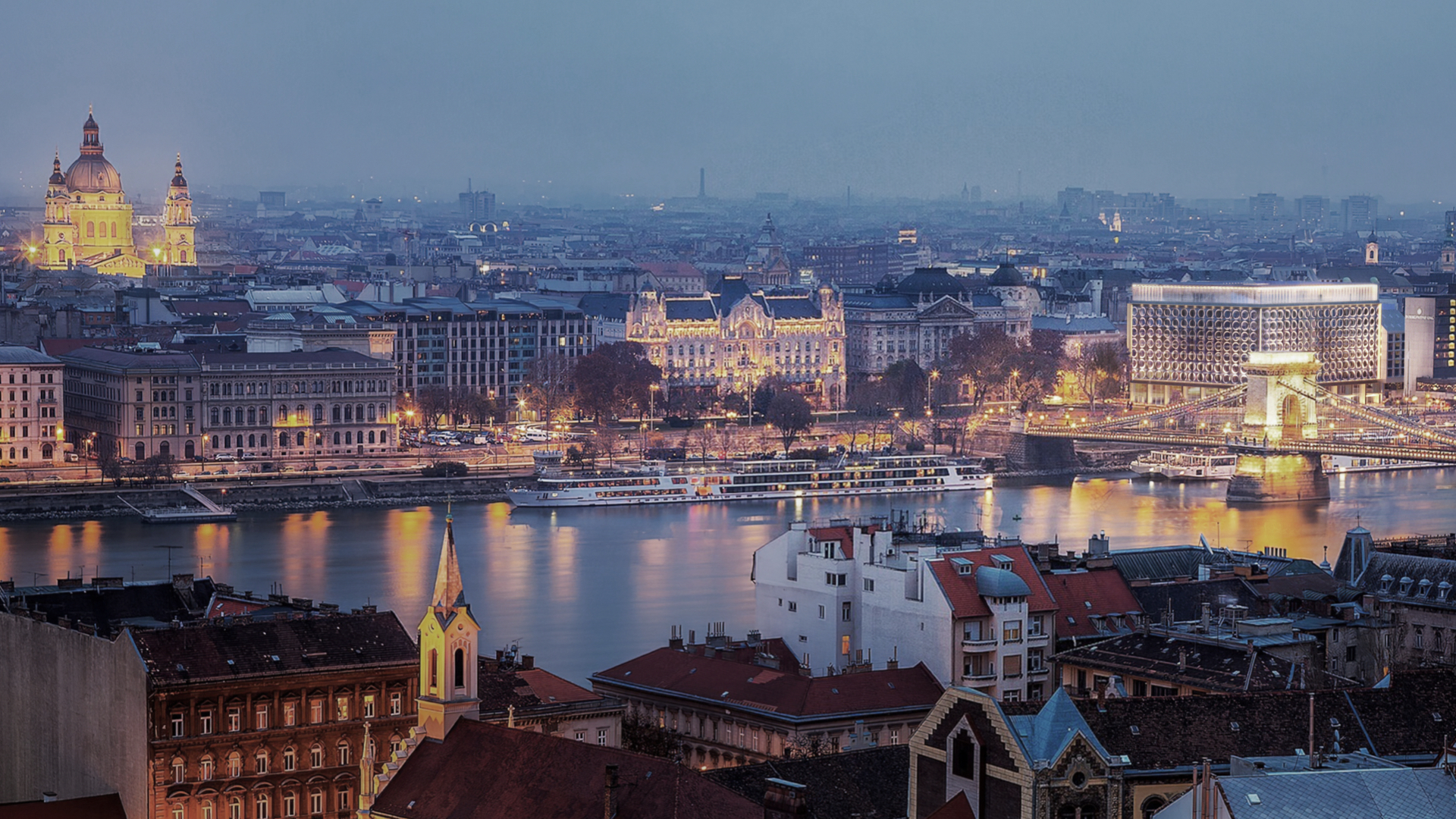
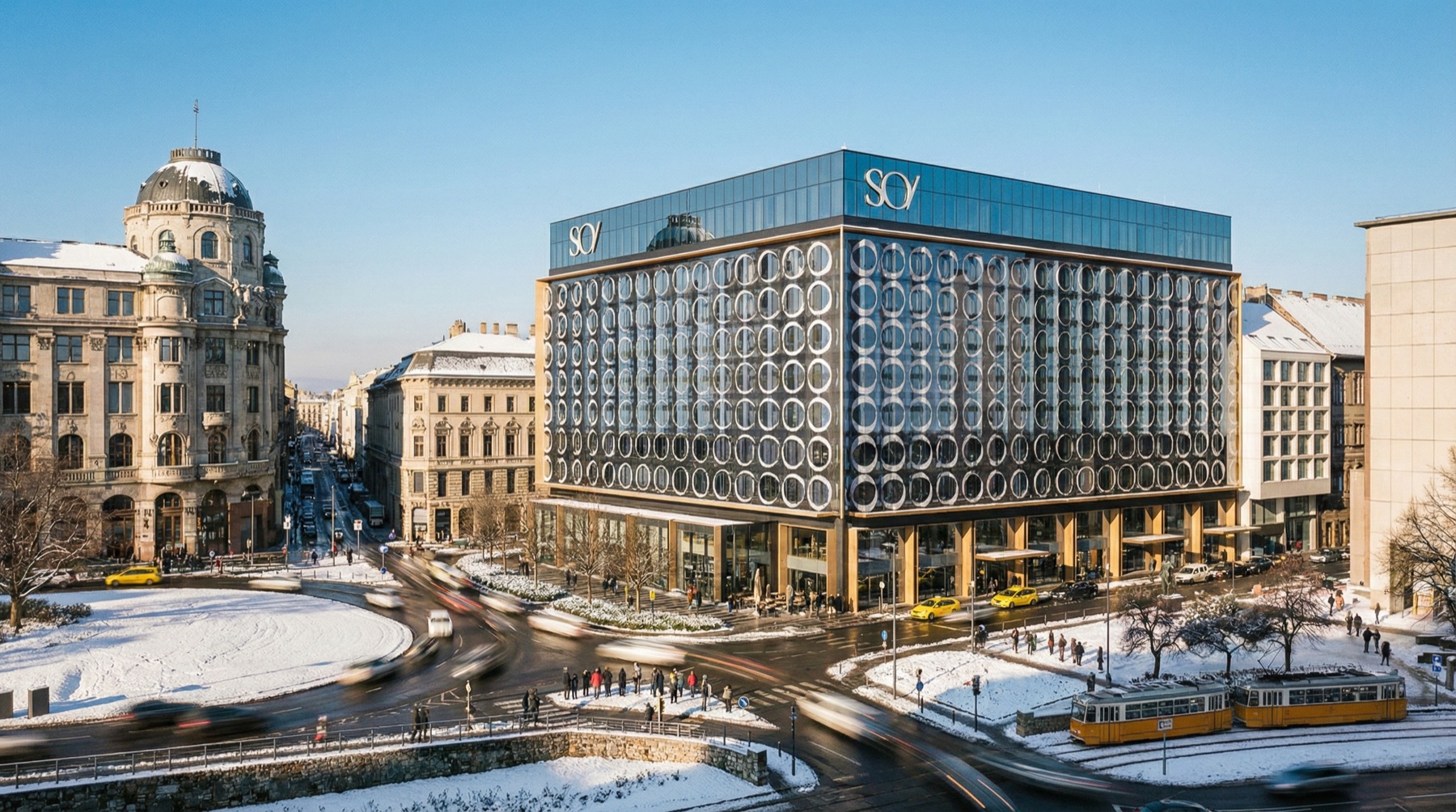
The project is a deep adaptive reuse of the former Sofitel Budapest Chain Bridge, built in 1982 on the Pest bank of the Danube, where the riverfront meets the approach to the Chain Bridge. The site lies within the UNESCO-protected Danube riverfront, opposite Buda Castle and next to Gresham Palace. The existing building is retained rather than demolished, and the work is directed at its envelope, its roof, and the organisation of its interior.
Design Concept
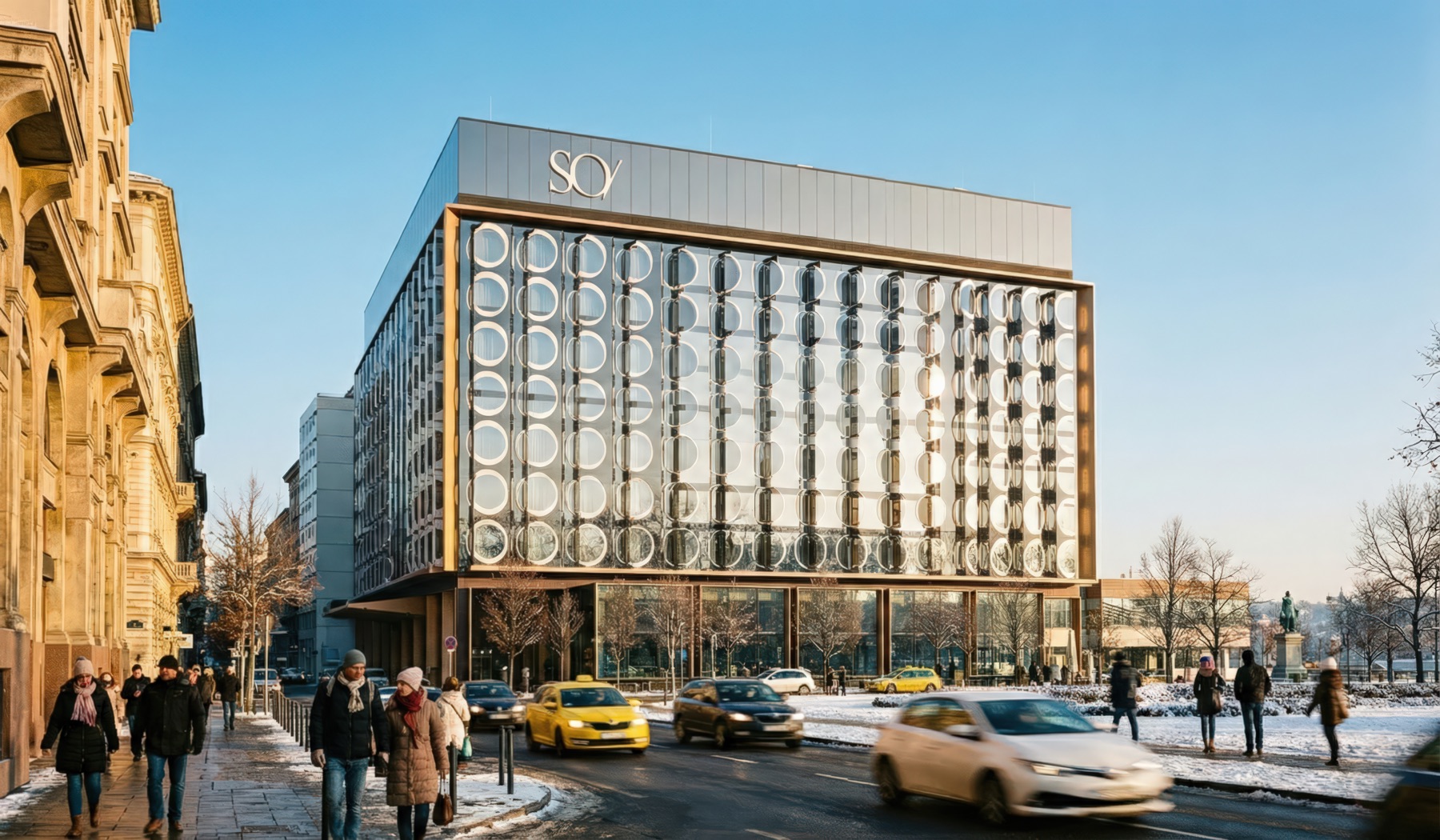
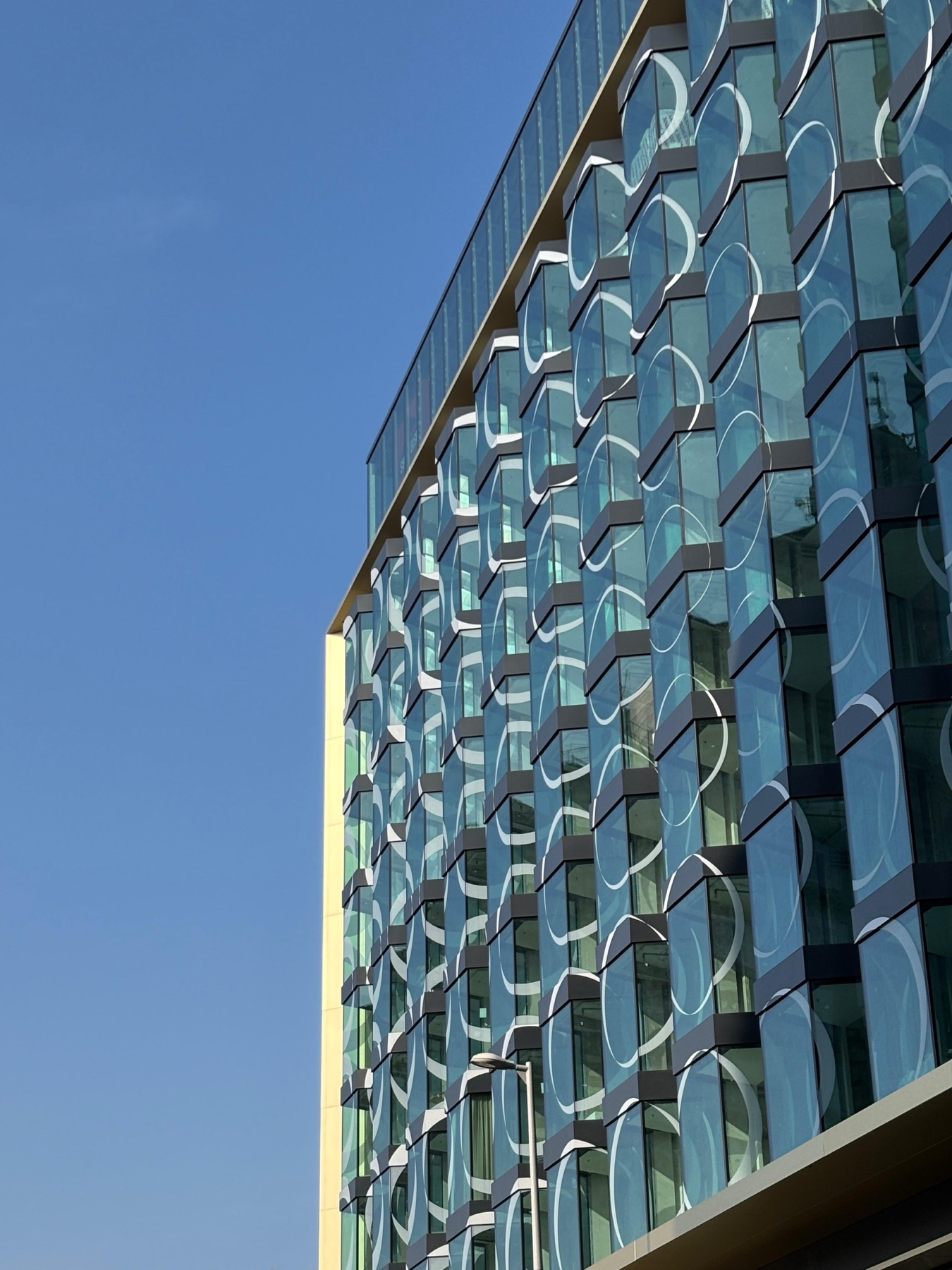
The retrofit keeps the original building mass, its spatial organisation, the central atrium, the circulation system, and the geometry of the facade. What changes is the outer shell: the existing cladding and roof are removed and replaced with a new patterned-glass envelope, its circular figures drawn from Op Art, which reads differently as light and vantage point change across the river frontage. The existing roof terrace is retained and extended with a new panoramic bar over the Danube. Working within the inherited section and circulation, the interior is reorganised around the atrium as a sequence of light, materiality, and spatial change.
Urban Positioning
The building’s mass and alignment are already part of the protected Danube panorama; retaining them holds the silhouette the riverfront has carried since 1982 while allowing the envelope to be rethought in full. Within that frame the design carries SO/’s lifestyle positioning, from arrival through the atrium to the interior transitions above.
Recognition & Positioning
Selected by Ennismore as a flagship SO/ property in Central Europe and featured in the Accor/Ennismore development spotlight (2022—2023), SO/ Budapest takes a landmark position on the Danube at the center of the city. The project sets out Asymptote’s approach to hospitality in a protected historic setting: retain the building and its organisation, and rebuild the envelope.