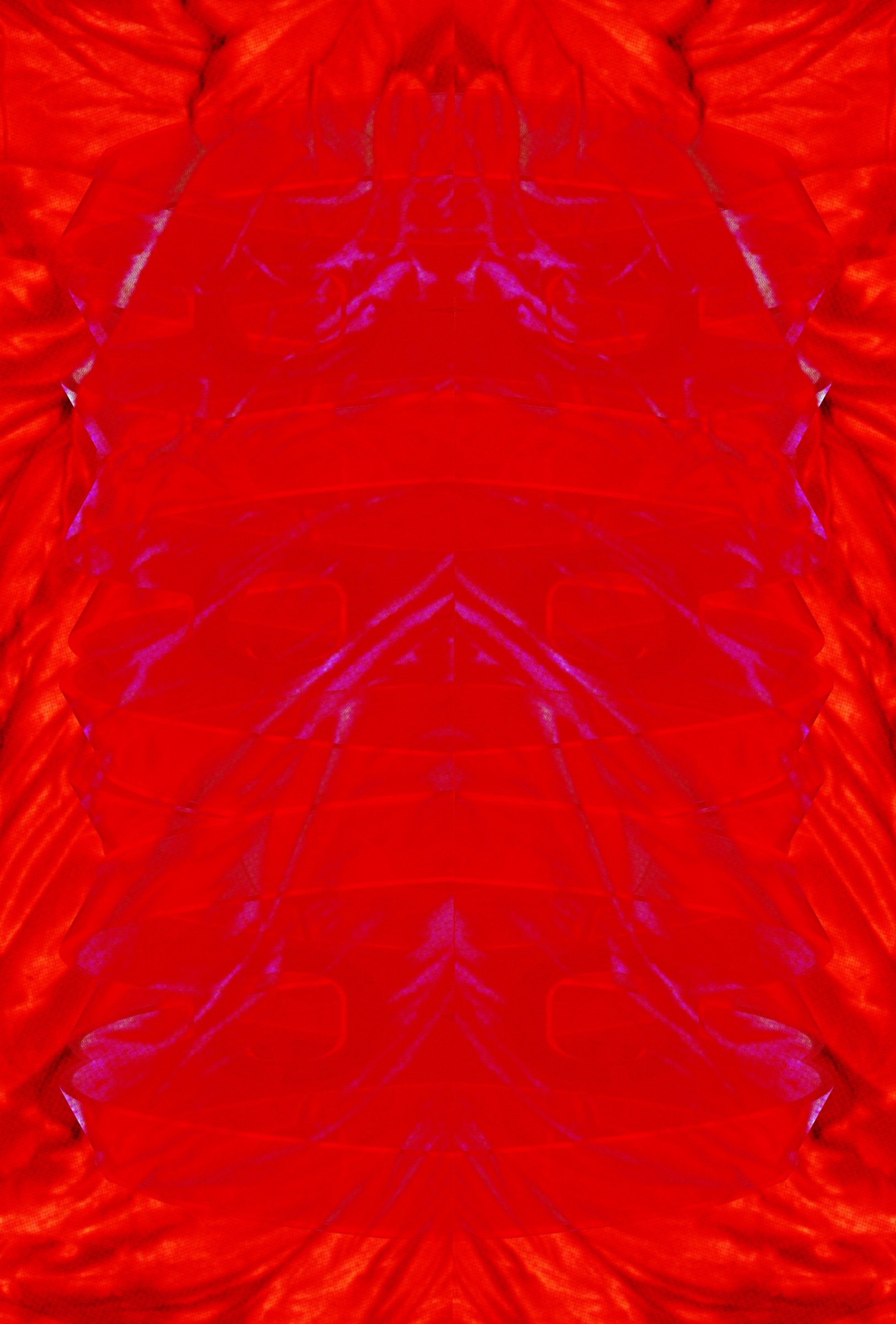
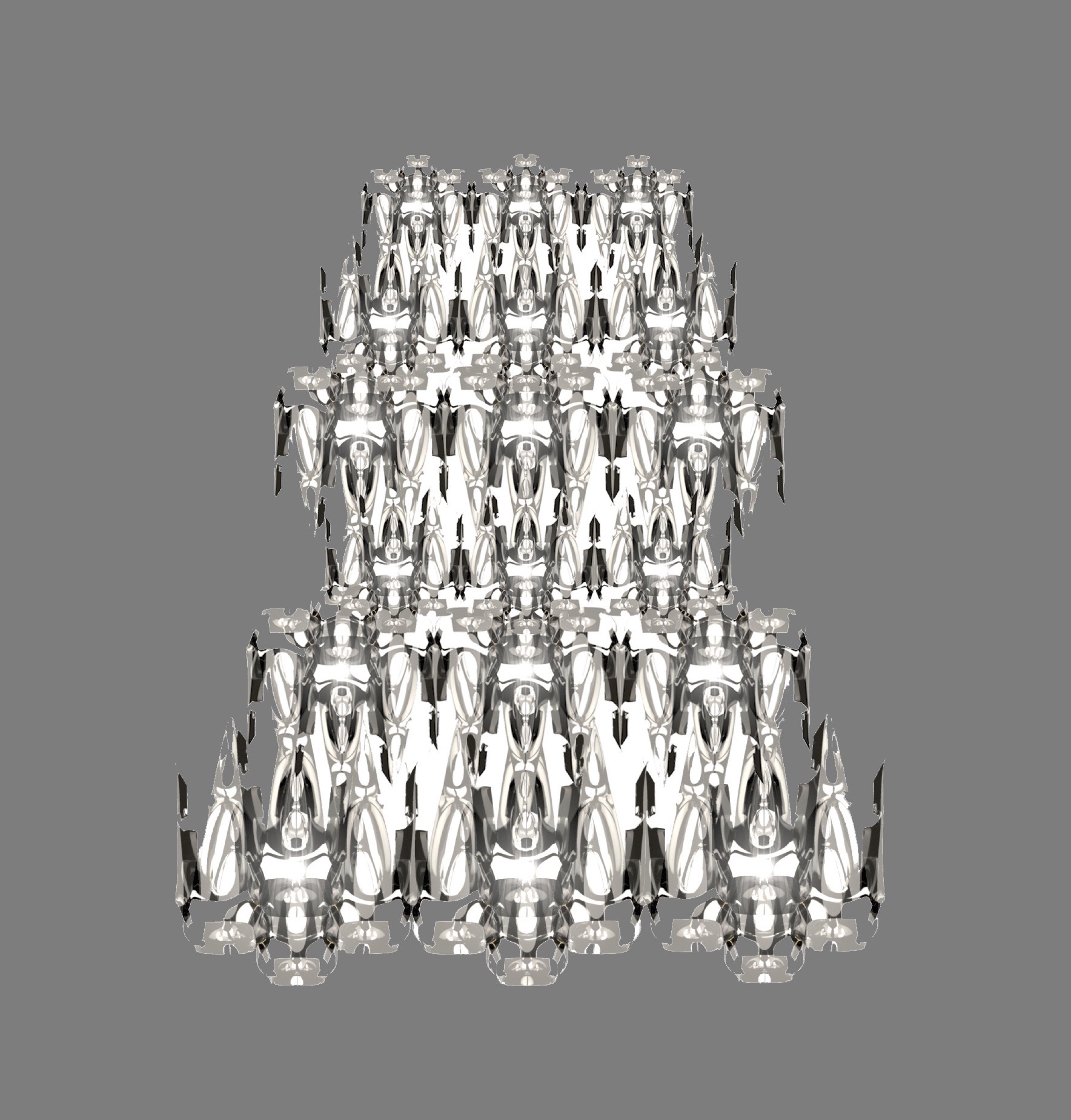
Drawings · 1994 · Realized
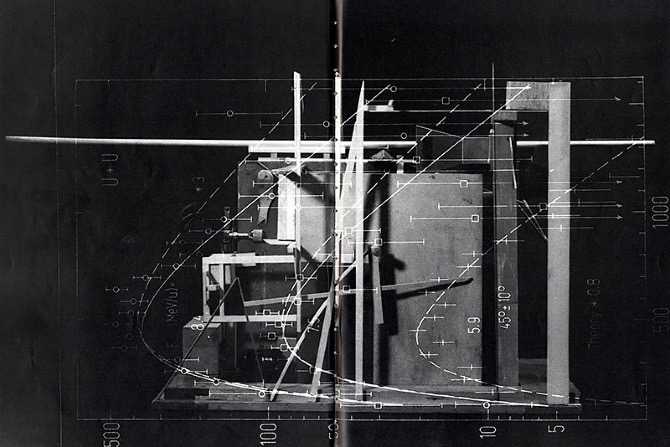
Hyperfine Splitting 001
An early body of work developed through analog photographic collage techniques, produced prior to the availability of digital tools, exploring the construction of complex spatial conditions through layered exposures, fragmentation, and recomposition of photographic material.
About the project
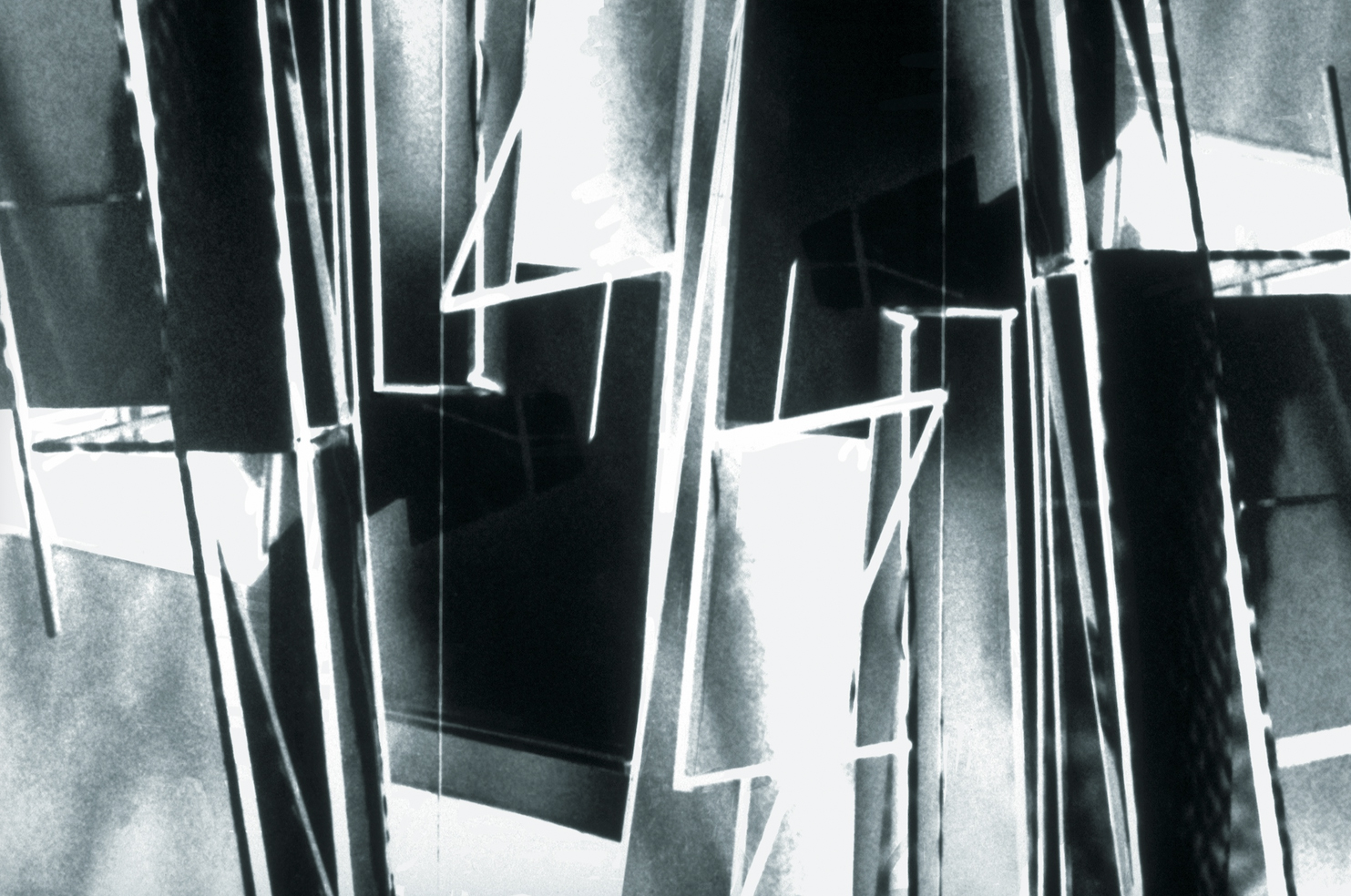
Produced in the mid-1990s using darkroom manipulation and hand-assembled collage on Ilford paper, the Hyperfine Splitting series predates the digital tools that would later become central to Asymptote’s practice. The work draws on experimental traditions in twentieth-century art and film, including the cameraless techniques of Man Ray and the perceptual film experiments of Stan Brakhage, extending those investigations into a spatial and architectural domain.
Process & Influences
Drawing on experimental practices in twentieth-century art and film, including the cameraless and montage-based techniques of Man Ray and the perceptual film experiments of Stan Brakhage, the work extends these investigations into a spatial and architectural domain. Rather than representing space, the image constructs it through the superposition of planes, light fields, and intersecting geometries.
The composition is generated through iterative layering processes in which photographic fragments are cut, reassembled, and re-exposed to produce a dense visual field. Linear elements and luminous edges act as structural traces, suggesting frameworks, thresholds, and latent architectural systems embedded within the image.
Title & Concept
The title Hyperfine Splitting references the subdivision of energy states in physics, here translated into a visual methodology where small variations and displacements generate increasingly complex spatial organizations. The image oscillates between depth and flatness, legibility and abstraction, producing an unstable perceptual field that resists fixed interpretation.
Legacy
As an early investigation, Hyperfine Splitting 001 establishes a foundational approach to image construction that would later evolve through digital media and architectural practice. It anticipates a shift from representation toward generation, where images operate as active systems capable of producing spatial logic rather than merely depicting it.
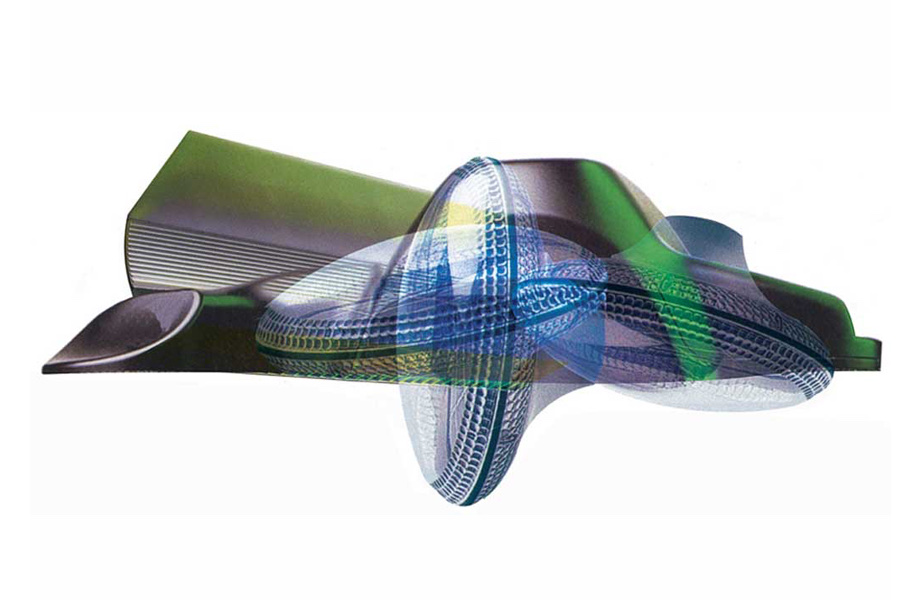
Works from the later Hyperfine Splitting series (004: Alexandria, Tokyo, Toronto, Berlin) were acquired by SFMOMA in 1999 and are held in their permanent collection.