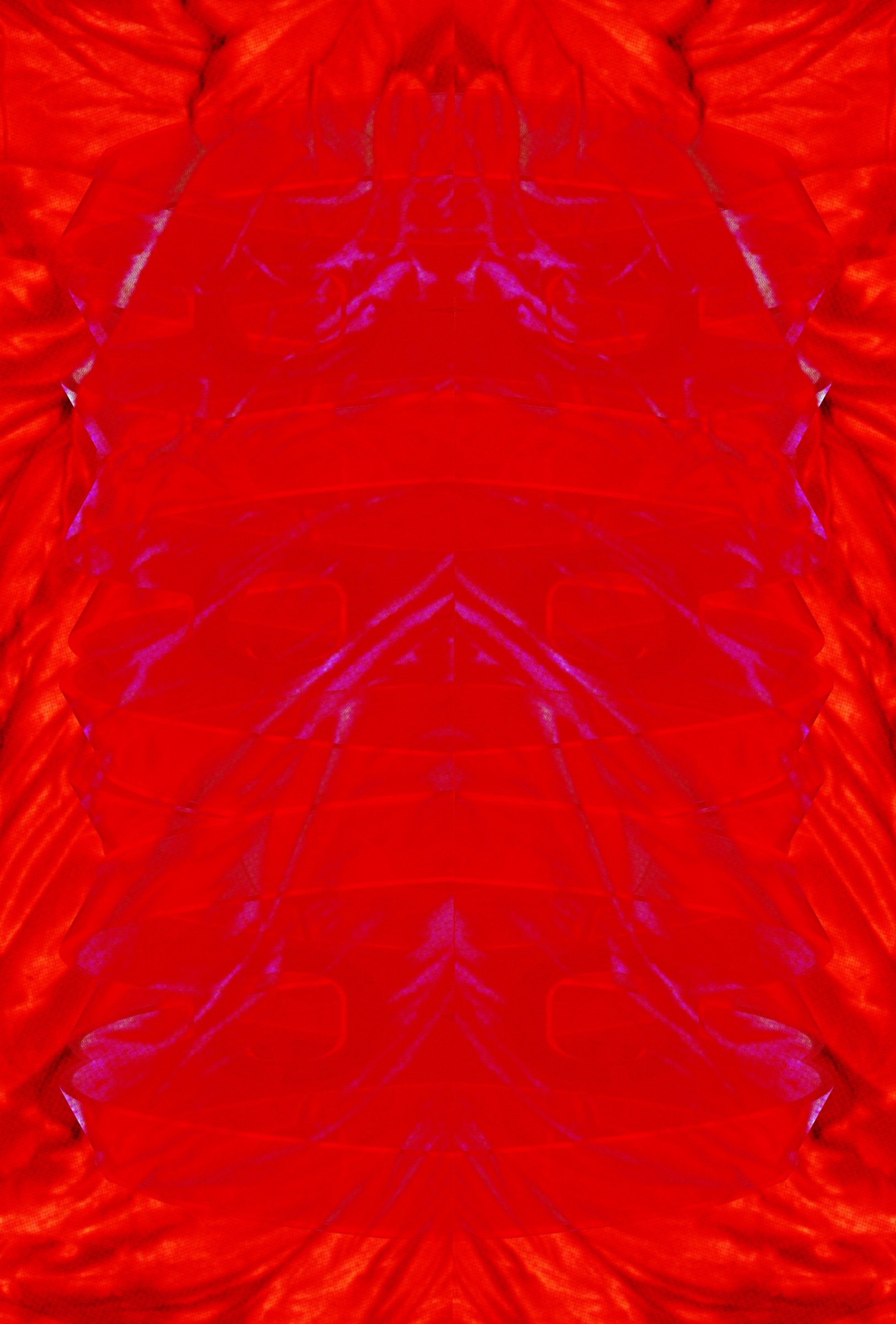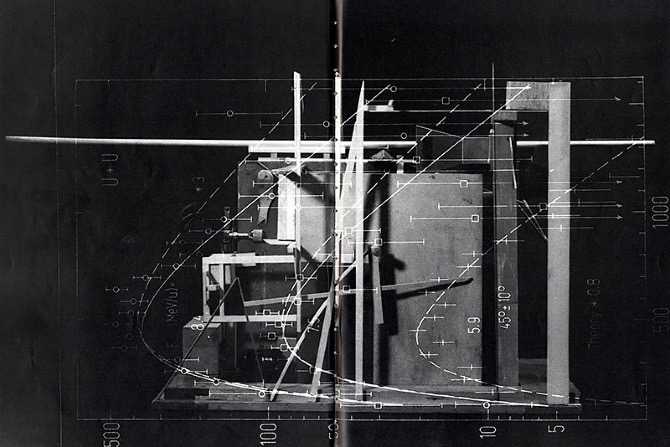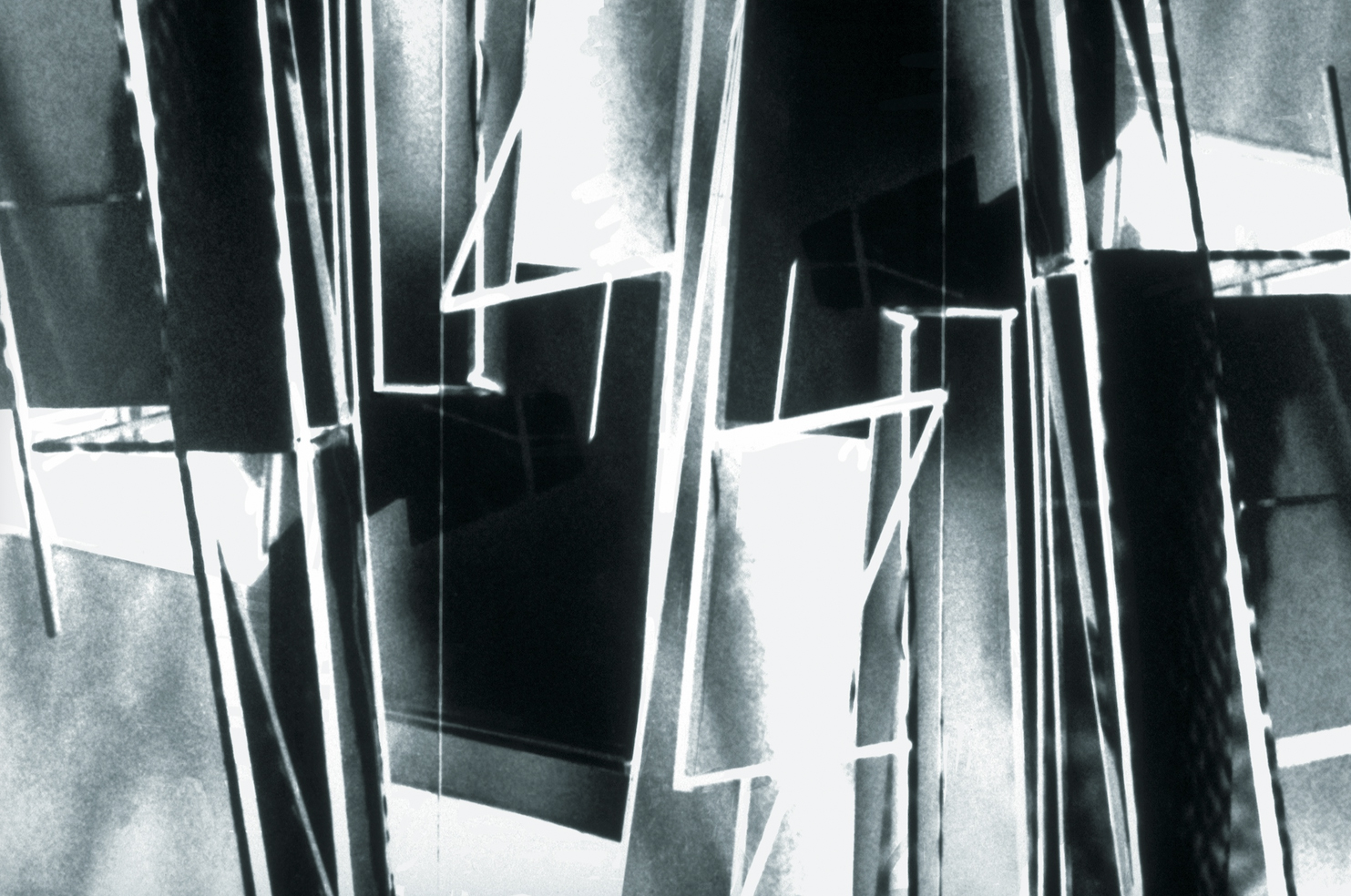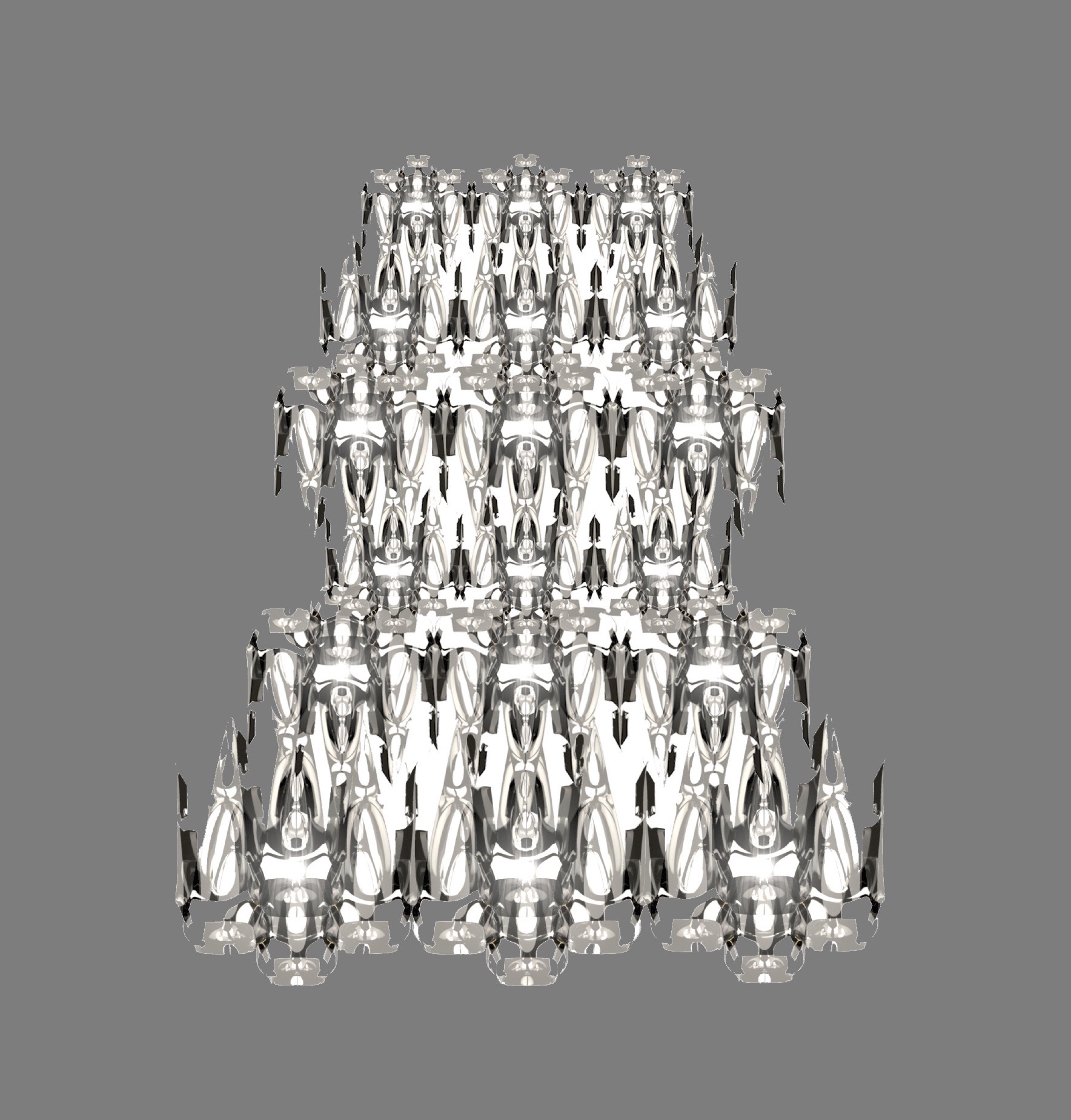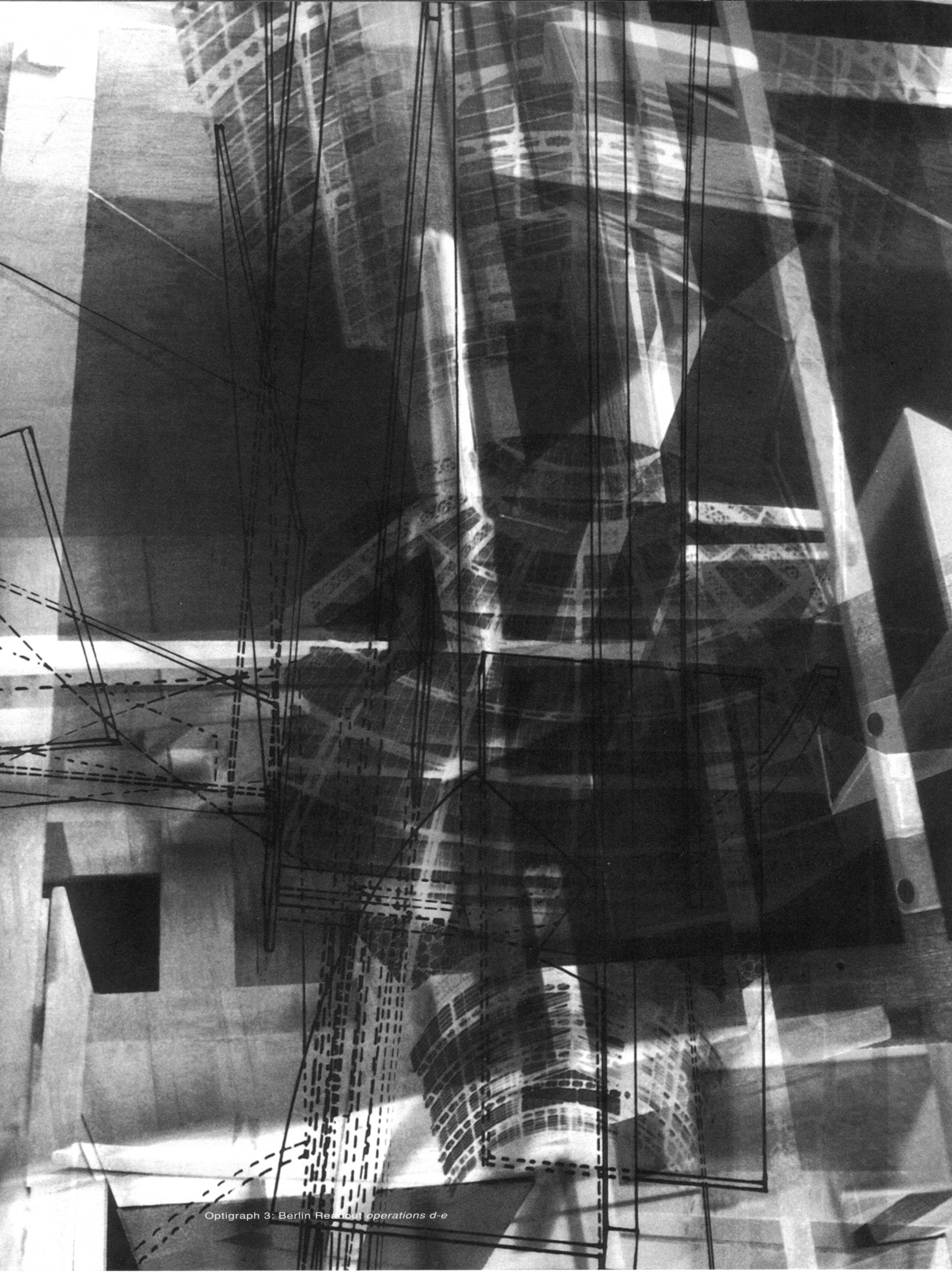
Produced while the Berlin Wall still stood, these drawings operate as a form of surveillance of the invisible psycho-spatial territory defined by the Wall — mapping the charged threshold between East and West through layered photographic fragments digitally reassembled into complex visual constructions.
Produced in 1988 while the Berlin Wall still stood, the Berlin Optigraphs emerged from direct engagement with the divided city — operating as a kind of surveillance of the invisible psycho-spatial territory defined by the Wall. The drawings map the charged, liminal space where the Wall stood: a zone that was simultaneously hyper-visible and cartographically absent, physically impenetrable yet psychologically omnipresent. The series investigates the relationship between urban form, political boundary, and the fragmentary nature of photographic representation.
Medium & Process
Each Optigraph is composed from multiple photographic fragments drawn from Berlin’s architectural landscape — streets, facades, infrastructural elements, and historical traces. These fragments are digitally reassembled into complex composite images that hover between photography, drawing, and architectural speculation. The optigraph process begins with photographic capture — sequences of images recorded across time and movement — which are then digitally recombined through compositing, stretching, and superimposition.
City & Memory
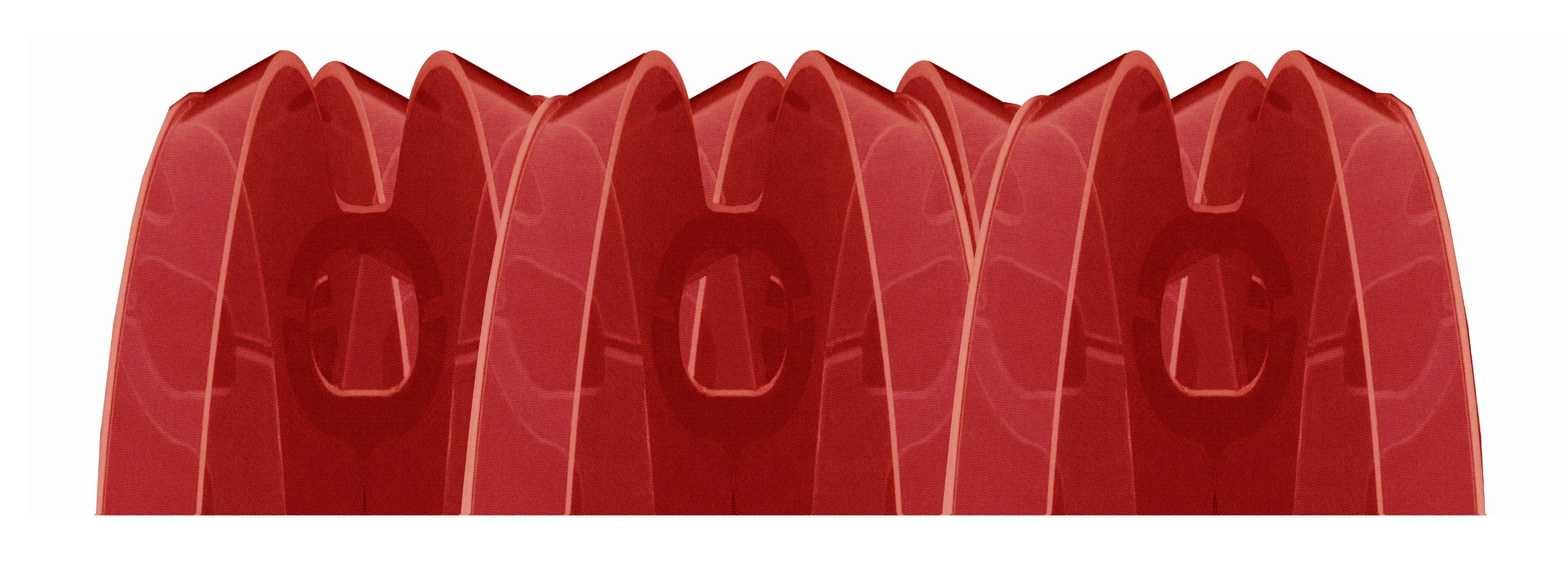
The works transform recognizable elements of the city into abstract spatial compositions, revealing hidden structures and visual rhythms embedded within the urban fabric. The resulting prints collapse duration into simultaneity, producing visual fields where architectural edges dissolve and color replaces structure as the primary spatial register.
Perception & Imagination
Rather than presenting a single viewpoint, the Optigraphs construct a new visual field where time, memory, and architecture collapse into a single image. As a drawing practice, the optigraphs represent an investigation into how perception itself can become a medium for spatial exploration — works that record not what is seen but how seeing operates within the flux of the built environment.