Saadiyat Island Bridges
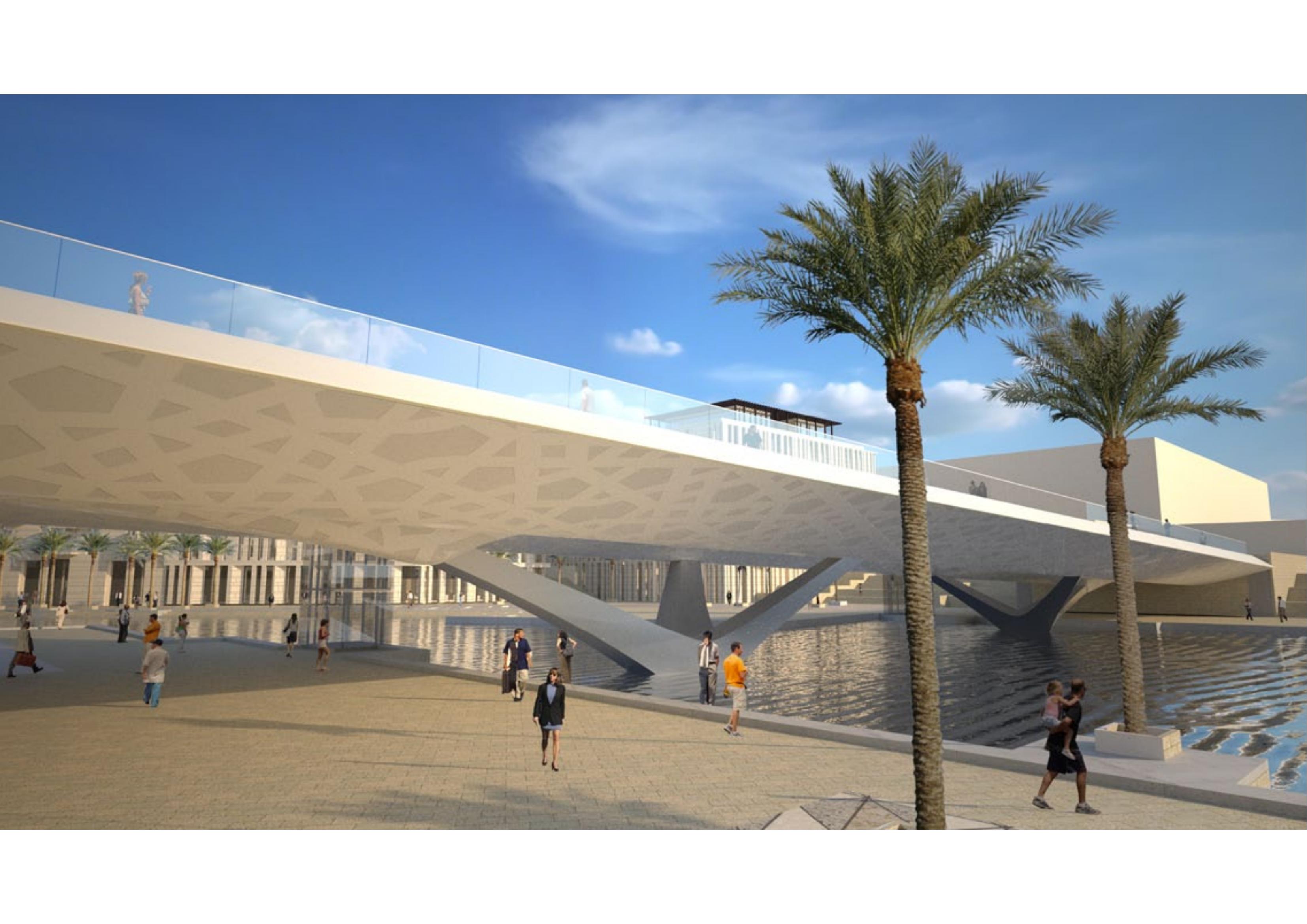
A family of vehicular and pedestrian bridges for Saadiyat Island utilizing 3D printing, mycelium, and bio-engineered concrete — sustainable materials producing lightweight, structurally efficient crossings shaped by the movement of people and vehicles.
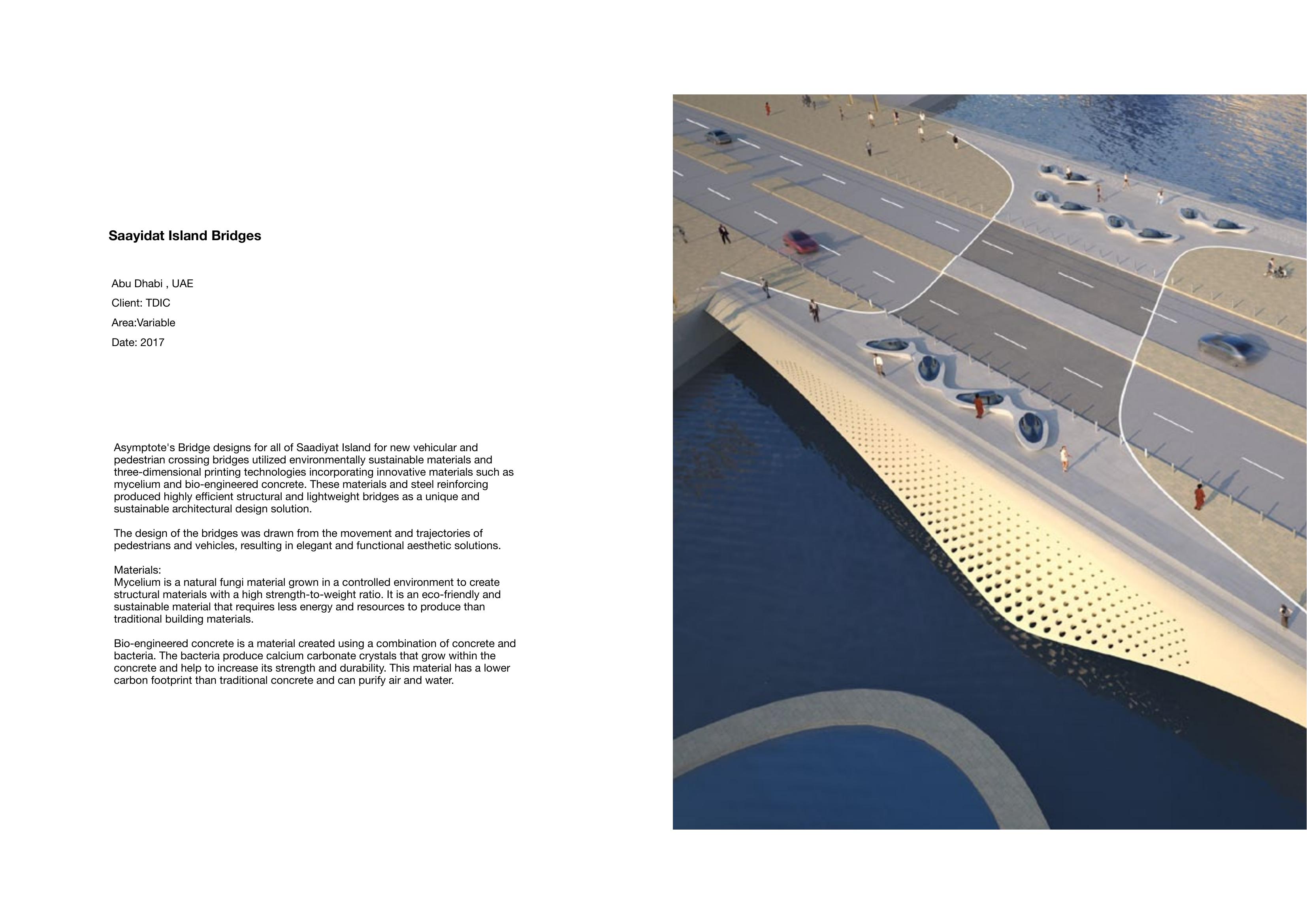
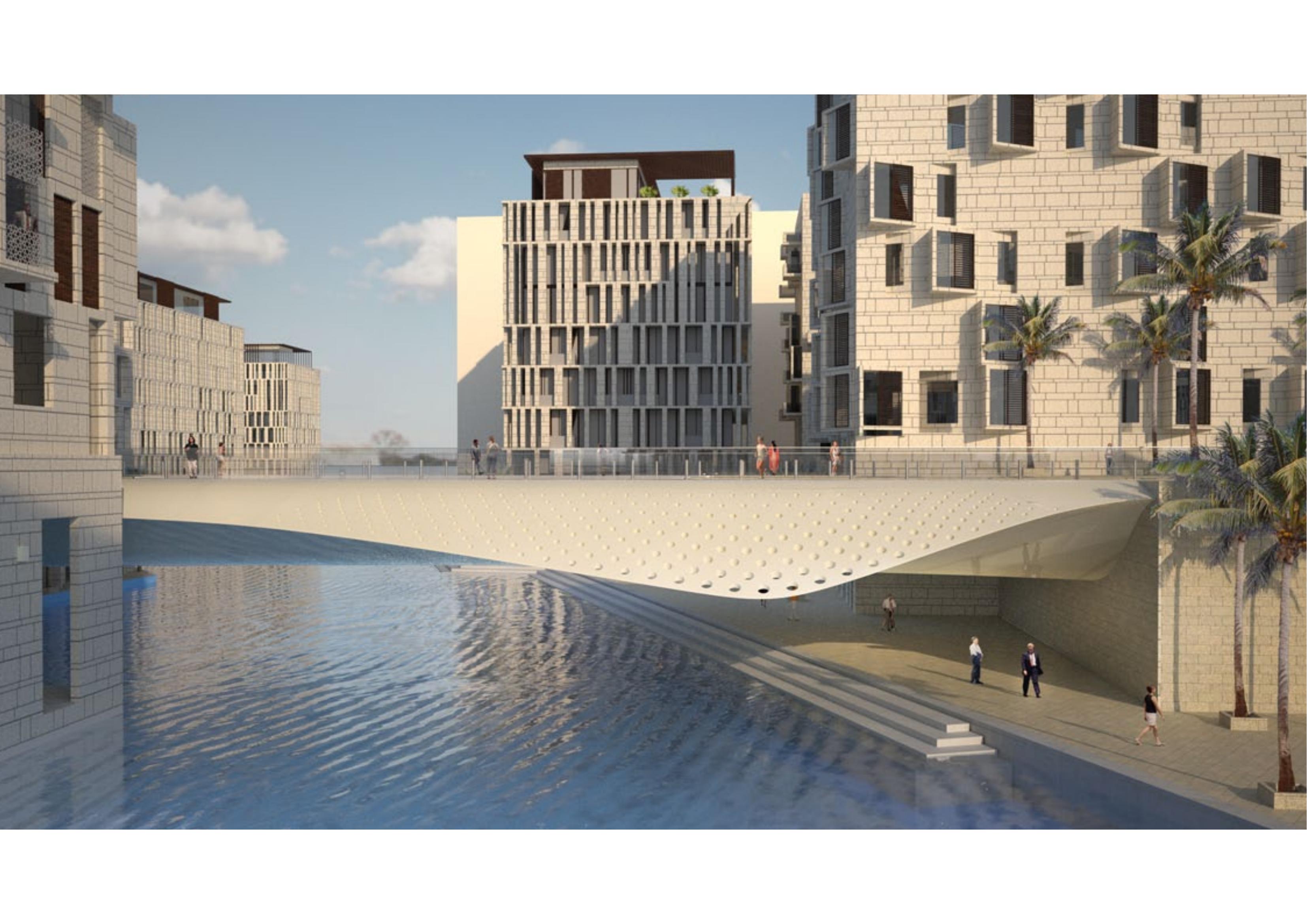
Asymptote’s bridge designs for Saadiyat Island encompass all new vehicular and pedestrian crossings across the island’s waterways and canals. The designs utilize environmentally sustainable materials and three-dimensional printing technologies, incorporating innovative materials such as mycelium and bio-engineered concrete to produce highly efficient structural and lightweight bridges as a unique and sustainable architectural design solution.
Design Logic
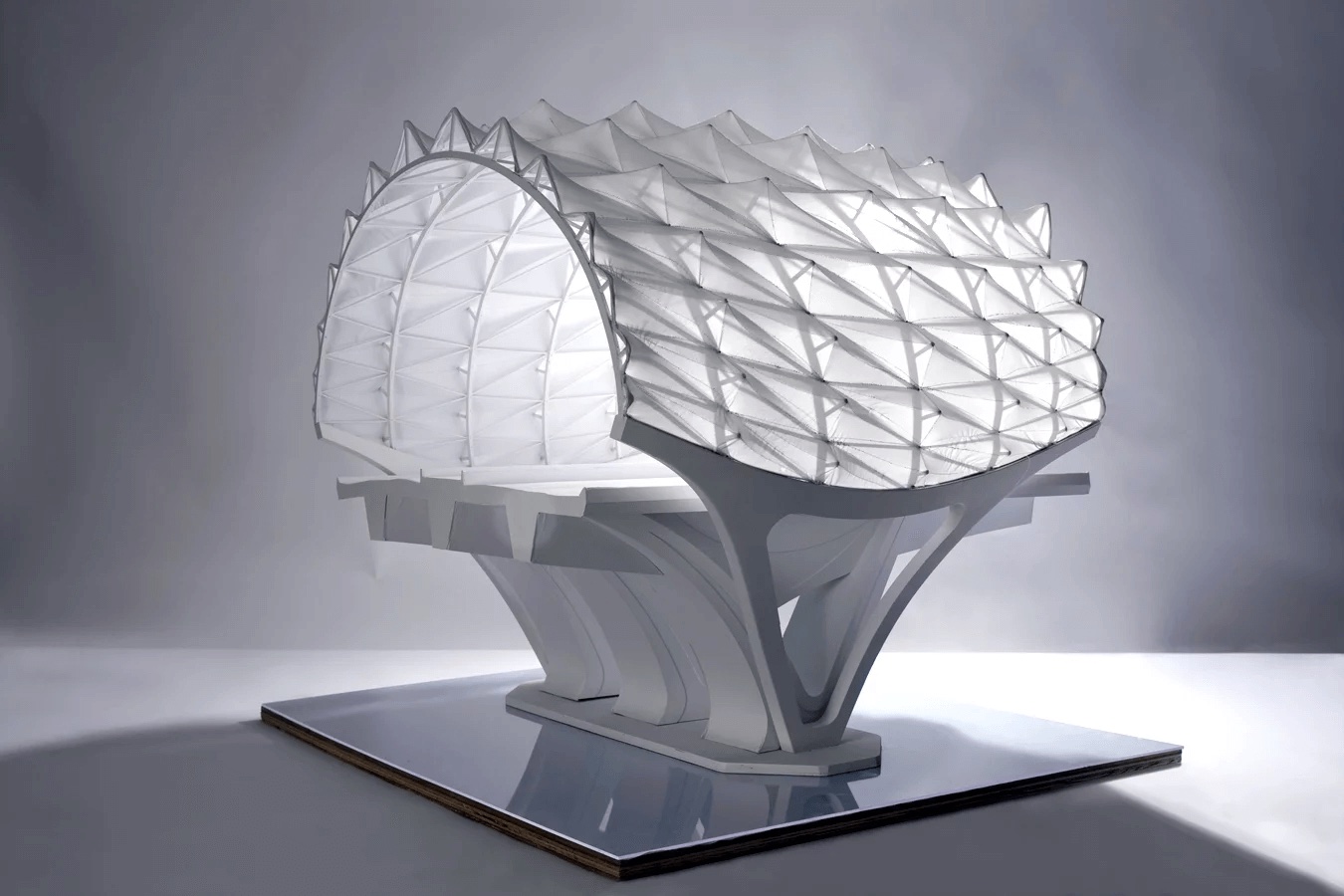
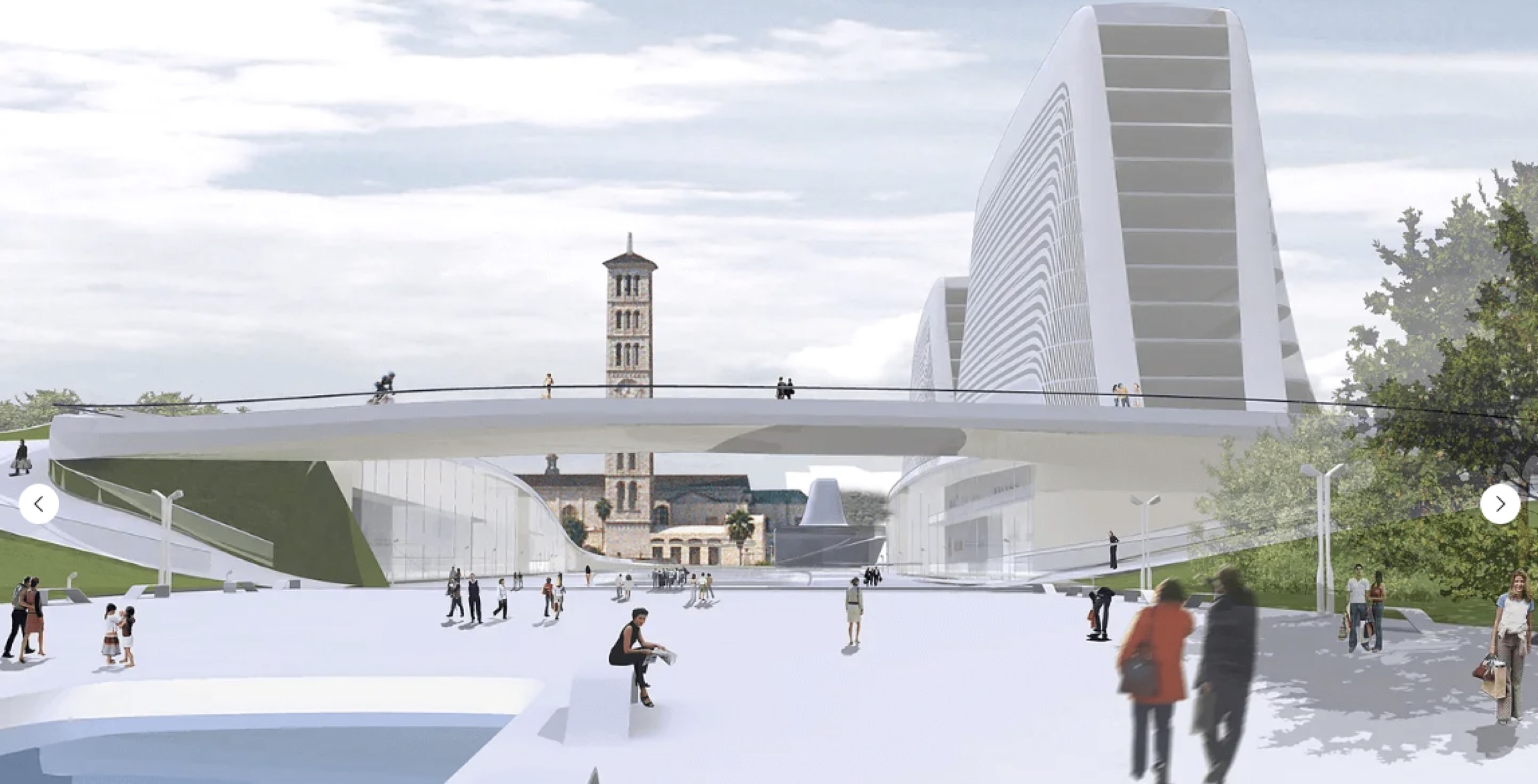
The design of the bridges was drawn from the movement and trajectories of pedestrians and vehicles, resulting in elegant and functional aesthetic solutions. Each bridge type responds to its specific crossing condition — vehicular bridges span wider waterways with perforated deck surfaces that reduce material use and create striking visual patterns, while pedestrian bridges employ sculptural branching supports that recall organic forms and cast patterned shadows across the walkways below.
Material Innovation
Mycelium — a natural fungi material grown in a controlled environment — creates structural components with a high strength-to-weight ratio. It is an eco-friendly and sustainable material that requires less energy and resources to produce than traditional building materials. Bio-engineered concrete, created using a combination of concrete and bacteria, produces calcium carbonate crystals that grow within the material and increase its strength and durability. This material has a lower carbon footprint than traditional concrete and can purify air and water.
Sustainable Infrastructure
Together, these material innovations and 3D printing fabrication methods represent a new approach to infrastructure design — one in which bridges are not merely functional crossings but architecturally expressive structures that embody the environmental ambitions of Saadiyat Island’s development as a cultural and ecological destination.